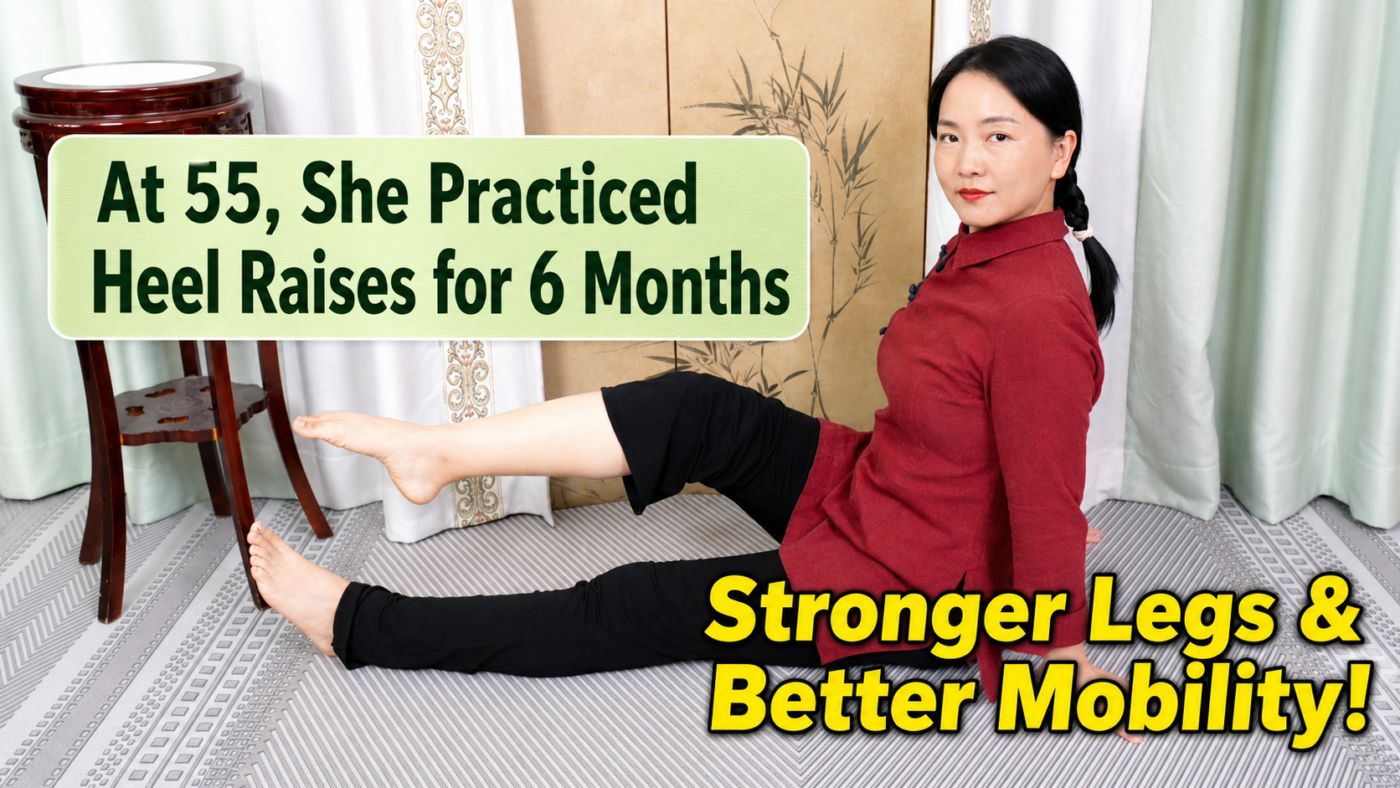
Heel raises for circulation are one of the simplest lower-body exercises you can do almost anywhere. By repeatedly lifting and lowering the heels, you activate the calf muscles while also training ankle mobility, balance, and lower-leg strength.Sometimes the most useful forms of movement are also the simplest.
Recently, I noticed an older woman regularly practicing heel raises in the morning. She would slowly rise onto the balls of her feet, pause for a moment, and gently lower herself again. She seemed to repeat the same movement almost every day.
Eventually, curiosity got the better of me, and I asked why she had kept doing such a simple exercise for so long.
She told me she had been practicing heel raises consistently for about two years. At first, she had not expected much from them. But after several months, she felt that her calves were less tired, her legs felt stronger during walking, and some of the discomfort she used to notice around her feet and heels had become easier to manage.
Those experiences are personal and should not be treated as proof that heel raises can cure cardiovascular disease, remove arterial plaque, or reverse varicose veins. Still, they point toward something genuinely useful about this movement.
Every time the calf muscles contract, they help push venous blood upward from the lower legs. This mechanism is often called the calf muscle pump. Stronger calf muscles, regular ankle movement, and frequent breaks from prolonged sitting can therefore play a valuable role in lower-limb mobility and circulation.
Heel raises also challenge ankle control, foot strength, posture, and balance.
And because they require almost no equipment, variations can be practiced while standing, walking, sitting, or even lying down.
Here are four practical ways to use them.
Why Heel Raises Are More Useful Than They Look
The calf is sometimes informally described as a “second heart” because contractions of the calf muscles help move blood from the legs back toward the upper body.
That description should not be taken literally—the calf is not another heart—but it illustrates why regular movement of the ankle and calf matters.
When you spend long periods sitting or standing still, the calf muscles are relatively inactive. Frequent ankle and calf contractions can help keep the lower legs moving, maintain muscle strength, and reduce the feeling of stiffness that often develops after inactivity.
Heel raises can also train:
Calf strength
Ankle stability
Foot control
Balance
Lower-leg endurance
Body awareness
Walking confidence
They are not a replacement for aerobic exercise, blood-pressure management, medical treatment, or other forms of strength training. Instead, think of them as a small movement habit that can complement a larger active lifestyle.
Method 1: Standing Heel Raises
This is the foundation of the entire routine.
Stand upright with your head comfortably lifted, chest relaxed, and feet close together or approximately hip-width apart if that feels more stable.
Allow your arms to rest naturally by your sides.
If your balance is uncertain, stand beside a wall, chair, countertop, or sturdy railing.
Slowly lift both heels away from the floor.
Your weight should move toward the balls of your feet rather than directly onto the tips of the toes.
Keep the toes relaxed against the floor and avoid gripping so forcefully that the feet cramp.
Rise only as high as you can while maintaining control.
At the top, pause for approximately one to two seconds.
Then slowly lower your heels back toward the floor.
The original traditional-style version of this exercise sometimes uses a gentle heel drop that creates a mild whole-body vibration. For most people, however, a controlled lowering is the safer choice. There is no need to stamp the heels forcefully into the ground or create a jarring sensation through the knees, spine, or head.
Keep your knees soft rather than rigidly locked.
Try:
10–20 repetitions per set
1–3 sets
A comfortable, controlled pace
Rest whenever necessary.
As your calves become stronger, you may notice that walking, climbing stairs, and standing for longer periods feel easier.
The goal is not exhaustion. It is controlled, repeated movement.
Pay Attention to the Feet
Heel raises may look like a calf exercise, but the feet are also working.
As you rise, maintain contact through the base of the big toe, little toe, and forefoot.
Imagine the foot forming a stable tripod.
Do not let the ankles roll dramatically inward or outward.
Good foot control makes the exercise more useful for balance and helps keep the movement aligned through the ankle, knee, and hip.
Move calmly.
There is no prize for completing the repetitions quickly.
Can Standing Heel Raises Prevent a Stroke?
This requires an important distinction.
Regular physical activity is associated with better cardiovascular health and a lower risk of stroke. Exercise can contribute to healthier blood pressure, body weight, glucose regulation, vascular function, and physical fitness.
But heel raises alone have not been shown to “prevent stroke.”
They should therefore be described as one small component of an active lifestyle rather than as a specific stroke-prevention treatment.
Anyone concerned about stroke risk should pay particular attention to major modifiable factors such as blood pressure, smoking, diabetes, cholesterol, physical inactivity, diet, and appropriate medical care.
An Older Eastern Wellness Perspective
The idea of using repeated leg and foot movements for health is not new.
Ancient Chinese yangsheng and daoyin traditions included deliberate movements of the legs, feet, joints, and trunk as part of daily health cultivation.
The ancient Chinese text Yinshu, or The Book of Pulling, dating to the early Han period, contains systematic descriptions of therapeutic and health-preserving movements, including exercises involving the legs, feet, toes, and stretching.
Traditional explanations often describe such practices as helping qi and blood move more freely through the body and supporting the channels or meridians.
Modern anatomy uses a different framework.
From a contemporary perspective, some of the practical effects of these exercises can be understood through muscular contraction, joint mobility, balance training, nervous-system coordination, and the calf muscle pump.
The traditional and modern explanations are not identical, but the practical message overlaps in one important way:
The body benefits from regular movement.
Method 2: Walking on the Forefoot
Once ordinary standing heel raises feel comfortable, you can progress to a walking variation.
This exercise is significantly more demanding on balance, so it is not appropriate for everyone.
Rise gently onto the balls of your feet.
Keep your heels slightly elevated.
Then begin taking small, controlled steps.
Allow your arms to swing naturally beside your body.
You can also slightly raise the knees as you walk if your balance is good.
Start with:
20–30 small steps
Rest
Repeat for another 1–2 rounds if comfortable
The movement should feel controlled rather than hurried.
Do not race.
Do not force yourself to stay excessively high on the toes.
And stop immediately if you feel pain, dizziness, instability, or cramping.
Safety Comes First
Older adults or anyone with poor balance should practice beside a wall or sturdy counter.
Another option is simply to march in place while occasionally rising onto the balls of the feet.
This gives you something stable to hold and greatly reduces the distance you could fall.
If tiptoe walking feels unstable, skip it completely.
Ordinary supported heel raises can provide plenty of useful calf training without introducing unnecessary fall risk.
People with osteoporosis do not automatically need to avoid all heel raises, but forceful heel dropping and high-impact bouncing are generally less appropriate. A slow, supported version is more sensible.
People with hypertension can often perform ordinary controlled resistance exercise, but anyone with poorly controlled blood pressure, significant cardiovascular disease, or exercise restrictions should follow their clinician’s advice.
What About Heel Walking?
Walking briefly on the heels, with the toes lifted, trains different muscles around the front of the lower leg.
It can be used as a separate mobility or strengthening drill.
However, do not rapidly alternate between extreme tiptoe walking and heel walking if your balance is poor.
If you want to include heel walking, use a nearby support and take only a few controlled steps at first.
Method 3: Seated Heel Raises
This may be the most practical version for people who spend much of the day at a desk.
After sitting for a long time, the legs can feel heavy, stiff, cold, or numb.
Before performing the movement, adjust your chair so that both feet can rest comfortably on the floor.
Your knees should be approximately level with your hips or slightly lower.
Sit upright without becoming rigid.
Place your feet close together or hip-width apart.
Keeping the front of your feet on the floor, slowly raise both heels as high as comfortably possible.
Pause at the top.
Then lower them again.
You should feel your calf muscles tighten.
Try to hold the top position for:
1–2 seconds initially
or
3–5 seconds if comfortable
Then repeat.
A reasonable starting point is 10–20 repetitions.
With practice, some people may gradually build toward 30–50 repetitions, provided there is no pain or excessive fatigue.
Adding Gentle Resistance
The original version of this exercise sometimes places weight over the thighs to make the calf muscles work harder.
You do not need heavy objects.
Simply place your hands on your thighs and apply a small amount of downward resistance as you raise the heels.
This is often enough.
A stable resistance exercise machine or properly positioned weight can also be used by experienced exercisers.
Avoid balancing unstable boxes, bottles, or other heavy household objects on your legs. They can slip or create unnecessary pressure.
The movement should remain controlled from beginning to end.
Before Standing Up After Sitting
Some people experience dizziness or temporary darkening of vision when standing after prolonged sitting.
This can sometimes be related to a temporary drop in blood pressure known as orthostatic or postural hypotension.
Gentle ankle and calf movements before standing may be useful for some people because the leg muscles begin contracting before the change in posture.
You might try several ankle movements or seated heel raises and then stand slowly while holding a stable surface.
However, persistent dizziness should not simply be treated with exercise.
Repeated light-headedness, fainting, blurred vision, palpitations, or unexplained weakness deserves medical evaluation.
Do not assume that heel raises have “fixed the blood vessels in the brain.”
Method 4: Lying Ankle Pumps
The fourth variation is gentle enough to perform while lying in bed.
Lie comfortably on your back.
Extend your legs in front of you without forcing the knees straight.
Relax your shoulders, jaw, abdomen, thighs, and calves.
Bring your attention toward your feet.
Now slowly pull the toes toward you so that the ankle moves into dorsiflexion.
You should feel a mild stretch through the back of the lower leg.
Do not pull until it hurts.
Hold briefly.
Then point or relax the feet away again.
Continue alternating between the two positions.
You can move:
Both feet together
One foot at a time
Or alternate left and right
Try approximately:
20–30 repetitions
Rest
Repeat if comfortable
This simple ankle-pumping action keeps the ankle moving and repeatedly activates muscles around the lower leg.
It can be especially pleasant after a day of prolonged sitting or standing.
Don’t Turn Stretching Into Pain
A common mistake is believing that a stronger stretch must produce a better result.
It does not.
When pulling the toes toward you, aim for gentle tension through the calf rather than pain.
Sharp pain, burning pain, new numbness, or sudden calf discomfort is a reason to stop.
You should finish the exercise feeling looser, not injured.
Can Ankle Pumps Help You Sleep?
Gentle repetitive movement before bed may help some people transition from an active day into a calmer state.
Slow breathing combined with relaxed ankle movements can also become part of a bedtime routine.
But ankle pumps should not be promoted as a treatment for insomnia.
If the movement helps you relax, that is a useful bonus.
Persistent insomnia has many possible causes and may require a broader approach involving sleep habits, stress, medication review, medical conditions, or professional treatment.
Why Calf Exercise May Support Leg Circulation
The veins in the legs must return blood upward against gravity.
When the calf muscles contract during walking, heel raises, or ankle movement, they compress the veins within the lower leg.
This assists the movement of venous blood upward.
For this reason, calf strengthening and ankle exercise are often included as part of conservative management for people with chronic venous problems.
But there is an important limitation.
Exercise does not physically erase varicose veins or repair every damaged venous valve.
It may improve calf muscle function and help some symptoms, but diagnosed venous disease still deserves appropriate medical assessment.
Heel Raises and Arterial Plaque
Another claim that deserves correction is that repeated heel raises can make arterial plaque “almost disappear.”
There is no good basis for promising that outcome from heel raises.
Atherosclerotic plaque develops through a complex biological process involving cholesterol, inflammation, blood pressure, smoking, diabetes, genetics, and other factors.
Regular physical activity is extremely valuable for cardiovascular health, but it works as part of a larger risk-reduction strategy.
Do not stop cholesterol medication, blood-pressure treatment, diabetes management, or other prescribed therapies because you have started doing calf raises.
Exercise complements appropriate medical care.
It does not replace it.
A Simple Daily Routine
If you want to combine the four methods, a gentle routine could look like this:
Morning:
10–20 supported standing heel raises.
During the day:
10–20 seated heel raises after long periods of sitting.
During a walk:
If your balance is excellent, add 20–30 controlled forefoot steps.
Before bed:
20–30 gentle ankle pumps.
You do not have to perform every variation every day.
The best routine is the one that fits naturally into your life.
You might do heel raises while waiting for water to boil, standing beside the kitchen counter, brushing your teeth, working at a standing desk, or taking a movement break.
Small bouts of movement accumulate.
Who Should Be More Careful?
Stop and seek medical advice if exercise produces unusual chest pain, severe shortness of breath, fainting, or neurological symptoms.
Do not massage or repeatedly exercise through a suddenly swollen, hot, red, or painful calf until a blood clot has been ruled out.
People recovering from recent surgery, significant Achilles tendon injury, severe foot or ankle problems, advanced cardiovascular disease, major balance impairment, or other serious medical conditions may need an individualized exercise plan.
If you use a walking aid, do not abandon it in order to perform a balance exercise.
Safety matters more than completing a particular movement.
The Most Important Principle: Consistency Over Intensity
Heel raises are not impressive because they are complicated.
They are useful precisely because they are simple.
You can perform them almost anywhere.
They require very little time.
They strengthen muscles that play an important role in standing and walking.
They keep the ankles moving.
They can break up long periods of sitting.
And they can become a sustainable daily habit.
Traditional wellness practices have long emphasized small movements repeated consistently rather than occasional extreme effort.
Modern exercise science gives us another way to understand the same practical lesson.
You do not need to exhaust yourself every time you exercise.
What matters is moving regularly, progressing gradually, and choosing a level appropriate for your body.
A few controlled heel raises today may not feel dramatic.
Repeat that habit over weeks and months, however, and stronger calves, better ankle control, and improved confidence in everyday movement can become meaningful rewards.
Frequently Asked Questions
Can heel raises remove arterial plaque?
No. Heel raises should not be promoted as a method for removing arterial plaque. Regular exercise supports cardiovascular health, but atherosclerosis requires comprehensive risk management.
Can heel raises cure varicose veins?
No. Calf exercise can support calf muscle pump function and may help some people with symptoms related to venous insufficiency, but it does not necessarily reverse damaged venous valves or eliminate visible varicose veins.
Can heel raises prevent stroke?
No single exercise can guarantee stroke prevention. Regular physical activity is part of a heart- and brain-healthy lifestyle and can contribute to reducing important stroke risk factors.
Are heel raises suitable for older adults?
Often, yes. Supported heel raises can be an accessible lower-leg exercise for older adults. A wall, chair, railing, or countertop should be used whenever balance is uncertain.
How many heel raises should I do?
Beginners can start with approximately 10–20 controlled repetitions. Increase gradually according to comfort, strength, balance, and recovery rather than trying to reach a large number immediately.
Should my heels hit the floor when I come down?
A gentle controlled lowering is sufficient. Forcefully striking the heels against the floor is unnecessary and may be uncomfortable for people with joint, bone, or balance problems.
Can I practice every day?
Gentle heel raises can often be performed frequently, especially at low intensity. If the calves become significantly sore or painful, allow more recovery time and reduce the volume.
Final Thoughts
Four simple variations—standing heel raises, supported forefoot walking, seated heel raises, and lying ankle pumps—can make lower-leg movement easier to incorporate into everyday life.
Their greatest value is not that they mysteriously “open every meridian” or cure multiple diseases.
Their value is more practical.
They encourage movement.
They strengthen the calves.
They mobilize the ankles.
They challenge balance.
They activate the calf muscle pump.
And, when practiced safely and consistently, they can become one useful part of a broader strategy for maintaining mobility as we age.
Traditional Eastern wellness reminds us to keep the body moving.
Modern physiology helps explain why.
The two perspectives meet in one remarkably simple habit:
Rise.
Pause.
Lower.
And keep moving.
Medical Disclaimer: This article is for educational purposes only and is not medical advice. Exercise should not be used as a substitute for diagnosis or treatment of cardiovascular disease, venous disease, persistent dizziness, or other medical conditions. People with significant health problems, recent surgery, balance impairment, or new or worsening symptoms should consult an appropriate healthcare professional before beginning a new exercise routine.
This article is for general education and does not replace individualized care from a qualified health professional. Seek appropriate advice for persistent, severe, or concerning symptoms.
Read the full medical disclaimer