Many people become frustrated when they are careful about what they eat yet still find it harder to manage their weight as they get older.
It is tempting to blame one organ or one metabolic change, but the reality is more complex. Aging can affect appetite, digestion, gastrointestinal motility, muscle mass, physical activity, sleep, hormones and overall energy expenditure. Together, these changes may influence how comfortable you feel after meals and how easily you maintain your weight.
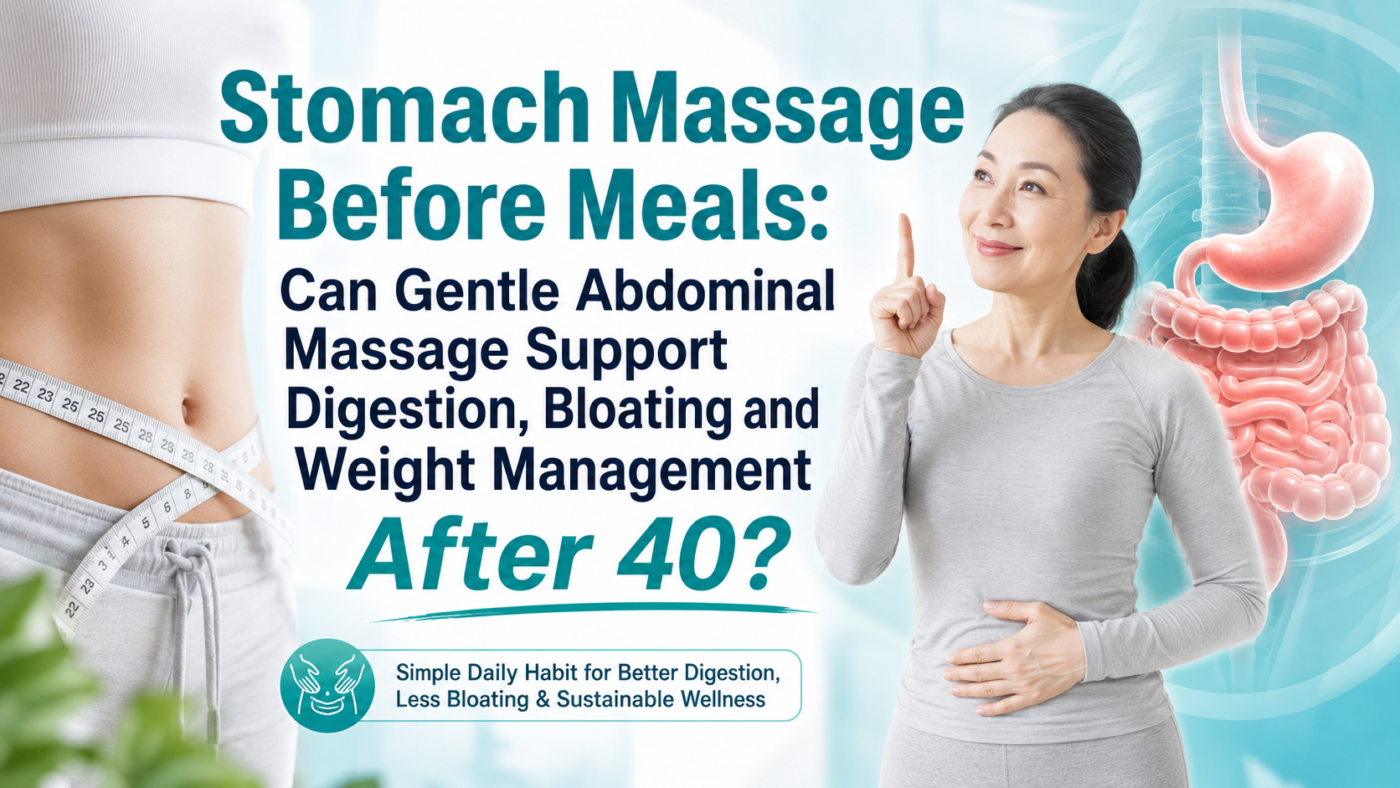
One traditional self-care approach is gentle abdominal massage before eating. It is not a shortcut for burning fat, nor can it “rejuvenate” the stomach overnight, but it may help some people relax abdominal tension, become more aware of their breathing and digestive sensations, and manage occasional feelings of fullness or bloating.
This guide explores a beginner-friendly stomach massage routine inspired by traditional Eastern bodywork while separating plausible benefits from exaggerated weight-loss claims.
Why Digestion Can Feel Different With Age
The digestive system does change over time.
Some people notice that large meals feel heavier, certain foods become more difficult to tolerate, constipation becomes more common, or bloating seems to appear more easily than it did in earlier decades.
Several factors may contribute, including changes in gastrointestinal motility, medications, dental health, activity level, hydration, dietary fiber intake and underlying medical conditions.
Protein digestion and utilization also deserve special attention as we age.
Maintaining adequate protein intake becomes increasingly important because adults gradually lose skeletal muscle unless they provide the body with sufficient nutrition and resistance-type activity.
This age-related decline in muscle mass is one reason maintaining metabolism and physical function becomes more challenging later in life.
However, it would be misleading to say that an “aging stomach” alone causes weight gain.
Body weight remains strongly influenced by total energy intake, physical activity, sleep, muscle mass, medications, hormonal factors and many other variables.
Can Poor Digestion Make Your Belly Look Larger?
Sometimes.
A larger-looking abdomen is not always caused by increased body fat.
Temporary abdominal distension may be influenced by:
Gas
Constipation
Large meals
Food intolerances
Fluid retention
Posture
Abdominal-wall relaxation
Changes in bowel motility
For this reason, improving digestive comfort may make the abdomen feel or look less distended even when body fat has not changed.
That distinction matters.
A massage that reduces temporary bloating should not be described as having “melted belly fat.”
What Abdominal Massage May Actually Do
Gentle abdominal massage has been studied most often in relation to constipation and gastrointestinal comfort rather than weight loss.
Mechanical stimulation of the abdominal wall may help some people become more aware of bowel movement, breathing and abdominal tension.
A relaxing massage may also reduce the tendency to brace the abdominal muscles throughout the day.
Possible benefits may include temporary improvements in:
Digestive comfort
Bowel regularity
Abdominal relaxation
Perceived bloating
Body awareness
Stress-related abdominal tension
These effects vary considerably between individuals.
There is currently no good evidence that abdominal massage substantially increases basal metabolic rate or directly causes meaningful fat loss.
Traditional Eastern Perspective
Traditional East Asian health systems have long used abdominal palpation, massage and acupressure as part of broader approaches to digestive wellbeing.
In these traditions, the abdomen is viewed as an important center of physical regulation.
Gentle pressure may be applied around the upper abdomen, rib margins and central abdominal area while breathing slowly.
Traditional explanations sometimes describe these techniques as improving the movement of qi or removing stagnation.
These ideas are part of traditional medical frameworks and should not automatically be interpreted as established modern physiological mechanisms.
Nevertheless, several practical elements of these traditions—gentle touch, slow breathing, relaxation and body awareness—can be incorporated into a modern wellness routine.
A Gentle Pre-Meal Stomach Massage Routine
If you want to experiment with abdominal massage, gentleness matters more than intensity.
There is no reason to force your fingers deeply into the abdomen.
The goal is relaxation, not pain.
Ideally, perform the routine when the stomach is relatively empty rather than immediately after a large meal.
1. Begin With Slow Breathing
Sit or stand comfortably.
Place your hands lightly over your abdomen.
Inhale slowly through the nose.
Allow your rib cage and abdomen to expand naturally.
Exhale without force.
Repeat several times.
Slow breathing can reduce unnecessary muscular tension before you begin the massage.
2. Warm the Upper Abdomen
Make a relaxed fist or keep your hand open.
Place it gently on the upper abdomen above the navel.
Apply mild pressure while breathing slowly.
Instead of digging deeply into the abdomen, make small vertical or circular movements.
Continue for approximately 20 to 30 seconds.
The sensation should feel comfortable.
Sharp or significant pain is a reason to stop.
3. Massage the Central Upper Abdomen
Move slightly higher toward the area beneath the sternum.
Use your fingertips rather than your knuckles if that feels more comfortable.
Press very lightly.
Take a slow breath in.
As you breathe out, make several gentle circular movements.
Avoid pressing directly and aggressively beneath the breastbone.
4. Explore the Area Beneath the Rib Cage
Place your hands along the lower edges of your ribs.
Use your fingertips to gently massage outward from the center.
Do not attempt to physically manipulate the stomach or other internal organs.
Instead, think of the movement as relaxing the muscles and connective tissues surrounding the rib cage.
Continue breathing slowly.
5. Gentle Rib-Cage Shaking
Place your hands on the sides of your lower ribs.
Without squeezing, create a subtle side-to-side movement.
Keep your shoulders relaxed.
This can help loosen trunk tension and encourage more comfortable breathing.
6. Massage the Waist and Side Body
Move your hands along the sides of your abdomen.
Use broad strokes rather than deep pressure.
Massage from the side of the rib cage toward the waist.
This is primarily a soft-tissue relaxation technique.
It will not selectively remove waist fat.
7. Finish With Warm Hands Over the Abdomen
Rub your palms together until they feel warm.
Rest them comfortably over the lower abdomen.
Take five slow breaths.
Notice whether the abdomen feels softer or whether your breathing feels easier.
Finish without aggressively pressing the digestive organs.
Should You Do the Massage Before Eating?
A short massage before eating may be more comfortable than doing deep abdominal massage immediately after a meal.
Around 10 to 20 minutes before eating is a practical option for people who enjoy the routine.
However, there is no scientifically established requirement that abdominal massage must be performed exactly 15 minutes before eating.
The timing is less important than performing the technique comfortably and consistently.
Why Slow Breathing Matters
Breathing is one of the most useful parts of this routine.
Many people unconsciously hold their breath when pressing on the abdomen.
That creates more muscular tension.
Instead:
Inhale gently.
Allow the abdomen to expand.
Exhale slowly.
Reduce pressure as needed.
Slow breathing may promote relaxation and make abdominal self-massage considerably more comfortable.
What About Acupressure Points?
Traditional Japanese and Chinese practices describe numerous abdominal and chest points used for digestive discomfort.
These points are sometimes called tsubo in Japanese practice.
Acupressure can be used as a gentle wellness technique, but pain should not be used as proof that you have found the “correct” point.
Pain can simply mean that the tissue is sensitive.
Never assume that strong pain indicates blocked energy, poor lymphatic drainage or a digestive disorder.
Use light pressure and stop if discomfort increases.
Can This Improve Constipation?
Possibly, particularly as part of a broader routine.
Abdominal massage has been studied as a supportive approach for constipation in some populations.
However, constipation is often influenced by several factors at once.
Useful strategies may also include:
Adequate fluid intake
Regular physical activity
Sufficient dietary fiber
Consistent meal timing
Appropriate toileting habits
Reviewing medications that may contribute to constipation
Persistent constipation, blood in the stool, unexplained weight loss or significant abdominal pain should be medically evaluated.
Can Stomach Massage Increase Metabolism?
This claim needs careful qualification.
Massage can increase local skin temperature and temporarily change local blood flow.
That does not mean it meaningfully increases whole-body metabolism.
There is currently no strong evidence that rubbing the stomach causes enough additional energy expenditure to produce significant fat loss.
For metabolic health after 40, the strategies with far stronger evidence include:
Maintaining muscle through resistance training
Walking regularly
Eating sufficient protein
Sleeping adequately
Managing total calorie intake
Reducing prolonged sedentary time
Improving cardiometabolic fitness
Abdominal massage can complement these habits, but it should not replace them.
The Muscle-Mass Connection After 40
One of the most important age-related changes affecting weight management is loss of skeletal muscle.
Muscle contributes to physical function and daily energy expenditure.
Without sufficient resistance exercise and dietary protein, muscle mass can gradually decline.
This is why a comprehensive weight-management plan after 40 should combine digestive comfort strategies with muscle-preserving habits.
Think of abdominal massage as a relaxation or digestive-comfort practice—not as the metabolic engine of your program.
What About Bloating?
This is where stomach massage may feel most immediately useful.
Bloating can fluctuate significantly throughout the day.
Changes in intestinal gas, stool volume, hydration, posture and abdominal-wall tension can make the waist temporarily expand.
Gentle massage and movement may reduce the sensation of abdominal tightness for some people.
If your waist appears slightly smaller afterward, the change is much more likely to involve temporary abdominal distension than fat loss.
When You Should Avoid Abdominal Massage
Avoid forceful abdominal massage if you have:
Unexplained or severe abdominal pain
Recent abdominal surgery
Active gastrointestinal bleeding
A known abdominal aneurysm
Acute inflammatory abdominal disease
A painful or unexplained abdominal mass
Significant nausea or vomiting
A hernia that becomes painful
Pregnancy unless the technique has been cleared by an appropriate clinician
You should also seek medical evaluation if abdominal bloating is persistent, progressively worsening or accompanied by fever, vomiting, blood in the stool or unexplained weight loss.
A Better Way to Think About This Routine
Instead of asking:
“Will this massage burn belly fat?”
A more useful question is:
“Can this routine help me relax my abdomen, breathe better and become more comfortable before meals?”
That is a much more realistic goal.
Traditional self-massage can still have value without needing exaggerated promises.
Combine the Massage With a Short Walk
For people concerned about metabolism and post-meal glucose control, walking is likely to produce substantially greater benefits than abdominal massage alone.
A useful routine could be:
Gentle abdominal massage before the meal.
Eat normally without rushing.
Then take a comfortable 10- to 20-minute walk afterward.
This combines relaxation before eating with light muscular activity after eating.
What Results Should You Expect?
After one session, you may notice:
A warmer abdomen
Reduced muscular tension
More comfortable breathing
Greater awareness of abdominal sensations
Temporary relief from mild bloating
Over several weeks, the biggest benefits will probably come from combining this routine with healthy eating, resistance exercise, walking, sufficient sleep and appropriate medical care when digestive symptoms persist.
Do not expect massage alone to dramatically increase metabolism or produce large amounts of fat loss.
Final Thoughts
The digestive system does change with age, but weight gain after 40 cannot be reduced to a single explanation such as an “aging stomach.”
Gentle stomach massage may nevertheless be a useful wellness practice.
It combines touch, breathing, relaxation and traditional bodywork in a routine that many people find soothing.
Used appropriately, it may support digestive comfort and help reduce temporary abdominal tension or bloating.
The strongest long-term strategy remains broader:
Protect your muscle.
Move regularly.
Eat well.
Sleep enough.
Manage stress.
And pay attention to persistent digestive symptoms rather than trying to massage them away.
A healthier relationship with the abdomen begins with understanding what the body can realistically change—and what it cannot.
Frequently Asked Questions
Can stomach massage help reduce belly fat?
There is no good evidence that stomach massage directly burns substantial abdominal fat. It may temporarily reduce bloating or muscular tension, making the abdomen feel less distended.
Is stomach massage good for digestion?
Some people find gentle abdominal massage relaxing and helpful for digestive comfort or constipation. Results vary, and persistent digestive symptoms should be evaluated medically.
Should I massage my stomach before or after eating?
A gentle routine before eating may feel more comfortable. Avoid forceful abdominal massage immediately after a large meal.
Does stomach massage increase metabolism?
Massage may temporarily increase local circulation, but there is little evidence that it meaningfully increases whole-body metabolic rate.
Is painful abdominal acupressure more effective?
No. Strong pain is not proof that an acupressure point is working. Reduce pressure or stop if the massage is painful.
Can I do stomach massage every day?
A brief, gentle routine can generally be practiced regularly by healthy adults if it feels comfortable and there are no medical reasons to avoid abdominal massage.
Medical Disclaimer
This article is for educational and general wellness purposes only and is not medical advice. Abdominal pain, persistent bloating, constipation, digestive changes or unexplained weight changes can have many causes. Consult a qualified healthcare professional for persistent, severe or unexplained symptoms.
This article is for general education and does not replace individualized care from a qualified health professional. Seek appropriate advice for persistent, severe, or concerning symptoms.
Read the full medical disclaimer