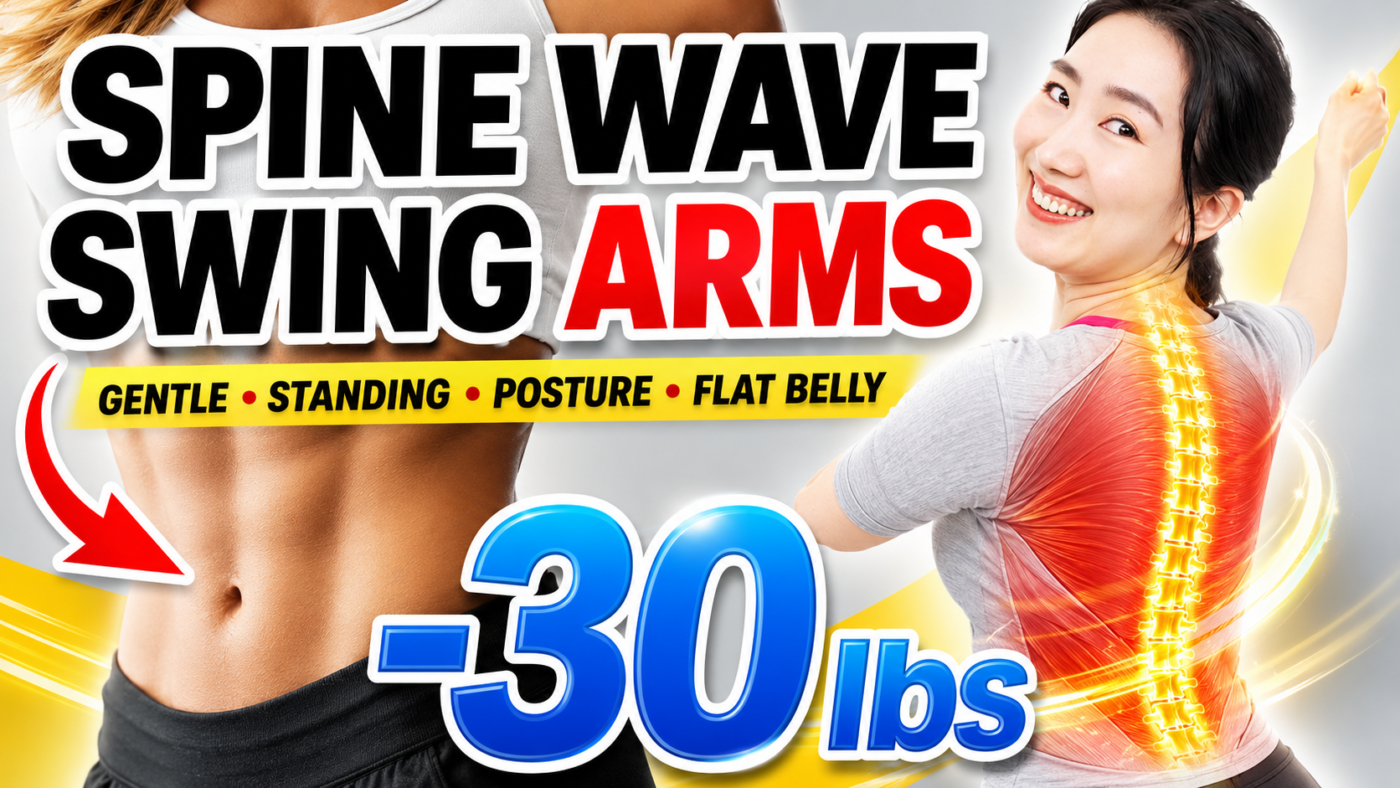
A stiff spine can make everyday movement feel harder than it needs to be. When the upper back, rib cage, shoulders and hips stop moving freely, people often compensate by rounding the back, pushing the abdomen forward, tightening the shoulders or moving less throughout the day. Over time, those patterns can contribute to stiffness, reduced activity and the appearance of a more prominent belly. The solution is not a magical “fat-burning spine,” but improving mobility can make movement more comfortable and help you stay active—an important part of long-term weight management and healthy aging.
The spine wave exercise is a gentle standing routine that combines spinal flexion and extension, rib-cage rotation, relaxed arm swings and controlled torso movement. It requires no floor exercises and can be adapted for people over 40 who want to improve mobility without high-impact training.
What Is a Spine Wave?
A spine wave is a controlled sequence in which different sections of the torso move smoothly rather than remaining rigid. Imagine gently rounding your upper back, opening your chest, rotating your rib cage and allowing the shoulders and arms to follow naturally.
The goal is not to force the vertebrae into extreme positions. Instead, the movement encourages the thoracic spine, rib cage, shoulders and pelvis to participate together.
This matters because many adults spend hours sitting, driving or looking at screens. Those habits can reduce thoracic mobility and encourage a forward-head, rounded-shoulder posture. Gentle multidirectional movement can help counter that stiffness.
Why Your Spine and Belly Appearance Are Connected
A protruding abdomen is influenced by many factors, including body fat, abdominal muscle strength, digestion, posture and pelvic position. Spinal stiffness by itself does not create belly fat.
However, posture can change how the abdomen looks.
If the rib cage, pelvis and spine are poorly aligned, the abdomen may project forward even when body weight has not changed significantly. Improving posture and core control may therefore make the midsection look more supported.
For actual fat loss, energy balance remains essential. Regular movement, resistance exercise, cardiovascular activity, adequate sleep and an appropriate diet matter far more than any single mobility exercise.
Spine Wave Exercise for Better Mobility After 40
Begin standing with your feet approximately shoulder-width apart. Keep your knees soft rather than locked.
Gently lengthen through the top of your head. Avoid pushing your belly forward or exaggerating the curve in your lower back.
Slowly bring your chest forward while allowing the shoulder blades to move slightly toward each other. Then reverse the motion by gently rounding your upper back and allowing the shoulder blades to spread.
Think:
Open → Round → Open → Round
Move slowly enough that you can feel the rib cage and upper spine participating.
Do not throw your head backward or force the lower back into a large arch.
Continue for approximately 30–60 seconds while breathing normally.
Add Rib-Cage Rotation
Place your hands lightly around the lower ribs.
Rotate your rib cage gently to the right and then to the left while keeping your shoulders relaxed.
Rather than twisting aggressively from the lower back, imagine the ribs initiating the movement.
Let your hips and feet respond naturally if necessary.
This variation encourages thoracic rotation, which is important for reaching, walking and many everyday activities.
Add Relaxed Arm Swings
Allow both arms to hang loosely.
Rotate your torso gently from side to side and let your arms follow the movement rather than deliberately throwing them.
Your hands, wrists and shoulders should remain relaxed.
The movement should feel fluid rather than forceful.
Arm-swing exercises can increase overall physical activity, warm the shoulder region and provide a gentle cardiovascular stimulus when performed continuously.
One-Arm Spine Wave
Once the basic movement feels comfortable, try allowing one arm to swing while the opposite arm remains relatively relaxed.
Alternate sides.
This asymmetrical pattern requires more trunk coordination and encourages the rib cage and shoulder blade to move independently.
Keep your abdominal muscles lightly engaged so that the movement remains controlled.
Shoulder-Blade Mobility Matters
The shoulder blades move across the rib cage whenever you reach, pull, rotate or raise your arms.
When the upper back becomes stiff, shoulder-blade movement may also become restricted. This can make ordinary activities feel uncomfortable and may encourage compensatory movement through the neck or lower back.
Regular mobility work that combines the thoracic spine and shoulders may improve movement quality.
However, feeling warmth around the shoulder blades does not mean that fat in that area is being directly burned. Spot reduction is not possible. Your body determines where stored fat is used.
What About Brown Fat?
Brown adipose tissue is metabolically active tissue involved in heat production. Research has shown that adults retain some brown fat, particularly around the neck and upper torso.
However, the claim that swinging your arms or moving your shoulder blades directly “activates brown fat” enough to produce meaningful weight loss is not well established.
A more useful reason to perform these movements is simple: they increase movement, improve mobility and may make it easier to participate in regular exercise.
Those benefits are far more relevant to long-term health.
A Simple 10-Minute Spine Mobility Routine
You can turn these movements into a short daily sequence:
1. Standing posture reset — 1 minute
Stand tall, soften your knees and gently align your rib cage over your pelvis.
2. Spine waves — 2 minutes
Alternate between opening the chest and gently rounding the upper back.
3. Rib-cage rotations — 2 minutes
Rotate slowly from side to side without forcing the lower back.
4. Relaxed arm swings — 2 minutes
Allow the torso to initiate the movement.
5. Single-arm swings — 1 minute
Alternate sides.
6. Gentle rocking and breathing — 2 minutes
Reduce the movement gradually and finish with relaxed breathing.
You do not need to perform every movement perfectly. Consistency matters more than range of motion.
Can This Routine Help With Weight Loss?
Not by itself.
A mobility routine burns some calories, but its greater value may be indirect. When your body feels less stiff, walking, strength training and other exercise may become easier and more enjoyable.
That can help you accumulate more daily movement.
For sustainable fat loss, combine mobility work with:
- regular walking or other aerobic activity
- resistance training at least a few times per week
- adequate protein and nutritious whole foods
- calorie intake appropriate for your goals
- sufficient sleep
- consistent daily activity
Think of spine mobility as one useful part of a larger health strategy rather than a shortcut.
Why Mobility Becomes More Important After 40
Mobility does not automatically disappear after 40, but many people become progressively less active as work, family responsibilities and sedentary habits accumulate.
Muscles can become weaker and joints may feel less comfortable when they are rarely moved through their available range.
Regular mobility training helps preserve the ability to bend, rotate, reach and walk comfortably.
Strength training remains equally important because muscles respond to training throughout adulthood.
How Hard Should the Exercise Feel?
This routine should feel comfortable.
A mild stretching sensation is acceptable. Sharp pain, numbness, dizziness or radiating pain is not.
Move slowly and reduce the range of motion if you feel discomfort.
People with significant spinal conditions, recent surgery, osteoporosis, balance problems or persistent back pain should discuss new exercise routines with an appropriate healthcare professional.
The Bottom Line
A spine wave is not a miracle belly-fat exercise, and there is no evidence that one specific movement can melt fat around the waist.
What it can do is more practical.
Gentle spine waves, rib-cage rotation and arm swings can encourage movement through areas that often become stiff with age and prolonged sitting. Improving mobility may support better posture, easier movement and greater confidence during exercise.
And that can make staying active much easier.
For adults over 40, preserving the ability to move comfortably may ultimately be more valuable than chasing any single “fat-burning” exercise.
FAQ
Can spine wave exercises reduce belly fat?
Not directly. No mobility exercise can selectively burn abdominal fat. Spine waves may improve posture and mobility and help make regular physical activity easier.
Are spine waves good for people over 40?
They can be a useful low-impact mobility exercise for many adults, provided the movement is comfortable and performed without forcing the spine.
How often can I practice spine waves?
A gentle routine can usually be practiced regularly, even daily, if it does not cause pain or unusual symptoms.
Can shoulder-blade exercises activate brown fat?
Brown fat exists around the upper torso, but evidence does not show that shoulder-blade exercises alone activate enough brown fat to cause meaningful weight loss.
Should I do this exercise if I have back pain?
Mild mobility work may be appropriate for some people, but persistent, severe or radiating back pain should be assessed by a qualified healthcare professional before starting a new routine.
Medical Disclaimer
This article is for educational purposes only and is not medical advice. Exercise should be adapted to individual mobility, health conditions and comfort levels. Stop if you experience sharp pain, numbness, dizziness or worsening symptoms, and seek professional medical guidance when appropriate.
This article is for general education and does not replace individualized care from a qualified health professional. Seek appropriate advice for persistent, severe, or concerning symptoms.
Read the full medical disclaimer