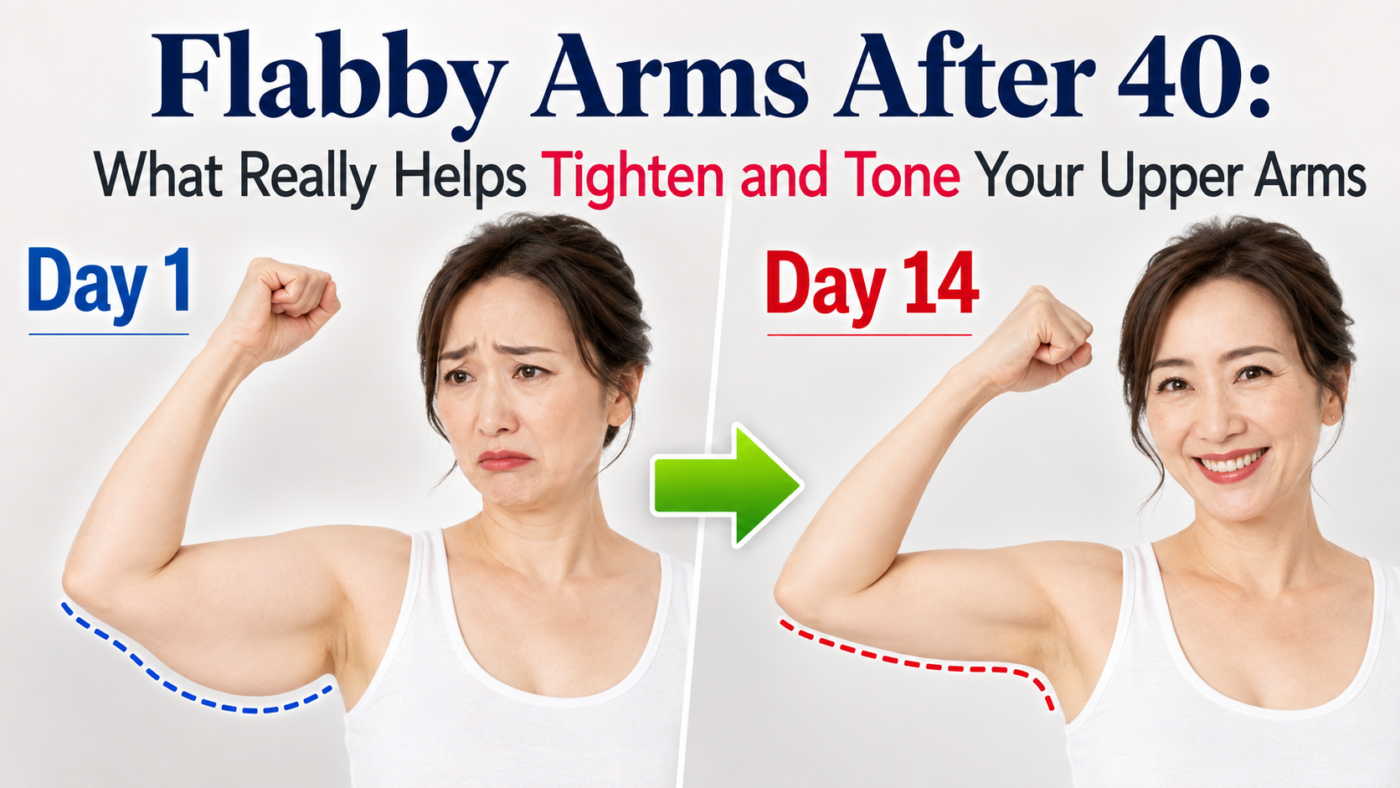
Many people notice that their upper arms start to look softer, looser, or less defined with age.
This can happen even if body weight has not changed dramatically.
You may lose weight and still feel that your arms look soft.
You may do cardio and notice your waist shrinking while your upper arms seem stubborn.
You may even feel heavier than you were years ago yet think your arms look more toned now.
So what is actually happening?
The answer is more complicated than simply “too much fat.”
Upper-arm appearance is influenced by several factors at the same time:
- Body fat
- Muscle mass
- Skin elasticity
- Collagen changes
- Genetics
- Age
- Weight history
- Activity level
That is why the most effective approach is not endless calorie cutting or aggressive massage.
A better strategy combines strength training, regular movement, adequate nutrition, realistic fat-loss goals when appropriate, and gentle mobility work.
Massage and stretching can be useful—but they should be understood correctly.
Why Arms Often Look Softer After 40
As we age, body composition gradually changes.
Muscle mass tends to decline when it is not actively maintained through resistance training.
Skin also becomes thinner and less elastic over time.
Collagen and elastin production gradually decrease, and years of sun exposure can accelerate these changes.
For some people, fat distribution also changes with age.
This means an upper arm can look less firm even without a major increase in body weight.
The issue is not always simply “too much fat.”
Sometimes it is a combination of:
less muscle + softer skin + normal body fat
That combination can create the appearance people often call “bat wings” or “flabby arms.”
Can Weight Loss Alone Fix Flabby Arms?
Sometimes—but not always.
If excess body fat is a major contributor, overall fat loss can make the arms smaller.
However, losing weight does not guarantee that the arms will become firm.
If muscle mass is low, the arms may still look soft.
Rapid or substantial weight loss can also make loose skin more noticeable in some people.
That is why resistance training is so important.
Strength training gives the upper arm more muscular structure underneath the skin.
It does not directly tighten loose skin, but it can improve overall shape and definition.
Can You Spot-Reduce Arm Fat?
No.
You cannot force your body to burn fat from one exact area by exercising or massaging that area.
Fat loss occurs systemically.
Your genetics and hormones influence where fat is stored and where it tends to disappear first.
Doing triceps exercises can strengthen the triceps.
It cannot selectively burn the fat directly above the triceps.
The same rule applies to:
- Thighs
- Belly
- Hips
- Back
- Arms
Spot reduction remains one of the most persistent fitness myths.
What Is Fascia?
Fascia is connective tissue that surrounds and connects muscles, organs, nerves, blood vessels and other structures.
It plays an important role in movement and force transmission.
It is not simply a thin sheet sitting underneath the skin.
The fascial system is complex and continuous throughout the body.
Researchers have studied fascial mechanics, stiffness, hydration, sensory function and cellular behavior.
But this does not mean that upper-arm sagging is primarily caused by “distorted fascia.”
There is no good evidence that twisting or stiffness of fascia alone is the main reason someone develops soft upper arms.
Can Fascia Become Stiff?
Connective tissue properties can change with inactivity, injury, inflammation, aging and mechanical loading.
However, the viral idea that fascia becomes “twisted,” gets stuck in the wrong place, and can then be manually pushed back into shape is an oversimplification.
Stretching, movement and massage can change how a region feels.
They may temporarily reduce perceived stiffness.
They may also influence range of motion.
But that is different from permanently reshaping the arm through fascia manipulation.
Can Massage Make Your Arms Thinner?
Massage can temporarily change the way an arm feels or looks.
For example, massage may:
- Increase local warmth
- Reduce the sensation of tightness
- Temporarily influence fluid distribution
- Make muscles feel more relaxed
- Improve comfort before stretching
But massage does not remove fat cells.
It does not permanently shrink arm circumference.
Any immediate reduction in measurement after massage is more likely related to posture, muscle tension, fluid movement, measurement variation, or compression—not fat loss.
Does Pain Mean Your Fascia Is “Blocked”?
No.
Pain during massage does not prove that fascia is twisted or that lymph flow is blocked.
An area may feel tender because of:
- Muscle soreness
- Pressure sensitivity
- Irritation
- Bruising
- Nerve sensitivity
- Previous injury
- Inflammation
If pressing hard hurts, that is a reason to reduce pressure.
Pain is not a sign that the technique is working better.
What About Lymphatic Drainage?
The lymphatic system is responsible for moving fluid and supporting immune function.
The armpit contains important lymph nodes.
But pressing deeply into the armpit is not necessary for normal lymph circulation in a healthy person.
Your lymphatic system already relies heavily on:
- Muscle contraction
- Breathing
- Walking
- General movement
People with medical lymphedema may sometimes receive specialized manual lymphatic drainage from trained professionals.
That is very different from aggressively pushing into the armpit at home.
Should You Press Deep Into the Armpit?
No.
The armpit contains:
- Lymph nodes
- Nerves
- Blood vessels
- Soft tissues
Aggressive deep pressure is unnecessary.
Gentle surrounding massage is safer.
Avoid strong pressure if you have:
- Swollen lymph nodes
- Recent surgery
- Breast surgery
- Active infection
- Unexplained lumps
- Persistent swelling
- Pain
Seek medical evaluation for unexplained lumps or ongoing swelling rather than trying to massage them away.
What Actually Makes Arms Look More Toned?
The biggest factors are:
1. Building Muscle
Muscle gives the arm shape.
Important muscles include:
- Triceps
- Biceps
- Deltoids
- Rotator cuff muscles
- Upper back muscles
The triceps are particularly important because they make up a large portion of the upper arm.
2. Reducing Overall Body Fat When Appropriate
If overall body fat is high, fat loss may reduce arm circumference.
But it cannot be targeted only to the arms.
3. Maintaining Skin Health
Skin elasticity depends on age, genetics, sun exposure, smoking, nutrition, hydration and other factors.
4. Staying Active
Regular movement helps preserve muscle function and mobility.
Why Shoulder Mobility Matters
The shoulder is one of the most mobile joints in the body.
If shoulder movement becomes limited, everyday tasks such as:
- Reaching overhead
- Putting on a jacket
- Fastening clothing
- Washing hair
can become difficult.
Improving shoulder mobility will not directly remove arm fat.
But better shoulder movement can make upper-body exercise easier and more comfortable.
That makes mobility training a useful part of an arm-toning program.
A Gentle Upper-Arm Mobility and Strength Routine
The original video combines mobility, massage and muscle activation.
Here is a safer, more evidence-based version.
Step 1: Wrist Rotation
Extend your arms comfortably in front of you.
Slowly rotate the wrists outward and inward.
Keep the shoulders relaxed.
Perform 10–15 controlled repetitions.
This is mainly a warm-up.
Step 2: Shoulder Circles
Place your fingertips lightly on your shoulders.
Bring the elbows forward.
Then move them upward, backward and down in a slow circle.
Perform 8–10 repetitions.
Reverse direction.
Do not force the range.
Step 3: Triceps Extension
Raise one arm overhead.
Bend the elbow so the hand moves behind the head.
Use the opposite hand to support the elbow gently.
Hold for 20–30 seconds.
Repeat on the other side.
This can stretch the triceps and shoulder region.
Step 4: Shoulder Tap Massage
Instead of hitting the shoulders forcefully, use light tapping with relaxed fingertips or the side of the hand.
Keep it comfortable.
The goal is warmth and relaxation.
Step 5: Side-Body Stretch
Sit or stand tall.
Raise one arm overhead.
Lean gently toward the opposite side.
You may feel a stretch through:
- Latissimus dorsi
- Triceps
- Side of the torso
Hold for 20–30 seconds.
Repeat on the other side.
This does not “tighten fascia,” but it can improve comfort and mobility.
Step 6: Gentle Upper-Arm Massage
Use one hand to gently massage the back and side of the opposite upper arm.
Avoid hard pinching.
Use slow circular motions.
Continue for approximately 30 seconds.
Switch sides.
Think relaxation—not fat removal.
Step 7: Wall Triceps Press
Stand facing a wall.
Place both hands on the wall at shoulder height.
Keep elbows relatively close to your body.
Slowly bend the elbows and bring your body toward the wall.
Push back.
Repeat 8–15 times.
This is a beginner-friendly triceps exercise.
Step 8: Seated Overhead Press
Use light dumbbells, water bottles, or no weight at first.
Sit upright.
Hold your hands beside your shoulders.
Press upward.
Lower slowly.
Perform 8–12 repetitions.
This strengthens the shoulders and triceps.
Step 9: Triceps Kickback
Lean forward slightly while keeping the spine neutral.
Keep the upper arm close to the torso.
Bend the elbow.
Straighten the arm backward.
Squeeze gently at the top.
Return slowly.
Perform 10–15 repetitions per side.
Step 10: Arm Raises
Stand or sit tall.
Raise the arms forward or slightly to the side.
Stop around shoulder height if comfortable.
Lower slowly.
Repeat 8–12 times.
This trains the shoulders.
Step 11: Elbow Press
Place your palms together in front of your chest.
Press them gently together.
Hold for several seconds.
Release.
Repeat 8–12 times.
This provides light activation around the chest and shoulders.
Step 12: Cool-Down Stretch
Raise one arm.
Reach gently overhead.
Breathe slowly.
Repeat on the other side.
Finish with relaxed shoulder circles.
How Often Should You Train Your Arms?
For most adults, upper-body strengthening two or three times per week is a practical starting point.
You do not need to train your arms every day.
Muscles benefit from recovery.
A simple weekly structure might look like:
Monday: Upper-body strength
Wednesday: Full-body strength
Friday: Upper-body or full-body strength
Mobility work can be done more frequently if it feels comfortable.
Do You Need Heavy Weights?
No.
Beginners can make progress using:
- Resistance bands
- Light dumbbells
- Water bottles
- Wall exercises
- Body weight
The key is gradually increasing challenge.
If 15 repetitions become extremely easy, slightly increase resistance.
Muscle adapts when it is given progressively greater demands.
Will Triceps Exercises Make Women’s Arms Bulky?
Usually not.
Building large amounts of muscle takes considerable time, progressive training and sufficient nutrition.
Most women who begin moderate resistance training see improved firmness, strength and shape—not suddenly oversized arms.
Strength training is one of the best tools for maintaining muscle with age.
What About Loose Skin?
Exercise cannot completely remove excess loose skin.
But stronger muscles underneath the skin can improve overall appearance.
Skin may also change gradually after weight loss, although the degree varies widely.
Factors include:
- Age
- Genetics
- Amount of weight lost
- Speed of weight loss
- Sun exposure
- Smoking
- Skin elasticity
Severe excess skin may require medical or surgical treatment if someone wants permanent removal.
Can Collagen Supplements Tighten Arms?
Evidence for collagen supplements is still evolving.
Some studies suggest modest benefits for skin hydration or elasticity in certain people.
But collagen supplements should not be expected to dramatically tighten loose upper-arm skin.
They are not a substitute for:
- Strength training
- Adequate protein
- Sunscreen
- Healthy nutrition
Protein Matters More Than Many People Realize
Building or preserving muscle requires sufficient dietary protein.
Older adults may be especially vulnerable to muscle loss when protein intake is inadequate.
Good protein sources include:
- Eggs
- Fish
- Dairy
- Lean meat
- Soy
- Beans
- Lentils
- Tofu
- Greek yogurt
Protein needs vary by body size, age, activity level and medical history.
Can Cardio Help?
Yes.
Cardio helps increase total energy expenditure and supports cardiovascular health.
Examples include:
- Walking
- Cycling
- Swimming
- Dancing
- Rowing
But cardio alone may not preserve muscle as effectively as resistance training.
The strongest body-composition strategy combines:
cardio + strength training + nutrition
How Long Until Arms Look Different?
Meaningful changes take time.
You may feel stronger within a few weeks.
Visible muscle definition often takes longer.
Fat-loss changes depend on overall energy balance.
Skin changes are even slower.
A realistic timeframe for noticeable body-composition improvement is usually measured in months rather than days.
Be cautious with dramatic one-session before-and-after comparisons.
What If Your Arm Circumference Changes Immediately?
A tape measurement can change slightly because of:
- Tape position
- Muscle contraction
- Posture
- Hydration
- Swelling
- Compression
A change immediately after a massage does not mean fat disappeared.
For tracking progress, measure under similar conditions every few weeks.
A Better Goal Than “Get Rid of Flabby Arms”
Instead of:
“How can I eliminate arm fat quickly?”
Try:
“How can I build stronger, more functional arms over the next three months?”
That shift creates healthier expectations.
Better goals include:
- Do 10 controlled wall push-ups
- Increase triceps strength
- Improve shoulder mobility
- Lift groceries comfortably
- Maintain muscle as you age
Appearance often improves as a side effect of better function.
Women Over 40 Should Prioritize Muscle
Strength becomes increasingly important with age.
Resistance training supports:
- Muscle mass
- Bone health
- Joint function
- Balance
- Physical independence
- Metabolic health
This makes strength training particularly valuable during midlife and later adulthood.
The goal should not be becoming smaller at all costs.
The goal should be becoming stronger.
The Bottom Line
Flabby arms after 40 are not caused by one single problem.
They can reflect a combination of:
- Body fat
- Reduced muscle mass
- Skin aging
- Genetics
- Previous weight changes
Fascia plays an important role in the body, but there is no solid evidence that massaging fascia alone can permanently slim or reshape the upper arms.
Gentle massage can help you feel more relaxed.
Stretching can improve mobility.
Strength training can build the muscle that gives the arm a firmer appearance.
Overall fat loss can reduce arm size when excess fat is present.
The most effective plan combines all of these realistic tools rather than relying on one miracle technique.
You do not need painful massage.
You do not need hundreds of repetitions.
You do not need to “break up” fascia.
You need consistent movement, strength, nutrition and patience.
That is what changes arms over time.
Frequently Asked Questions
Can massage get rid of flabby arms?
No. Massage may temporarily reduce tension or puffiness, but it cannot permanently remove arm fat or tighten loose skin.
Can fascia massage slim my arms?
There is no strong evidence that fascia massage permanently reduces arm circumference.
Does pain during arm massage mean lymph is blocked?
No. Pain does not prove lymphatic blockage or fascia distortion.
Can triceps exercises reduce arm fat?
They strengthen the triceps but cannot selectively burn fat from the upper arms.
What is the best exercise for flabby arms?
There is no single best exercise. A combination of triceps, shoulder, back and full-body resistance training works best.
Can women over 40 tone their arms?
Yes. Adults can build strength and muscle at many ages with progressive resistance training and adequate nutrition.
How often should I train my arms?
Two or three strength sessions per week is a practical starting point for many adults.
Will lifting weights make my arms bulky?
Moderate resistance training is unlikely to suddenly create very large arms. Most beginners develop improved firmness and strength.
Can loose upper-arm skin tighten naturally?
Some mild improvement may occur over time, especially after gradual weight loss, but significant excess skin may not fully tighten without medical treatment.
Does stretching burn arm fat?
No. Stretching improves mobility but does not meaningfully burn localized arm fat.
Medical Disclaimer:
This article is for educational and informational purposes only and is not medical advice. Stop any exercise or massage that causes sharp pain, numbness, persistent swelling or significant discomfort. Seek medical evaluation for unexplained lumps, swelling, weakness, or persistent arm or shoulder pain.
References
- American College of Sports Medicine. Resistance training and healthy aging guidance.
- World Health Organization. Physical activity recommendations for adults.
- National Institute on Aging. Strength and resistance exercise guidance for older adults.
- Research reviews on age-related sarcopenia, muscle mass and resistance training.
- Research literature on fascial anatomy, connective tissue and manual therapy.
- Research on body composition, spot reduction and resistance training.
This article is for general education and does not replace individualized care from a qualified health professional. Seek appropriate advice for persistent, severe, or concerning symptoms.
Read the full medical disclaimer