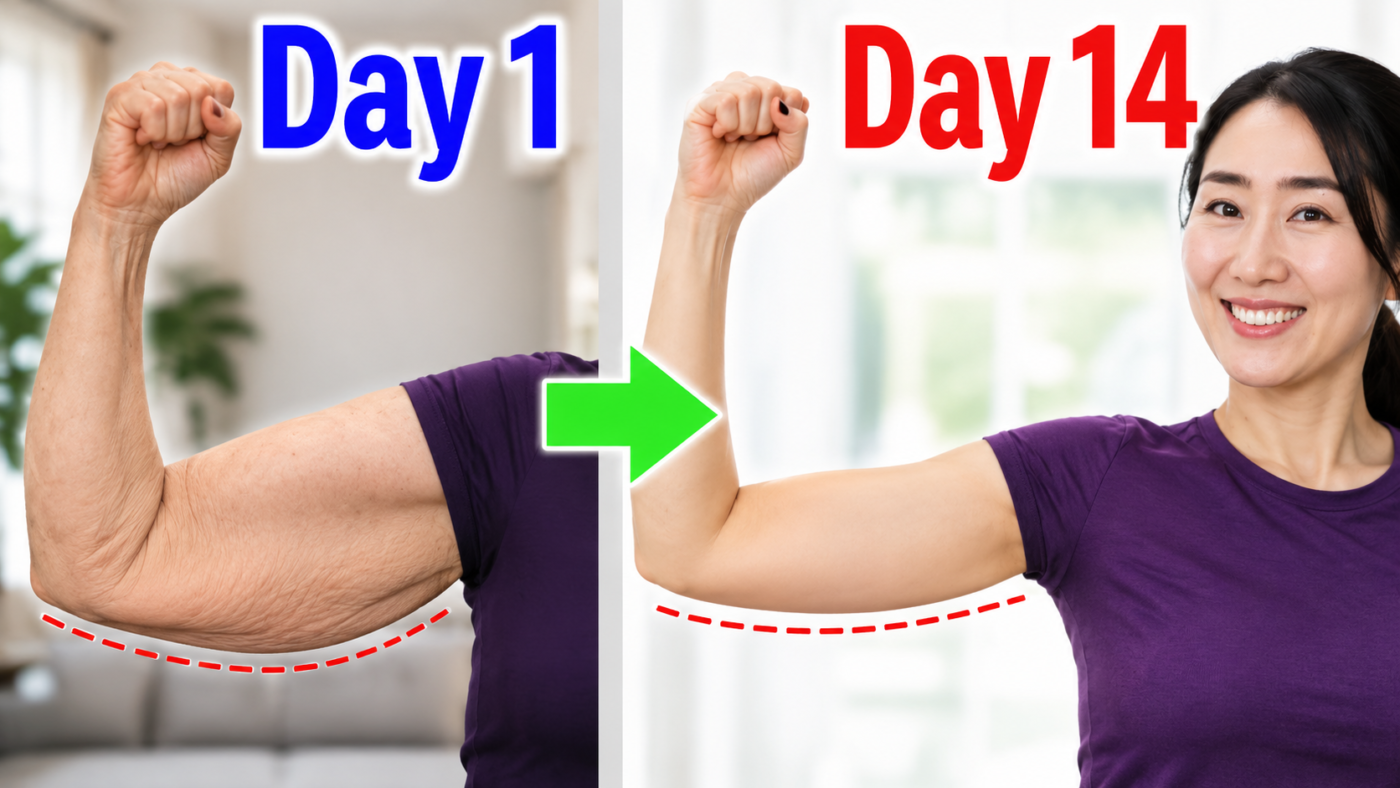
If you want to tone your arms after 40, the most effective approach combines strength training, mobility and consistent healthy habits.Upper arms often change with age. Skin may feel less firm, muscle definition may decrease and the familiar “arm jiggle” can become more noticeable.
That does not mean your arms are “falling apart,” and it does not mean you need extreme workouts or painful massage.
A more useful approach is to understand what actually changes after 40 and what exercise can realistically improve.
A combination of upper-arm strengthening, shoulder mobility, regular movement and gentle massage can help your arms feel stronger, move better and look more defined over time.
What it cannot do is instantly crush fat cells, remove arm fat from one specific area or permanently tighten loose skin in a single session.
The goal should be stronger, healthier arms—not chasing unrealistic promises.
Why Arms Can Look Softer With Age
Several factors can change the appearance of the upper arms over time.
One of the most important is loss of muscle mass.
Without regular resistance training, adults can gradually lose skeletal muscle as they age. This process contributes to reduced strength and can make the arms appear less firm.
Skin also changes.
Collagen and elastin decline with age, while sun exposure, genetics, hormonal changes and weight fluctuations can influence skin laxity.
Body-fat distribution can change as well.
Together, these changes may make the upper arms appear softer even when your overall body weight has not changed dramatically.
Is “Arm Jiggle” Just Fat?
No.
Upper-arm movement can reflect several things:
- Subcutaneous body fat
- Skin laxity
- Reduced muscle mass
- Genetics
- Age-related tissue changes
- Previous weight gain or loss
The triceps muscle on the back of the upper arm is particularly relevant because it contributes significantly to the shape of this region.
Strengthening the triceps can improve muscle tone underneath the skin, but it cannot completely eliminate loose skin or selectively remove fat.
You Cannot Spot-Reduce Arm Fat
This is one of the most important myths to correct.
Doing arm exercises does not force your body to burn fat specifically from the upper arms.
Fat loss occurs systemically.
Your genetics largely influence where fat comes off first and where it remains longest.
If reducing overall body fat is appropriate for you, the most effective approach involves a combination of nutrition, regular physical activity, resistance training, adequate sleep and long-term consistency.
Arm exercises can improve the muscle beneath the fat.
That can still make an important visual difference.
How to Tone Your Arms After 40 Safely
After 40, maintaining muscle becomes increasingly important for strength, metabolism, bone health and physical independence.
Resistance exercises create a stimulus that tells the body to maintain or build muscle.
For the upper arms and shoulders, useful movements include:
- Triceps extensions
- Rows
- Push-ups
- Chest presses
- Shoulder presses
- Biceps curls
- Lateral raises
You do not need to perform all of them in one session.
A few well-chosen exercises performed consistently are far more useful than a long routine performed once.
Start With Shoulder Mobility
Before strengthening the arms, it can help to gently warm the shoulders.
Stand or sit tall.
Extend both arms out to the sides.
Slowly rotate your palms and thumbs upward and downward within a comfortable range.
Do not force the shoulders.
Perform approximately 10 controlled repetitions.
This introduces movement through the shoulder joints and forearms while helping you become aware of stiffness.
Shoulder Circles
Place your fingertips lightly on your shoulders.
Bring your elbows forward.
Then circle them upward, outward and backward.
Perform 8 to 10 slow repetitions.
Reverse the direction.
Keep your neck relaxed.
Shoulder circles do not “reset circulation,” but they are a simple mobility exercise that may reduce stiffness before strengthening work.
Triceps Extension Without Weights
The triceps are located along the back of the upper arm.
To practice activating them without equipment, stand tall with your arms behind you.
Straighten your elbows and gently extend your arms backward.
Pause briefly.
Return.
Repeat 10 to 15 times.
Keep the shoulders down rather than shrugging.
You should feel muscular effort through the back of the upper arms.
If you have resistance bands or light dumbbells, you can progress to more challenging triceps exercises later.
Overhead Triceps Stretch
Raise one arm overhead.
Bend the elbow so your hand moves behind your head.
Use the opposite hand to gently support the elbow.
You should feel a stretch through the back of the upper arm.
Hold for 15 to 30 seconds.
Repeat on the other side.
Do not aggressively pull.
Stretching improves range of motion but does not directly “lock in” a new arm shape.
Add Arm Circles
Extend your arms out to the sides.
Make small circles.
Perform approximately 20 seconds forward.
Then reverse.
Arm circles create low-level muscular endurance through the shoulders and upper arms.
They can feel surprisingly challenging when performed continuously, but they are not a substitute for progressive resistance training if your goal is meaningful muscle development.
Try Wall Push-Ups
Stand facing a wall.
Place your hands against it at approximately chest height.
Walk your feet slightly backward.
Bend your elbows and bring your chest toward the wall.
Push back to the starting position.
Perform 8 to 15 repetitions.
Wall push-ups train the chest, shoulders and triceps while being more accessible than floor push-ups.
As you become stronger, you can progress to a countertop, bench or eventually the floor.
Triceps-Focused Push-Up Variation
For more triceps involvement, keep your elbows somewhat closer to the body during a supported push-up.
Do not force them completely against your ribs.
Lower yourself with control.
Push back up.
Start with a wall or elevated surface.
Strength development comes from gradually increasing resistance—not from chasing a burning sensation.
What About Massage?
Massage can feel pleasant after exercise.
Gentle rubbing, kneading or stroking of the upper arms may temporarily increase skin warmth and reduce the sensation of muscular tension.
It may also help you become more aware of areas that feel tight.
But massage does not crush fat cells.
It cannot selectively remove upper-arm fat.
It also does not permanently tighten loose skin.
Those claims should be avoided.
Is Pinching the Skin Helpful?
Aggressively pinching the skin is unnecessary.
Some videos claim that pinching stimulates “skin renewal” or directly fixes sagging tissue.
Evidence for that kind of dramatic effect is lacking.
If you enjoy light skin massage, use gentle pressure.
Repeated bruising or pain is not a sign that the technique is working.
Skin does not need to be hurt to become healthier.
What About Lymphatic Drainage?
The lymphatic system helps regulate fluid balance and immune function.
The underarm region does contain important lymph nodes.
However, this does not mean most people have “blocked lymph” that needs to be aggressively massaged.
True lymphatic drainage techniques are specialized and use light, controlled pressure.
Deep pressing in the armpit is not automatically better.
If you have a history of lymph node removal, cancer treatment, lymphedema, unexplained swelling or infection, do not perform aggressive underarm massage without professional guidance.
Gentle Upper-Arm Massage
If you want to include massage, apply a small amount of lotion or oil if needed.
Use the palm of your hand to make slow strokes along the upper arm.
Keep pressure comfortable.
Massage for approximately 30 seconds per side.
Avoid bruising, hard squeezing or deep pressure over painful areas.
The purpose is relaxation, not fat destruction.
Can Massage Improve Circulation?
Massage can temporarily increase local skin blood flow.
That may make the area feel warmer.
But this is different from permanently improving fat loss or skin tightening.
Temporary circulation changes are normal and do not indicate that tissue is being “detoxified.”
What About the Armpit Area?
The region where the upper arm meets the torso can feel tight, especially if the chest, shoulder or latissimus muscles are stiff.
Gentle movement may help.
Raise one arm overhead.
Lean slightly away from that side.
You may feel a stretch extending from the upper arm into the side of the torso.
Breathe normally.
Avoid aggressively pressing deep into the armpit itself.
A Simple 10-Minute Arm Routine
This simple routine can help you tone your arms after 40 while improving upper-body strength and mobility.Try this practical sequence:
1. Arm rotations — 60 seconds
Extend your arms and gently rotate through a comfortable range.
2. Shoulder circles — 60 seconds
Perform both directions.
3. Arm circles — 60 seconds
Alternate directions.
4. Wall push-ups — 2 sets of 8 to 15 repetitions
Move with control.
5. Standing triceps extensions — 2 sets of 10 to 15 repetitions
Focus on the back of the upper arms.
6. Overhead triceps stretch — 30 seconds per side
Keep it gentle.
7. Side-body stretch — 30 seconds per side
Reach overhead and lengthen through the torso.
8. Gentle upper-arm massage — 30 to 60 seconds per side
Finish with comfortable pressure.
That is enough for a short beginner session.
How Fast Can Arms Change?
Not in one workout.
After a single session, your arms may feel warmer, slightly firmer or more “pumped” because muscles temporarily contain more blood and fluid.
That effect fades.
Meaningful muscle growth takes time.
Visible changes usually require weeks or months of consistent training, depending on your starting point, nutrition, genetics and exercise intensity.
Progress does not need to happen quickly to be valuable.
Does Measuring Your Arms Before and After Help?
It can be interesting, but immediate measurements can be misleading.
Arm circumference may fluctuate because of muscle pump, hydration, inflammation and measurement technique.
If you want to track progress, measure under similar conditions every few weeks rather than expecting meaningful permanent change within minutes.
Also consider tracking strength.
Being able to perform more controlled push-ups or use a heavier resistance band is often a better indicator of progress than circumference alone.
Can Exercise Tighten Loose Arm Skin?
Exercise can improve the muscle underneath the skin, which may make the area appear firmer.
But exercise cannot fully reverse significant skin laxity.
Skin quality is influenced by age, genetics, collagen, sun exposure and previous weight changes.
Strength training remains worthwhile because stronger arms improve function regardless of how much the skin changes.
What About Wrinkles on the Arms?
Wrinkled arm skin is primarily a skin issue rather than a weak-muscle problem.
Sun protection is particularly important.
Regular use of broad-spectrum sunscreen on exposed arms can help limit additional photoaging.
Moisturizers may improve skin hydration and appearance.
Exercise supports overall health and muscle tone, but it should not be presented as an iron that permanently smooths skin wrinkles.
Protein and Muscle Maintenance
If you want stronger arms, exercise is only part of the picture.
Adequate protein intake supports muscle maintenance and recovery.
Protein needs vary according to body size, age, health status and activity level.
Foods such as eggs, fish, poultry, dairy, tofu, beans, lentils and other protein-rich options can help.
People with kidney disease or other conditions affecting protein intake should follow individualized medical advice.
Why Progressive Overload Matters
Repeating the same easy movement indefinitely eventually stops providing enough stimulus.
To build muscle, gradually increase challenge.
That may mean:
- More repetitions
- Stronger resistance bands
- Heavier dumbbells
- Harder push-up variations
- Slower controlled movements
Increase difficulty gradually.
You do not need to train to exhaustion every session.
Can Stronger Arms Make You Look Younger?
Strength itself does not reverse chronological age.
But it can affect appearance and function.
More muscle definition can make the arms look firmer.
Improved posture can change body silhouette.
Moving confidently can create a more energetic impression.
Those changes are real without claiming that exercise biologically turns back the clock.
Why Body Shape Changes After 40
Midlife changes are not simply a personal failure.
Hormonal shifts, reduced activity, muscle loss, genetics and lifestyle changes can all influence body composition.
The useful question is not:
“How do I make my arms look 25 again?”
A better question is:
“How do I keep my arms strong and functional for the next 20 or 30 years?”
That leads to more sustainable decisions.
Stop Treating Pain as Progress
Several aggressive massage routines encourage people to continue because something “hurts so good.”
That is not a necessary part of effective exercise.
Muscular fatigue during training is normal.
Sharp pain is not.
Massage should also remain comfortable.
Stop if you notice:
- Sharp pain
- Numbness
- Tingling
- Significant bruising
- Swelling
- Weakness
- Sudden loss of motion
- Pain radiating from the neck
Persistent symptoms deserve professional evaluation.
Who Should Use Extra Caution?
Consult an appropriate healthcare professional before beginning or significantly changing exercise if you have:
- Recent shoulder or arm surgery
- Severe arthritis
- Rotator cuff injury
- Unexplained arm swelling
- Lymphedema
- Recent lymph node surgery
- Cardiovascular limitations
- Neurological symptoms
- Significant osteoporosis
- Acute injury
Exercises can usually be modified, but the correct modification depends on the condition.To tone your arms after 40, consistency matters much more than painful massage or quick-fix promises.
The Best Formula for Firmer Arms After 40
Forget fat-cell crushing.
Forget painful fascia attacks.
Forget expecting a 17-minute routine to permanently transform your arms.
Instead, focus on four things:
Strength.
Train the triceps, shoulders, back and chest.
Mobility.
Keep your shoulders moving comfortably.
Overall body composition.
If fat loss is appropriate, address it through sustainable whole-body habits.
Consistency.
Repeat the process for months rather than searching for an instant fix.
That combination is much more powerful than any miracle arm massage.
Strong Arms Matter Beyond Appearance
Your arms carry groceries.
They push doors.
They help you get up from the floor.
They lift children and grandchildren.
They support you during falls.
They help you continue living independently.
That makes arm training a longevity habit—not merely a beauty routine.
You can still want your arms to look good.
But the strongest reason to train them is that you use them every day.
Build muscle.
Keep moving.
Massage gently if you enjoy it.
Protect your skin.
And give your arms enough time to become stronger.
FAQ
Can you tone flabby arms after 40?
You can improve upper-arm muscle strength and definition through resistance training. Skin laxity and body fat may still affect appearance, so results vary between individuals.
What is the best exercise for flabby upper arms?
Triceps exercises, push-ups, rows and shoulder exercises can all help build upper-body muscle. A balanced program is more effective than relying on one exercise.
Can massage remove arm fat?
No. Massage does not selectively remove fat cells. Overall fat loss occurs through sustained changes in energy balance and lifestyle.
Does pinching your arms tighten the skin?
There is no strong evidence that painful skin pinching permanently tightens loose upper-arm skin. Gentle massage may feel pleasant, but bruising is unnecessary.
Can you tighten sagging arm skin with exercise?
Building muscle beneath the skin may improve the arm’s appearance, but exercise cannot completely reverse significant age-related skin laxity.
How many times a week should I train my arms?
For many adults, resistance training major muscle groups at least two days per week is a reasonable starting point. Recovery and individual fitness level matter.
Can women over 50 build arm muscle?
Yes. Older adults can still gain strength and muscle with appropriately progressive resistance training, adequate nutrition and consistency.
Do arm circles burn arm fat?
Arm circles use the shoulder and arm muscles, but they do not selectively burn upper-arm fat.
Is armpit massage necessary for toned arms?
No. Toning comes primarily from muscle development and overall body composition. Aggressive armpit massage is not necessary.
Medical Disclaimer
This article is for educational and informational purposes only and is not medical advice. Stop exercise or massage if you experience sharp pain, numbness, unusual swelling, dizziness or worsening symptoms. People with injuries, recent surgery, lymphedema, lymph node removal or significant medical conditions should consult an appropriate healthcare professional before beginning a new exercise or massage routine.
This article is for general education and does not replace individualized care from a qualified health professional. Seek appropriate advice for persistent, severe, or concerning symptoms.
Read the full medical disclaimer