Your weight may be almost unchanged. Your diet may not feel dramatically different. You may even still have fairly regular periods.
Yet your waistband suddenly feels tighter.
For many women approaching menopause, this change can be confusing. It is easy to assume that your metabolism has suddenly slowed or that you have simply become less active.
But changes in body composition during midlife are more complicated than what appears on the scale.
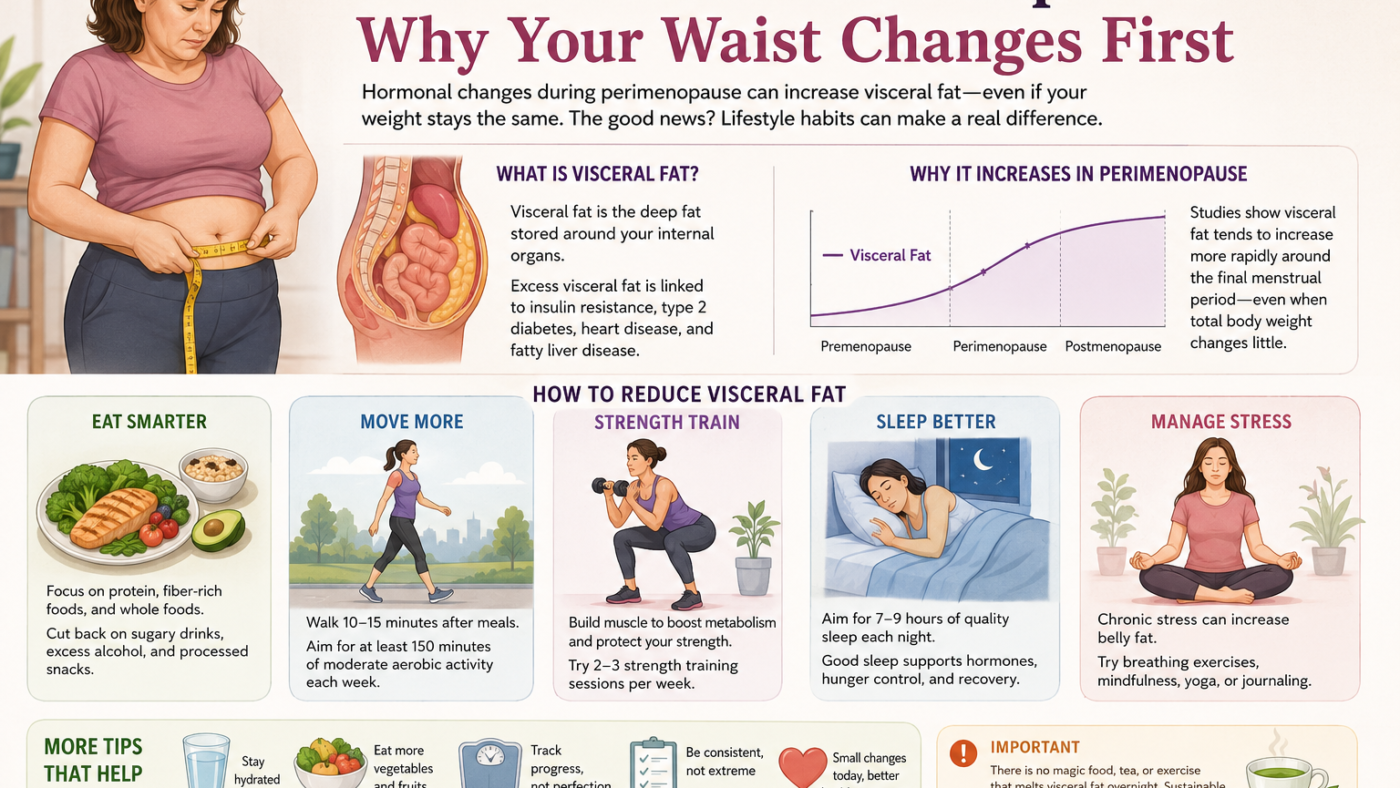
During the menopausal transition, hormonal changes can influence where the body tends to store fat. Visceral fat, the deeper abdominal fat surrounding internal organs, may increase even when total body weight changes only slightly.
The good news is that visceral fat can respond to lifestyle changes. Sustainable nutrition, regular movement, strength training, adequate sleep, and realistic long-term habits can all support healthier body composition.
What Is Visceral Fat?
Not all abdominal fat is the same.
Subcutaneous fat sits directly underneath the skin. It is the softer fat you can usually pinch around the abdomen, hips, or thighs.
Visceral fat lies deeper inside the abdominal cavity around internal organs.
Visceral fat is metabolically active. Excess amounts are associated with insulin resistance, type 2 diabetes, fatty liver disease, and a higher risk of cardiovascular disease.
This is why waist size and body composition may matter even when your weight has not changed very much.
A Normal BMI Does Not Tell the Whole Story
BMI is useful as a basic screening measurement, but it cannot tell you where body fat is stored.
It also cannot distinguish fat from muscle.
Some people may have a normal BMI while still carrying relatively high levels of abdominal fat.
This is particularly relevant in some Asian populations, where metabolic risks can appear at lower BMI levels.
That does not mean every thin person has excessive visceral fat.
It simply means BMI should not be treated as a complete measurement of metabolic health.
Why Can Visceral Fat Increase Around Menopause?
Perimenopause is the transition leading up to menopause.
Menopause is reached after 12 consecutive months without a menstrual period.
The timing varies from person to person, but the transition usually occurs during midlife.
During this period, estrogen and other reproductive hormones fluctuate.
These hormonal changes may influence fat distribution, muscle mass, sleep, appetite, and energy regulation.
Research following women through the menopause transition has found that visceral fat can increase more rapidly around the final menstrual period.
Importantly, these changes can happen even when total body weight changes only slightly.
This helps explain a common experience:
“My weight is almost the same, but my body shape has changed.”
How Do You Know Whether You Have Too Much Visceral Fat?
You cannot reliably determine visceral fat simply by looking in the mirror.
Waist circumference can provide useful information about abdominal fat and metabolic risk.
However, it does not directly measure visceral fat.
CT and MRI scans provide much more accurate measurements.
Home body-composition scales sometimes provide a visceral fat score, but this is only an estimate based on electrical impedance and mathematical formulas.
These readings may be useful for watching long-term trends, but they should not be treated as a medical diagnosis.
Where Does Fat Go When You Lose It?
This is one of the most interesting parts of fat metabolism.
When stored fat is broken down and oxidized, much of its mass eventually leaves the body as carbon dioxide through the lungs.
The rest is largely converted into water.
But this does not mean breathing faster will make you lose fat.
Your body must first use stored fat for energy.
Carbon dioxide is simply one of the final products of that metabolic process.
How to Reduce Visceral Fat During Perimenopause
There is no special tea, supplement, abdominal exercise, or menopause food that can selectively melt visceral fat.
The most useful approach is usually a combination of sustainable nutrition, regular activity, muscle-preserving exercise, and adequate sleep.
Start With Calories You Barely Notice
Fat loss generally requires the body to use slightly more energy than it receives over time.
That does not mean starving yourself.
It also does not mean eliminating all carbohydrates.
A more practical first step is identifying calories that provide little fullness.
Common examples include sweetened coffee drinks, bubble tea, soft drinks, alcohol, mindless snacks while watching television, and large portions eaten after you are already satisfied.
Replacing one high-calorie drink each day with water, sparkling water, or unsweetened tea can be much easier than completely changing your diet overnight.
Build Meals Around Protein, Fiber, and a Carbohydrate You Enjoy
A simple balanced meal can include a clear protein source, a fiber-rich food, and a reasonable portion of a carbohydrate you enjoy.
Good protein choices include fish, chicken, eggs, tofu, beans, lentils, Greek yogurt, and soy foods.
Fiber-rich foods include vegetables, beans, whole fruit, mushrooms, and whole grains.
Rice, potatoes, oats, bread, or noodles can still be part of a healthy diet.
You do not automatically need to eliminate carbohydrates.
Why Protein Matters During Midlife
Adequate protein can help preserve muscle while you are losing body fat.
This becomes increasingly important during and after menopause because muscle mass tends to decline with age.
Preserving muscle supports strength, mobility, blood sugar control, and overall metabolic health.
People with kidney disease or other conditions requiring protein restriction should ask a healthcare professional for individualized advice.
Prepare for the Time You Usually Overeat
Many eating plans fail because hunger meets convenience.
If you usually reach for cookies or sweets in the late afternoon, prepare a better option before hunger becomes intense.
Useful choices may include whole fruit, plain Greek yogurt, edamame, eggs, unsweetened soy milk, or a small portion of nuts.
The goal is not dietary perfection.
The goal is making healthier choices easier to repeat.
Walk After a Meal
One of the simplest habits you can adopt is a short walk after eating.
Try walking for about 10 to 15 minutes after your largest meal.
For many people, this may be after dinner.
You can walk outside, through a shopping mall, around your home, in a hallway, or on a treadmill.
Even gentle walking can reduce sedentary time and may help improve the body’s glucose response after meals.
You do not need special workout clothes.
Consistency matters more than intensity.
Add Strength Training
Cardio is useful, but maintaining muscle is especially important in midlife.
Resistance training can improve strength and help preserve lean body mass.
Beginner-friendly exercises include chair squats, wall push-ups, resistance-band rows, hip-hinge movements, and carrying moderately heavy objects.
Two short strength-training sessions each week can be a reasonable starting point for many people.
Begin with good technique.
When the exercises become easy, gradually increase resistance.
What About HIIT?
High-intensity interval training can also help reduce visceral fat.
HIIT alternates short periods of harder effort with easier recovery periods.
However, HIIT is not required for everyone.
Walking, aerobic exercise, resistance training, and combined exercise programs can all be effective.
For beginners, a simple interval session might involve one minute of brisk walking followed by two minutes of easy walking.
Repeat this several times and finish with a gentle cool-down.
If you have heart disease, unexplained chest pain, fainting, unusual shortness of breath, or another significant medical condition, talk with your doctor before starting vigorous exercise.
Do Not Ignore Sleep
Sleep does not directly burn visceral fat overnight.
However, inadequate sleep can make healthy eating and exercise much harder.
People who are chronically sleep deprived often experience increased hunger, stronger cravings, and lower motivation for physical activity.
Better sleep can therefore support weight management indirectly.
How Much Sleep Do Adults Need?
Most adults generally need around seven to nine hours of sleep, although individual needs vary.
Helpful habits include keeping your wake-up time reasonably consistent, getting outdoor light in the morning, limiting caffeine later in the day, reducing alcohol close to bedtime, and avoiding work messages or videos while lying in bed.
Sleep Problems During Perimenopause
Poor sleep during perimenopause is not always caused by bad sleep habits.
Hot flashes and night sweats can repeatedly wake women during the night.
Keeping the bedroom cool, using breathable bedding, and adjusting the sleep environment may help improve comfort.
However, persistent menopausal symptoms sometimes require medical treatment.
Hormonal and non-hormonal treatments may be appropriate for some women depending on their individual medical history.
Discuss persistent symptoms with a qualified healthcare professional.
What About Chronic Insomnia?
For persistent insomnia, cognitive behavioral therapy for insomnia, often called CBT-I, is considered an effective treatment.
Sleep hygiene alone may not be enough for chronic insomnia.
If you wake during the night and remain fully awake, it may help to get out of bed temporarily, keep the lights dim, and do something quiet until you feel sleepy again.
This can help reinforce the association between bed and sleep rather than bed and frustration.
Could Sleep Apnea Be Part of the Problem?
Sleep apnea is another possible cause of poor sleep.
Common warning signs include loud snoring, waking up gasping or choking, morning headaches, severe daytime tiredness, and repeated nighttime awakenings.
Women may sometimes experience insomnia and fatigue without obvious loud snoring.
If these symptoms persist, ask a healthcare professional whether sleep apnea should be evaluated.
Can Green Tea Burn Visceral Fat?
Unsweetened green tea can be a healthy replacement for sugary drinks.
But green tea itself should not be treated as a special visceral-fat-burning treatment.
Green tea extracts and weight-loss supplements should also be approached cautiously.
Natural does not automatically mean effective or completely safe.
Can Crunches Remove Belly Fat?
Crunches can strengthen abdominal muscles.
They cannot force the body to burn fat specifically from the abdomen.
Your body determines where stored fat is mobilized.
This is why spot reduction is not a reliable fat-loss strategy.
Does Intermittent Fasting Work Better?
Time-restricted eating can be helpful for some people.
For example, a shorter eating window may reduce late-night snacking.
But the eating window itself is not magic.
If time-restricted eating helps you control food intake and maintain a healthier routine, it may be useful.
If it makes you excessively hungry or causes overeating later, it may not be the right approach for you.
A Simple Two-Week Starting Plan
If all of this feels complicated, start small.
Replace one high-calorie drink or habitual snack each day.
Add a meaningful source of protein to your main meals.
Eat more vegetables or another fiber-rich food.
Walk for 10 to 15 minutes after one meal each day.
Keep your wake-up time reasonably consistent.
Add two short resistance-training sessions each week when you are ready.
Once these habits become easier, gradually increase your activity.
A sustainable plan is usually more effective than an extreme plan you abandon after several days.
Frequently Asked Questions
Can visceral fat increase without significant weight gain?
Yes. Body composition and fat distribution can change during the menopause transition even when total body weight changes only modestly.
Does perimenopause automatically cause belly fat?
No.
Hormonal changes may influence fat distribution, but genetics, age, diet, physical activity, sleep, medications, medical conditions, and other factors also matter.
Can a home smart scale accurately measure visceral fat?
Not directly.
Consumer scales estimate visceral fat using bioelectrical impedance and mathematical formulas.
They are better used for observing trends than for making medical conclusions.
Is HIIT the best exercise for visceral fat?
Not necessarily.
HIIT can be effective, but aerobic exercise, strength training, walking, and combined exercise programs can also reduce visceral fat.
The best program is one that is safe and sustainable for you.
Can walking after dinner really help?
Yes.
Short walks after meals may improve post-meal glucose control and reduce sedentary time.
They are a useful addition to an overall healthy lifestyle.
Do I need to stop eating carbohydrates?
No.
You do not need to eliminate carbohydrates to reduce body fat.
Overall diet quality, calorie balance, portion sizes, protein intake, fiber intake, and long-term consistency matter more.
Can menopause supplements remove visceral fat?
No supplement has been shown to compensate for chronic overeating, inadequate exercise, and poor sleep.
Be cautious with products claiming to balance hormones, detox the body, or selectively burn menopausal belly fat.
Bottom Line
A changing waistline during perimenopause does not necessarily mean you have become lazy or that your metabolism is broken.
The menopause transition can influence body composition and encourage more fat to accumulate around the abdomen.
These changes may happen even before the bathroom scale shows a major difference.
There is no single food, tea, supplement, fasting schedule, or abdominal exercise that reliably eliminates visceral fat.
A more evidence-based approach is to improve diet quality, reduce easy-to-overconsume calories, preserve muscle with strength training, move regularly, walk after meals when practical, get adequate sleep, and seek medical help when menopausal symptoms or sleep disorders interfere with your health.
Small changes that become permanent are usually more useful than aggressive changes that last only a few days.
Medical Disclaimer
This article is for educational and informational purposes only and is not intended as medical advice, diagnosis, or treatment. Individual health needs vary. Consult a qualified healthcare professional if you have a medical condition, persistent symptoms, or concerns about whether a particular diet, exercise program, treatment, or product is appropriate for you.
This article is for general education and does not replace individualized care from a qualified health professional. Seek appropriate advice for persistent, severe, or concerning symptoms.
Read the full medical disclaimer