A Science Based Guide to Scalp Care
Modern life can be demanding. Stress, long working hours, poor sleep, restrictive diets, and frequent chemical or heat styling may all affect the condition of the hair and scalp. As a result, many people, including younger adults, become concerned about premature graying, thinning hair, or increased shedding.
One traditional self care practice often recommended for scalp health is regular hair combing or gentle scalp massage.
But can combing your hair every day actually prevent hair loss or gray hair?
The answer is more nuanced.
Gentle combing and scalp massage can be a pleasant and low cost part of a healthy grooming routine. They may help relax the scalp, reduce tension, and improve overall comfort. However, they should not be considered a treatment for significant hair loss or a proven method for reversing gray hair.
Why Gentle Scalp Massage May Feel Beneficial
The scalp contains a rich network of blood vessels and sensory nerves. Gentle pressure from the fingertips or a smooth comb provides mild mechanical stimulation, which may create a sensation of warmth and relaxation.
For people who spend long hours working at a desk, experience mental stress, or struggle to unwind in the evening, a few minutes of gentle scalp massage may also serve as a calming daily self care routine.
However, the main benefits are related to comfort, relaxation, and scalp awareness.
There is currently insufficient evidence to suggest that simply increasing the number of times you comb your hair can prevent hereditary hair loss, permanently restore gray hair to its original color, or treat an underlying scalp disorder.
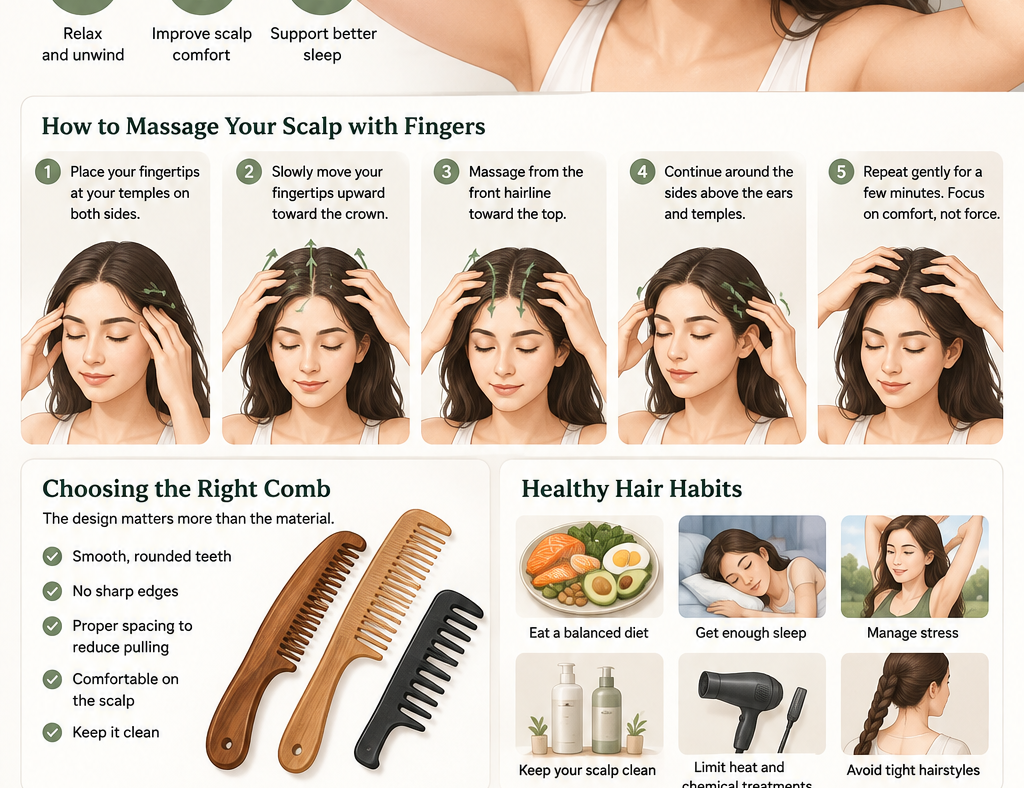
How to Massage the Scalp with Your Fingers
Before beginning, make sure your fingernails are trimmed and smooth to avoid scratching the scalp.
Spread your fingers naturally and use the soft pads of your fingertips rather than your nails.
Begin near the temples on both sides of the head. Slowly move your fingertips upward toward the crown while applying light and comfortable pressure.
You can then continue from the front hairline toward the top of the head, followed by the areas above the ears and around the temples.
Many people are particularly concerned about the frontal hairline and temple areas. These regions can receive a little extra attention, but avoid aggressive rubbing, pulling, or scratching.
The goal is to create a gentle feeling of warmth and relaxation rather than pain.
There is no need to focus on a fixed number of strokes each day. Gentle technique, comfort, and consistency are more important than reaching a specific number.
A few minutes is usually enough.
Excessive brushing or massage is unlikely to provide additional benefits and may irritate the scalp or damage fragile hair.
Choosing the Right Comb
Traditional wellness practices sometimes recommend wooden or horn combs. From a modern scalp care perspective, however, the material of the comb is less important than its design.
A suitable comb should have smooth and rounded teeth. It should not have sharp edges or rough surfaces. The spacing between the teeth should reduce unnecessary pulling and breakage. The comb should feel comfortable against the scalp and should be cleaned regularly.
Wooden combs, wide tooth combs, and other well designed combs can all work well.
Avoid repeatedly scraping the scalp with sharp comb teeth. Excessive friction can irritate the skin, increase sensitivity, and contribute to hair breakage.
Can Combing Reduce Hair Loss?
It is important to distinguish between normal hair shedding and true hair loss.
Hair naturally moves through growth, resting, and shedding cycles. Losing some hair each day is therefore normal.
When you notice loose hairs on a comb, many of them may already have entered the natural shedding phase. The act of combing simply removes them.
Gentle scalp massage may support relaxation and scalp comfort, but significant hair loss can have many different causes.
Possible causes include genetics, androgenetic alopecia, severe or prolonged stress, poor sleep, rapid weight loss, nutritional deficiencies, thyroid disorders, hormonal changes, certain medications, and inflammatory scalp conditions.
When hair is becoming progressively thinner, increasing the number of times you brush or comb it is unlikely to address the underlying cause.
Can Hair Combing Prevent Gray Hair?
Gray hair develops largely because pigment producing cells inside the hair follicle gradually reduce their production of melanin.
Genetics and aging are among the most important factors.
Stress, nutritional status, and certain medical conditions may also contribute to premature graying in some individuals. However, there is no strong scientific evidence that frequent hair combing alone can prevent gray hair or reliably restore pigment to hair that has already turned gray.
Scalp massage can still be enjoyed as a relaxing daily habit, but it should not be promoted as a proven way to reverse graying.
If unusually rapid graying occurs at a young age, particularly together with significant hair loss, fatigue, unexplained weight changes, or other symptoms, medical evaluation may be appropriate.
Depending on the situation, a healthcare professional may consider factors such as thyroid function, anemia, or nutritional status.
Healthy Hair Habits That Matter More
For long term hair and scalp health, overall lifestyle habits are usually more important than counting how many times you comb your hair.
Eating enough protein and maintaining a balanced diet can support normal hair growth.
Adequate intake of iron, zinc, vitamins, and other essential nutrients is also important.
Avoid extreme or prolonged calorie restriction.
Limit excessive bleaching, chemical treatments, and high heat styling.
Keep the scalp clean and comfortable.
Try to manage long term stress and maintain consistent sleep habits.
Handle wet or fragile hair gently.
Avoid hairstyles that constantly pull on the hair roots.
If the scalp frequently becomes itchy, oily, inflamed, flaky, or painful, addressing the underlying scalp condition is more important than increasing massage or brushing.
When to See a Healthcare Professional
Consider seeking medical advice if you notice rapid thinning over several weeks or months.
You should also pay attention to a noticeably receding hairline, progressive thinning around the crown, circular or patchy areas of hair loss, sudden excessive shedding, persistent scalp pain or itching, redness, crusting, sores, discharge, or hair loss that continues for several months without improvement.
A dermatologist can help determine the type and possible cause of hair loss.
Early evaluation can be helpful because different types of hair loss may require different approaches.
The Bottom Line
Gentle hair combing and scalp massage can be a simple and enjoyable addition to a daily wellness routine.
They may help the scalp feel relaxed, comfortable, and refreshed.
However, they should not be considered substitutes for evidence based treatment for hair loss. There is also no strong evidence that they can prevent or reverse gray hair.
The most useful approach is to comb gently, avoid excessive pulling, keep the scalp healthy, eat a balanced diet, sleep well, manage stress, and pay attention to significant changes in your hair or scalp.
Think of scalp massage as a few relaxing minutes of daily self care rather than a miracle treatment.
Medical Disclaimer
This article is intended for general educational and wellness purposes only. It is not a substitute for professional medical advice, diagnosis, or treatment. If you experience persistent or significant hair loss, scalp problems, premature graying associated with other symptoms, or any other health concerns, consult a qualified healthcare professional or dermatologist.
This article is for general education and does not replace individualized care from a qualified health professional. Seek appropriate advice for persistent, severe, or concerning symptoms.
Read the full medical disclaimer