Many people today experience stress, tension, or occasional discomfort caused by busy lifestyles. Traditional Eastern wellness practices have long emphasized the relationship between the body, emotions, and overall balance.
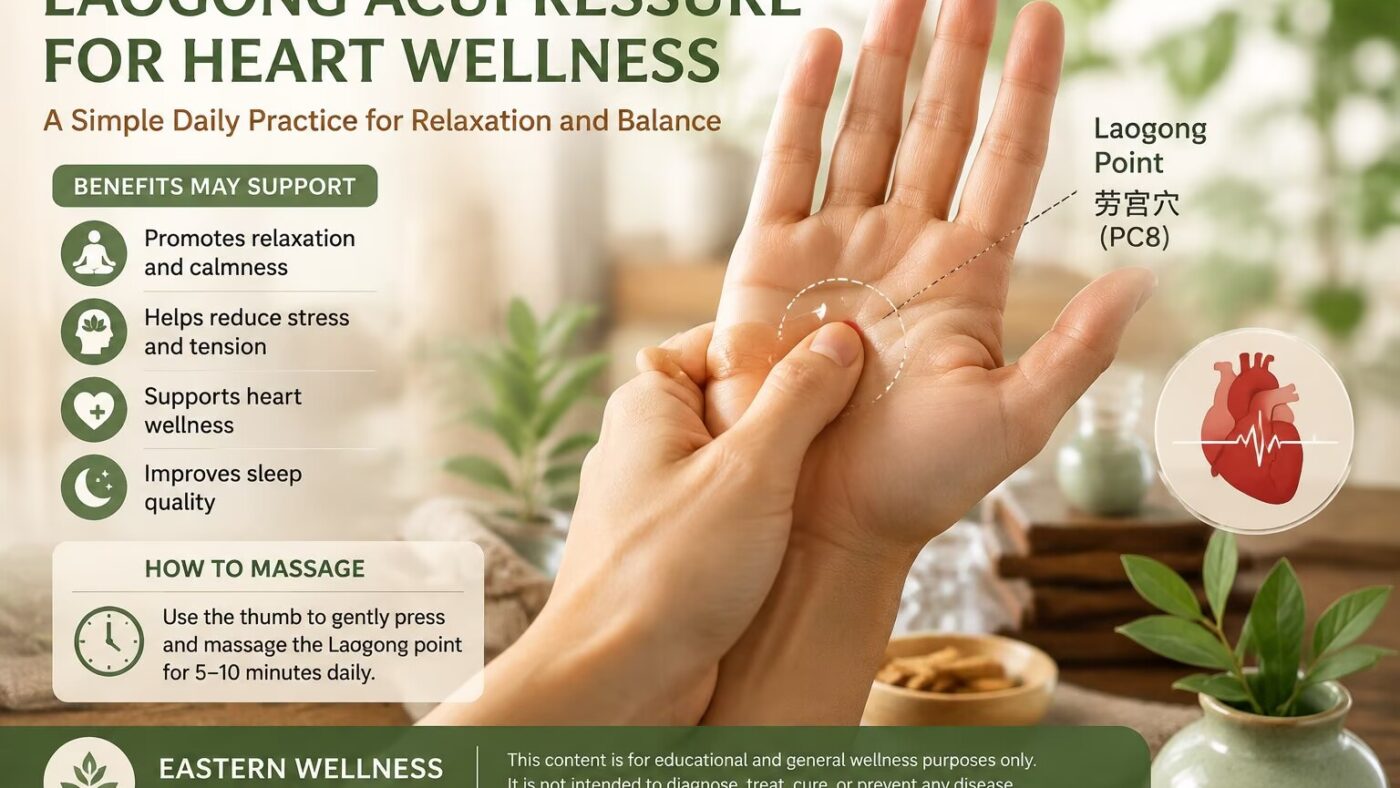
One commonly discussed acupressure point is Laogong (PC8), located in the palm of the hand. In traditional Chinese wellness practices, Laogong is often associated with relaxation, calming the mind, and supporting the body’s natural balance.
Acupressure is a traditional self-care practice and should not replace professional medical evaluation or treatment.
Where Is the Laogong Acupressure Point?
The Laogong point is located in the center of the palm.
To find it:
Relax your hand and gently make a loose fist.
Notice where the tip of your middle finger touches the palm.
The area where the fingertip rests is traditionally considered the location of the Laogong point.
How to Practice Gentle Laogong Massage
You can include Laogong massage as part of a daily relaxation routine.
Use the thumb of one hand to gently press and massage the Laogong point on the opposite palm.
Apply comfortable pressure while slowly rubbing the area.
Continue for several minutes while maintaining relaxed breathing.
Many people practice this technique for around 5 to 10 minutes daily, depending on personal comfort.
The goal is gentle stimulation and relaxation rather than strong pressure.
How Traditional Wellness Views Laogong Massage
In traditional Eastern wellness practices, Laogong massage is often used as part of routines focused on:
Relaxation and emotional balance
Reducing feelings of tension
Supporting calmness and mindfulness
Increasing awareness of the body
Modern wellness approaches also recognize that relaxation techniques, stress management, quality sleep, and healthy habits are important parts of maintaining overall well-being.
Supporting Heart Health Through Daily Habits
Taking care of heart health involves many aspects of lifestyle.
Regular movement
Activities such as walking, stretching, strength exercises, and mobility training can support cardiovascular health and overall physical function.
Balanced nutrition
A healthy eating pattern that includes vegetables, fruits, whole grains, quality protein sources, and adequate hydration can support long-term wellness.
Stress management and good sleep
Maintaining healthy sleep habits, managing daily stress, and creating relaxing routines can contribute to better overall health.
Important Health Note
Laogong acupressure is a traditional wellness practice and should not be considered a treatment for heart disease or emergency conditions.
If you experience sudden chest pain, severe shortness of breath, persistent chest pressure, fainting, or unusual and severe palpitations, seek immediate medical attention.
Conclusion
Traditional practices such as Laogong acupressure provide a simple way to incorporate relaxation and mindfulness into daily life.
When combined with regular exercise, balanced nutrition, healthy sleep, and appropriate medical care when needed, these practices can become part of a comprehensive approach to lifelong wellness.
A healthy heart begins with caring for the whole body.
This article is for educational and general wellness purposes only. It does not diagnose, treat, cure, or prevent any disease. Acupressure should not replace professional medical advice, especially for heart-related symptoms or emergencies.
This article is for general education and does not replace individualized care from a qualified health professional. Seek appropriate advice for persistent, severe, or concerning symptoms.
Read the full medical disclaimer