Exploring an Eastern Wellness Approach for Lumbar Tension
Many people have experienced sudden lower back discomfort during daily activities — such as turning too quickly, bending incorrectly, lifting heavy objects, or moving without proper posture.
After a minor back strain, people may experience:
Lower back soreness or tightness
Difficulty bending forward
Discomfort when standing or walking
Reduced flexibility and mobility
In addition to proper rest and avoiding movements that worsen symptoms, some traditional Eastern wellness practices focus on gentle acupressure techniques that may help promote relaxation and support overall body balance.
One commonly discussed point in traditional Chinese wellness practices is Zanzhu (攒竹) acupressure point, located near the inner edge of the eyebrows. Traditionally, this point is often associated with eye comfort and facial relaxation. Some practitioners also use it as part of broader body relaxation routines.
What Is the Zanzhu Acupressure Point?
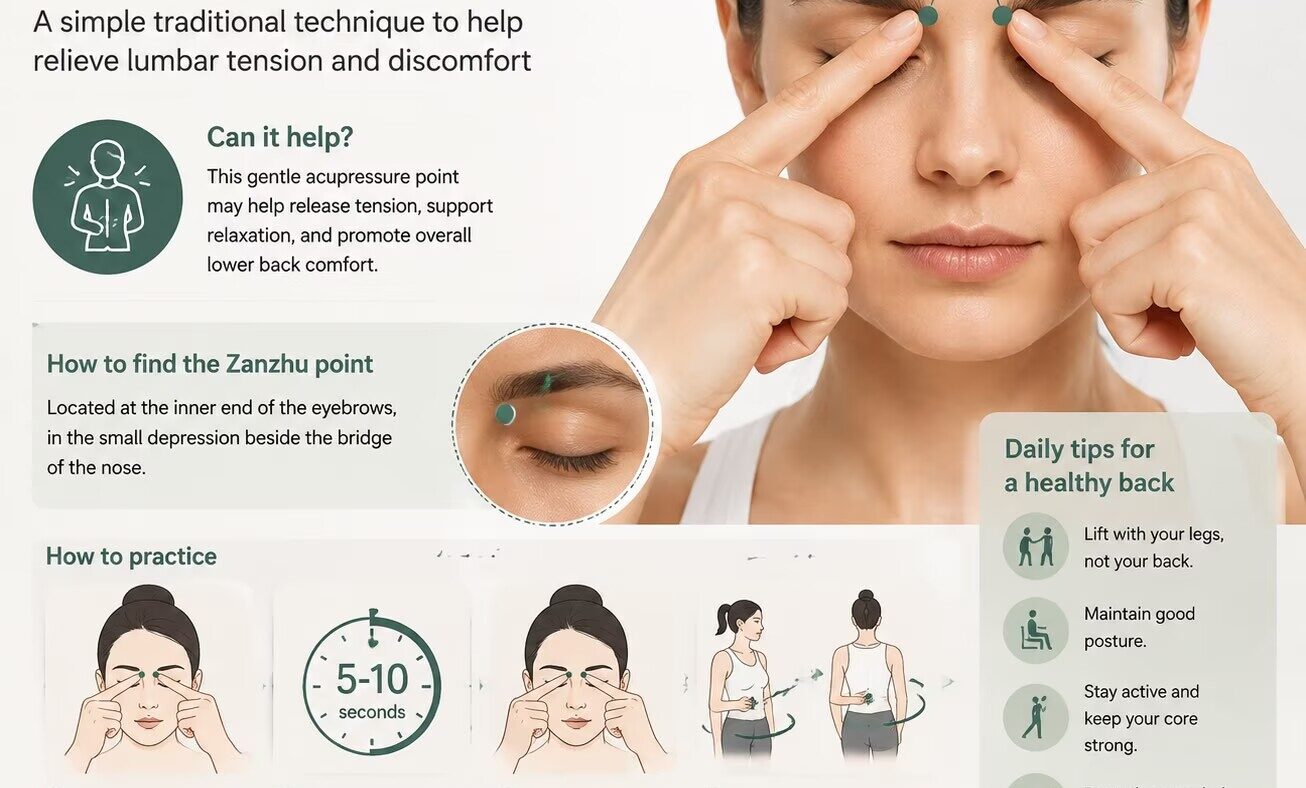
The Zanzhu point is located at the inner end of the eyebrows, in the small depression near the bridge of the nose.
A simple way to locate it:
Close your eyes and gently touch the area where the inner eyebrow meets the upper part of the nose. You may feel a small natural indentation — this is the area traditionally identified as the Zanzhu point.
Many people notice this spot becomes more prominent when they frown, which is why it is easy to locate.
How to Practice Gentle Acupressure
For general relaxation, you can try the following:
- Use the pads of your thumbs to gently press both sides of the Zanzhu point.
- Apply comfortable pressure — avoid pressing too hard.
- Hold for a few seconds, then relax. Repeat several times.
- While gently pressing, you may combine the practice with slow, comfortable movements such as:
Slowly turning the waist from side to side
Gentle upper and lower body movements
Relaxed breathing
The goal is not to force movement, but to encourage relaxation and awareness of your body.
Everyday Habits for a Healthier Lower Back
Acupressure can be part of a healthy lifestyle routine, but protecting your lower back also depends on daily habits.
Maintain Proper Movement Techniques
When lifting objects:
Bend your knees instead of relying only on your lower back
Avoid sudden twisting movements
Keep objects close to your body when carrying them
Strengthen Your Core and Mobility
Regular activities such as:
Gentle stretching
Walking
Core strengthening exercises
Mobility training
can help support posture and physical function.
Give Your Body Time to Recover
If your back feels uncomfortable, avoid activities that increase pain and allow your body adequate time to recover.
Important Health Note
Traditional acupressure is a complementary wellness practice and should not replace professional medical evaluation or treatment.
Seek medical advice if you experience:
Severe or worsening pain
Numbness or weakness in the legs
Difficulty walking
Symptoms following a significant injury
Conclusion
A healthy lower back depends on many factors, including movement habits, posture, strength, and daily care.
By combining modern wellness approaches with traditional Eastern practices, we can develop a more balanced understanding of body care and support long-term mobility and vitality.
A flexible body supports a healthier and more active life.
This article is for educational and general wellness purposes only. It is not intended to diagnose, treat, cure, or prevent any medical condition. If you have persistent or severe symptoms, consult a qualified healthcare professional.
This article is for general education and does not replace individualized care from a qualified health professional. Seek appropriate advice for persistent, severe, or concerning symptoms.
Read the full medical disclaimer