Knee discomfort is a common concern that can affect daily movement, exercise, and overall quality of life. While many people associate knee pain with injuries or excessive activity, daily habits and environmental factors may also influence how our joints feel over time.
Long periods spent in cold or damp environments, frequent exposure to cold air conditioning, or activities such as swimming without proper warmth afterward may leave some people experiencing increased knee stiffness or discomfort, especially as they get older.
From a traditional wellness perspective, maintaining warmth, supporting circulation, and caring for the muscles and tissues around the knee are important parts of everyday joint care.
Before trying any self-care method, persistent knee pain, swelling, instability, or discomfort after an injury should always be evaluated by a qualified healthcare professional to rule out underlying conditions.
For general wellness and relaxation, some people incorporate gentle acupressure techniques into their daily routines.
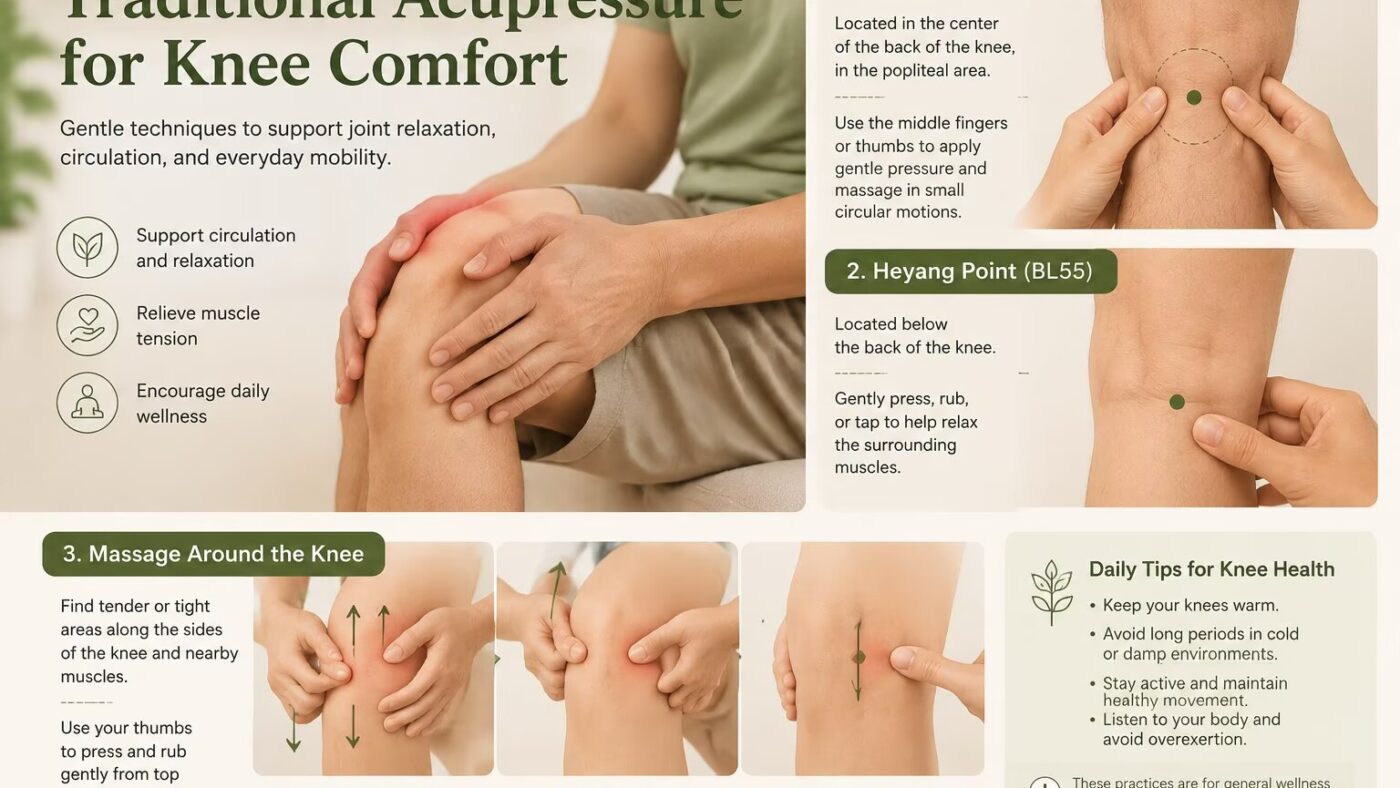
One commonly used area in traditional Chinese wellness practices is the Weizhong point (BL40), located in the center of the back of the knee, within the popliteal area.
To practice gentle pressure:
Sit comfortably on a chair and relax your legs. Using the middle fingers or thumbs, apply light pressure to the center area behind the knee. Massage gently in small circular movements, paying attention to your comfort level.
Another area often discussed in traditional practices is the Heyang point (BL55), located below the back of the knee. Gentle massage around this area may help promote relaxation of the surrounding muscles.
Some people also use gentle tapping or rubbing techniques around the muscles surrounding the knee. The goal is not to force pressure into painful areas, but to encourage relaxation and awareness of the body.
The muscles and connective tissues around the knee play an important role in movement. Gentle self-massage along the sides of the knee and nearby muscles may help release areas of tension caused by everyday activities, prolonged sitting, or exercise.
When practicing these techniques, avoid pressing aggressively. A comfortable sensation is important. Sharp pain, increased swelling, or worsening symptoms are signs to stop and seek professional advice.
Healthy joints are supported by many daily habits, including regular movement, appropriate strength training, maintaining a healthy weight, protecting joints from excessive strain, and keeping the body active through all stages of life.
Traditional wellness practices such as acupressure can be viewed as a complementary approach to relaxation and body awareness. They are not a replacement for medical diagnosis or treatment, but they may become part of a balanced self-care routine.
Caring for your knees does not begin only when discomfort appears. Small daily habits that support mobility and flexibility can help you continue moving with confidence as you age.
This article is for general education and does not replace individualized care from a qualified health professional. Seek appropriate advice for persistent, severe, or concerning symptoms.
Read the full medical disclaimer