How seasonal habits, body warmth, and traditional wellness approaches may support women’s daily balance
Many women experience changes in their menstrual cycle at different stages of life. Stress, sleep patterns, nutrition, exercise habits, and overall health can all influence the body’s natural rhythm.
In traditional Eastern wellness practices, seasonal changes are also considered an important factor in maintaining balance. During summer, frequent exposure to air conditioning, cold drinks, and chilled environments may leave some people feeling uncomfortable, especially those who are sensitive to cold or experience lower abdominal discomfort during their menstrual period.
Traditional Chinese Medicine (TCM) often emphasizes the relationship between warmth, circulation, and overall well-being. One traditional approach used for maintaining warmth and relaxation is moxibustion, a practice that involves gently applying heat generated from burning dried mugwort (Artemisia argyi) near specific areas of the body.
Moxibustion has been practiced for centuries as part of traditional wellness routines. While modern research continues to explore its potential effects, it should be understood as a complementary wellness practice rather than a replacement for medical diagnosis or treatment.
Traditional Warming Points Commonly Used in Women’s Wellness
In traditional practices, two areas are often associated with warming and supporting lower abdominal comfort.
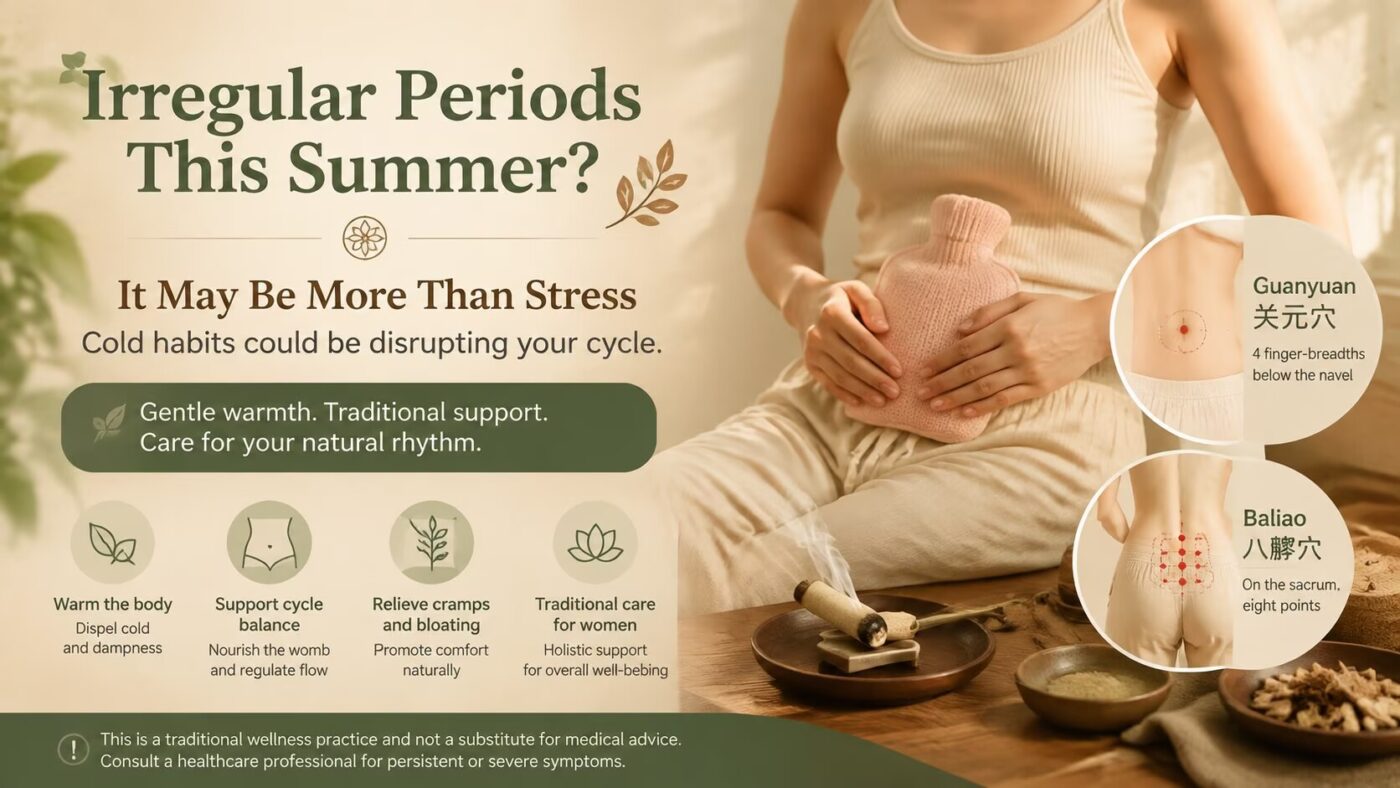
The first is the Guanyuan point (CV4), located on the lower abdomen along the body’s midline, approximately four finger-widths below the navel.
Within TCM theory, this area is traditionally considered an important location for supporting vitality and warmth in the lower body. Gentle heat application is commonly used in wellness routines to promote relaxation and a sense of comfort.
The second area is the Baliao region, located around the lower back and sacral area. This region contains eight points traditionally referred to as the “Eight Liao” points.
In traditional wellness practices, gentle warming of this area is often used as part of routines focused on lower back relaxation and women’s reproductive health support.
Using Heat Safely as Part of a Wellness Routine
For those interested in exploring moxibustion, safety is essential.
Traditional heat-based practices should always be performed carefully:
* Keep a comfortable distance between the heat source and skin.
* Avoid excessive heat or prolonged exposure.
* Stop immediately if there is discomfort, burning, or skin irritation.
* People who are pregnant, have sensitive skin, or have specific medical conditions should consult a healthcare professional before trying heat-based practices.
Women experiencing persistent menstrual irregularities, severe pain, unusually heavy bleeding, or sudden changes in their cycle should seek professional medical advice to understand the underlying cause.
Supporting Women’s Health Through Daily Habits
Traditional wellness emphasizes that health is not created by one single technique. Long-term balance comes from consistent daily choices.
Maintaining regular sleep, eating a balanced diet, staying physically active, managing stress, and creating a comfortable environment are all important parts of supporting the body’s natural rhythm.
Seasonal wellness is about adapting to changes around us. Whether through traditional practices such as moxibustion or modern healthy lifestyle habits, the goal is the same: helping the body feel supported, balanced, and cared for throughout different stages of life.
This article is for general education and does not replace individualized care from a qualified health professional. Seek appropriate advice for persistent, severe, or concerning symptoms.
Read the full medical disclaimer