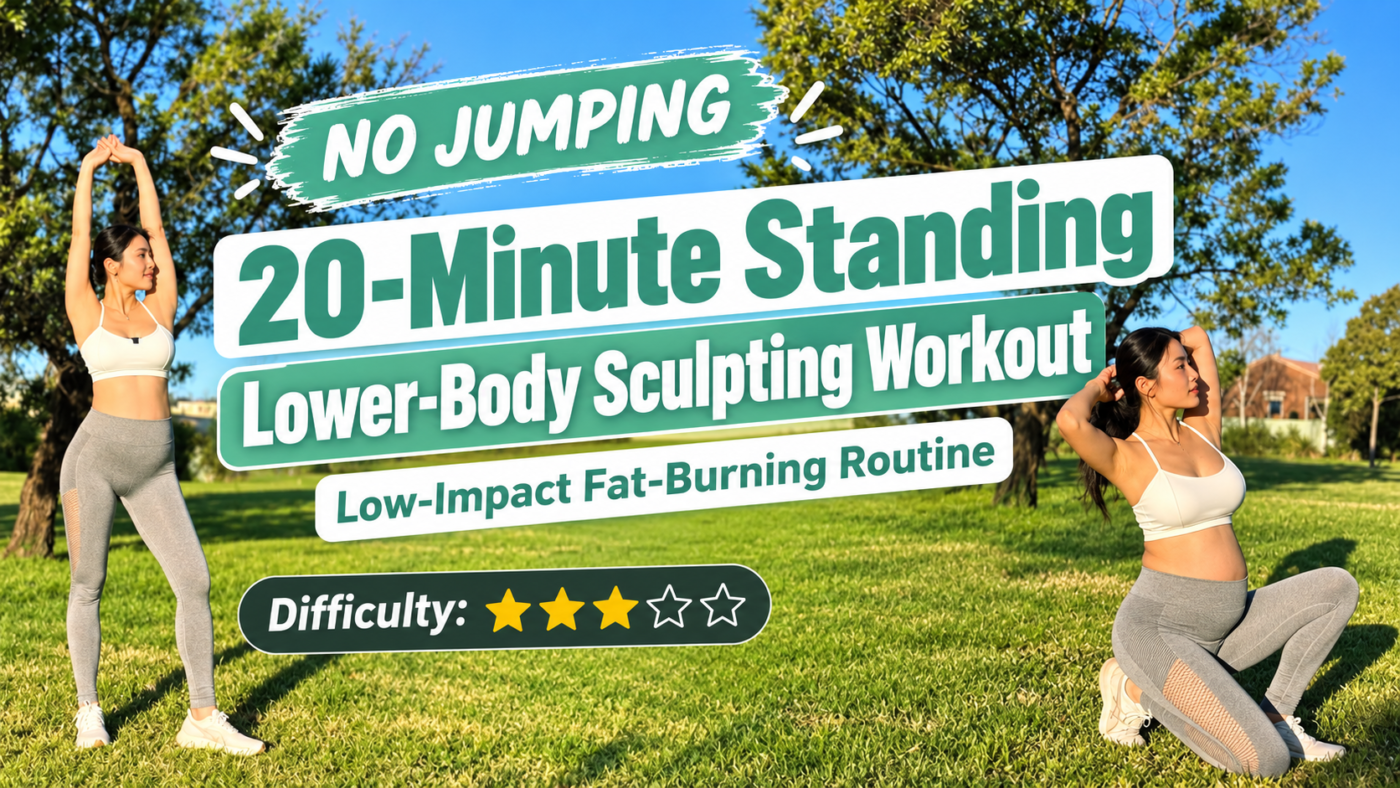
A 20-minute follow-along workout can be one of the easiest ways to exercise at home when you want to stop overthinking and simply start moving.Not every workout needs a long explanation.
Sometimes you just want to press play, start moving, and let the music carry you through the session.
That is the appeal of a music-led follow-along workout.
Instead of stopping every few seconds for detailed coaching, this approximately 20-minute session is built around continuous movement with very little talking.
For people who already understand the basic exercises being demonstrated on screen, this style can make home training feel simple, energetic, and enjoyable.
Why Music-Led Workouts Feel Easier to Start
One of the biggest barriers to regular exercise is mental resistance.
You may know that exercise is good for you, but starting can still feel difficult.
A follow-along video reduces that decision-making.
You do not need to plan the entire workout.
You do not need to count every minute.
You simply follow the movement on screen.
Music can also help create rhythm and make repetitive exercise feel less monotonous.
For some people, that makes a 20-minute session feel much shorter.
What a 20-Minute Workout Can Do
A single short workout is not a transformation program.
But 20 minutes of regular movement can still be valuable.
Depending on the intensity and exercises used, a session like this may contribute to:
Cardiovascular fitness
Muscular endurance
Coordination
Daily energy expenditure
Movement confidence
Exercise consistency
Stress relief
General physical activity
The real value comes when short sessions become part of a regular routine.
Twenty minutes performed consistently is usually more useful than an exhausting 90-minute workout that you only do occasionally.
Does Sweating Mean You Are Burning More Fat?
Not necessarily.
Sweat is primarily your body’s cooling mechanism.
How much you sweat depends on many factors, including:
Exercise intensity
Room temperature
Humidity
Clothing
Genetics
Fitness level
Hydration
Some people sweat heavily during moderate activity.
Others sweat relatively little during demanding exercise.
So sweating should not be used as a direct measurement of fat loss or workout quality.
Can a 20-Minute Workout Help With Weight Loss?
It can contribute.
But one workout cannot target fat from one specific area of the body.
Long-term fat loss depends primarily on overall energy balance.
Exercise can support that process by increasing energy expenditure and helping preserve or develop muscle.
The most effective approach usually combines:
Regular physical activity
Resistance training
Cardiovascular exercise
Walking
Appropriate nutrition
Adequate protein
Sleep
Consistency
The goal should be creating a lifestyle that you can maintain rather than trying to burn as many calories as possible in one session.
Why Follow-Along Workouts Work Well at Home
Home workouts remove several common barriers.
There is no commute.
No gym membership is required.
You can exercise around work or family responsibilities.
You can stop whenever necessary.
And you can repeat the same routine until the movements become familiar.
This makes follow-along training particularly useful for people who struggle to create a consistent exercise schedule.
Minimal Instruction Has Advantages and Limitations
A workout with very little talking can be enjoyable because it keeps the session flowing.
But it also has an important limitation.
You may receive less guidance about:
Body alignment
Range of motion
Breathing
Exercise modifications
Joint positioning
Pain warning signs
Beginner alternatives
That means this style is usually easier for someone who already recognizes the movements being demonstrated.
If an exercise is unfamiliar, slow down and focus on technique rather than trying to match the instructor perfectly.
You Do Not Need to Match the Instructor
This is one of the most important rules of follow-along exercise.
The person on screen may have:
More training experience
Greater mobility
Better cardiovascular fitness
Stronger muscles
Different joint structure
Different limb proportions
Different injury history
Your movement does not need to look identical.
Reduce the range of motion if necessary.
Slow down.
Take a break.
Use a simpler variation.
Exercise should fit your body rather than forcing your body to fit the video.
How Hard Should the Workout Feel?
For a general home workout, many people can aim for a moderate perceived effort.
Imagine a scale from 0 to 10.
0 means complete rest.
10 means maximal effort.
A moderate workout may feel around 4 to 6.
A harder interval may reach 7 or 8.
You should still feel that your movements are controlled.
If technique begins falling apart because you are exhausted, reduce the intensity.
Should Beginners Do the Entire 20 Minutes?
Not necessarily.
If you are new to exercise, start with what you can manage comfortably.
That might be:
5 minutes
10 minutes
15 minutes
Then gradually build toward the complete session.
There is no benefit in forcing yourself through a full workout if the final portion is performed with poor control.
Rest Is Allowed
Follow-along videos can sometimes create the impression that stopping is failure.
It is not.
Take a break if:
You become excessively breathless
Your technique deteriorates
You feel dizzy
You experience sharp pain
Your joints become uncomfortable
You can no longer control the movement
A short pause does not ruin the workout.
It may actually allow you to complete more high-quality movement overall.
How to Make a Music Workout Lower Impact
If the video includes jumping or rapid transitions, you can often reduce impact by making simple changes.
Step instead of jump.
Keep one foot on the floor.
Reduce squat depth.
Use smaller arm movements.
Move more slowly.
Take longer transitions.
This can reduce stress on the knees, ankles, hips, and pelvic floor.
How to Make It More Challenging
More experienced exercisers can increase difficulty without simply moving faster.
You can:
Use a larger controlled range of motion
Slow the lowering phase
Increase muscular tension
Add light resistance where appropriate
Reduce unnecessary rest
Improve movement precision
Maintain better posture under fatigue
Better control often creates a more meaningful progression than uncontrolled speed.
How Often Can You Do a 20-Minute Workout?
That depends on intensity.
A moderate session may fit into your week several times.
For example:
Monday: 20-minute follow-along workout
Tuesday: Walking or mobility
Wednesday: Strength training
Thursday: Rest or gentle movement
Friday: 20-minute follow-along workout
Saturday: Walking or full-body strength
Sunday: Recovery
You do not need to repeat the same workout every day.
Variety helps develop broader physical capacity.
Add Strength Training Too
Music-led cardio workouts are useful, but they should not be your only form of exercise.
Strength training becomes increasingly important for preserving:
Muscle
Bone health
Physical function
Balance
Metabolic health
Independence with age
A complete program should ideally include some form of progressive resistance training.
That can involve:
Squats
Rows
Push movements
Hip hinges
Lunges
Carries
Core exercises
Resistance bands
Dumbbells
Machines
Bodyweight exercises
A 20-Minute Workout Still Counts
People sometimes believe exercise only “counts” if it lasts 45 to 60 minutes.
That is unnecessary.
Short exercise sessions can accumulate across the week.
A 20-minute workout performed three times provides an hour of additional activity.
Combine that with walking, strength training, and normal daily movement, and the total becomes meaningful.
The key is consistency.
The Best Workout Is the One You Will Repeat
There is no universally perfect workout.
The best routine depends on:
Your goals
Your fitness level
Your available time
Your health
Your preferences
Your recovery
Your schedule
For some people, detailed coaching is motivating.
For others, music and movement are enough.
If a simple follow-along workout makes you more likely to exercise regularly, that is a significant advantage.
Frequently Asked Questions
Is a 20-minute workout enough?
Yes, 20 minutes can be useful, especially when performed regularly. Total weekly activity matters more than whether every individual session is long.
Can I lose belly fat with this workout?
The workout can contribute to overall energy expenditure, but no exercise can selectively burn fat from the abdomen.
Is sweating a sign of a good workout?
Not necessarily. Sweat mainly reflects thermoregulation and varies greatly between individuals.
Can beginners do follow-along workouts?
Yes, but beginners should reduce speed, impact, range of motion, and duration when necessary.
Do I need equipment?
Many music-led home workouts require little or no equipment, although the exact requirements depend on the exercises shown in the video.
Should I stop if I cannot keep up?
Slow down or rest. You do not need to match the instructor’s pace.
Can I do the same 20-minute workout every day?
You can repeat moderate exercise regularly, but a balanced fitness program should also include strength, mobility, walking, and adequate recovery.
Final Thoughts
Exercise does not always need to be complicated.
Sometimes the most effective strategy is simply to create a small window of time, turn on some music, and start moving.
A 20-minute follow-along workout can provide structure without requiring a complicated training plan.
You may not complete every movement perfectly.
You may need to pause.
You may move more slowly than the person on screen.
That is completely fine.
The goal is not to perform the video perfectly.
The goal is to move more consistently.
And when 20 minutes becomes something you can repeat week after week, that simple routine can become the foundation for much greater changes in fitness and health.
Medical Disclaimer
This content is for general educational and fitness purposes only and is not medical advice. Stop exercising if you experience chest pain, severe shortness of breath, dizziness, faintness, sharp joint or muscle pain, numbness, or other concerning symptoms. People who are pregnant, recently postpartum, recovering from surgery or injury, or living with cardiovascular, neurological, joint, or other medical conditions should choose appropriately modified exercise and seek individualized professional guidance when necessary.
This article is for general education and does not replace individualized care from a qualified health professional. Seek appropriate advice for persistent, severe, or concerning symptoms.
Read the full medical disclaimer