10-minute yoga for tight hamstrings can be a simple way to explore greater lower-body mobility without forcing your range of motion. Tight hamstrings can make everyday movement feel restricted, especially after long periods of sitting, driving, working at a desk, or simply moving less than usual. Rather than forcing the backs of the legs into an intense stretch, a slower approach can help you explore your current range of motion while keeping the breath steady and the rest of the body relaxed.Tight hamstrings can make everyday movement feel restricted, especially after long periods of sitting, driving, working at a desk, or simply moving less than usual. Rather than forcing the backs of the legs into an intense stretch, a slower approach can help you explore your current range of motion while keeping the breath steady and the rest of the body relaxed.
This 10-minute yoga for tight hamstrings sequence gradually works through the calves, backs of the knees, hamstrings, hips, spine, and surrounding tissues. It begins with quiet breathing and spinal movement, progresses into lunges and forward-fold variations, and finishes with supported stretches on the back.This gentle 10-minute yoga sequence gradually works through the calves, backs of the knees, hamstrings, hips, spine, and surrounding tissues. It begins with quiet breathing and spinal movement, progresses into lunges and forward-fold variations, and finishes with supported stretches on the back.
You do not need to be especially flexible. A folded blanket, yoga block, strap, or towel can make several positions more comfortable.
Begin With Breath and Awareness
Sit comfortably on the floor. If sitting upright feels difficult, place a folded blanket, cushion, yoga block, or several towels underneath the hips.
Lengthen gently through the spine and allow the shoulders to soften away from the ears. You may close your eyes or lower your gaze for a moment.
Take a slow breath in through the nose. Exhale through the nose or mouth and allow the shoulders to relax.
Repeat once more.
Instead of treating these first moments as something to rush through, use them to notice how your body feels today. Flexibility can vary from one day to another, and the goal of this practice is not to force the body into a particular shape.
Move Into Tabletop and Mobilize the Spine
Come onto your hands and knees in a tabletop position.
As you inhale, gently lower the belly, broaden across the chest, and look slightly forward.
As you exhale, round the spine and bring the chin toward the chest.
Move slowly between these two positions with the breath.
This gentle spinal movement prepares the body for the stretches that follow and encourages you to maintain awareness of your breathing rather than moving automatically.
Right-Leg Calf and Hamstring Preparation
Return to a neutral tabletop position.
Extend the right leg straight behind you and tuck the toes under. Reach backward through the heel.
You may begin to feel a gentle line of tension through the Achilles tendon, calf, back of the knee, and hamstring.
Keep the neck long rather than allowing the head to hang. Slowly rock the body forward and backward several times while maintaining a comfortable stretch.
The movement should feel controlled and exploratory rather than aggressive.
Low Lunge to Hamstring Stretch
Step the right foot forward between the hands. If necessary, use your hand to help guide the foot into position.
Slide the left knee slightly backward and bring the right knee roughly over the right ankle.
Lift the chest gently and relax the shoulders.
From here, exhale and shift the hips backward. Flex the right foot so the toes point toward the face.
Keep a soft bend in the right knee.
Straightening the leg completely is not necessary. In fact, maintaining a slight bend can make it easier to focus the stretch through the back of the thigh without forcing the knee into a locked position.
Stay here for several slow breaths.
Downward-Facing Dog
Plant both palms firmly on the mat and step back into Downward-Facing Dog.
Lift the hips upward and allow the chest to move gently toward the thighs. Spread the fingers and press through the hands.
Begin bending one knee and then the other, slowly alternating the legs.
This gentle “pedaling” motion allows the calves and backs of the legs to lengthen gradually.
Your heels do not need to touch the floor. Keep the movement comfortable and continue breathing steadily.
Repeat on the Left Side
Step the left foot forward and lower the right knee to the mat.
Adjust your stance until you feel stable.
Lift gently through the chest while allowing the shoulders to remain relaxed.
Then shift the hips backward and flex the left foot toward the face.
Keep a gentle bend in the left knee and breathe into the sensation along the back of the leg.
Pay attention to how this side feels compared with the first. It is completely normal for one side of the body to feel tighter or more mobile than the other.
After several breaths, step back into Downward-Facing Dog and once again alternate bending the knees.
Seated Forward Fold With Bent Knees
Return to the floor and come into a seated position.
You may sit on a folded blanket or another support if that helps you maintain a more comfortable posture.
Bend both knees and place your hands behind the thighs.
Inhale and gently lift the chest.
As you exhale, begin to hinge forward from the hips.
There is no need to straighten the legs immediately. Keep the knees comfortably bent while allowing the torso to move forward.
If it feels appropriate, gradually extend through the heels.
Your hands may remain behind the thighs or move to the shins, ankles, or feet.
Avoid turning the practice into a competition to reach the toes. The useful part of the stretch comes from finding a sustainable position where you can continue breathing without excessive strain.
Stay for approximately three to five slow breaths.
Supine Right-Leg Hamstring Stretch
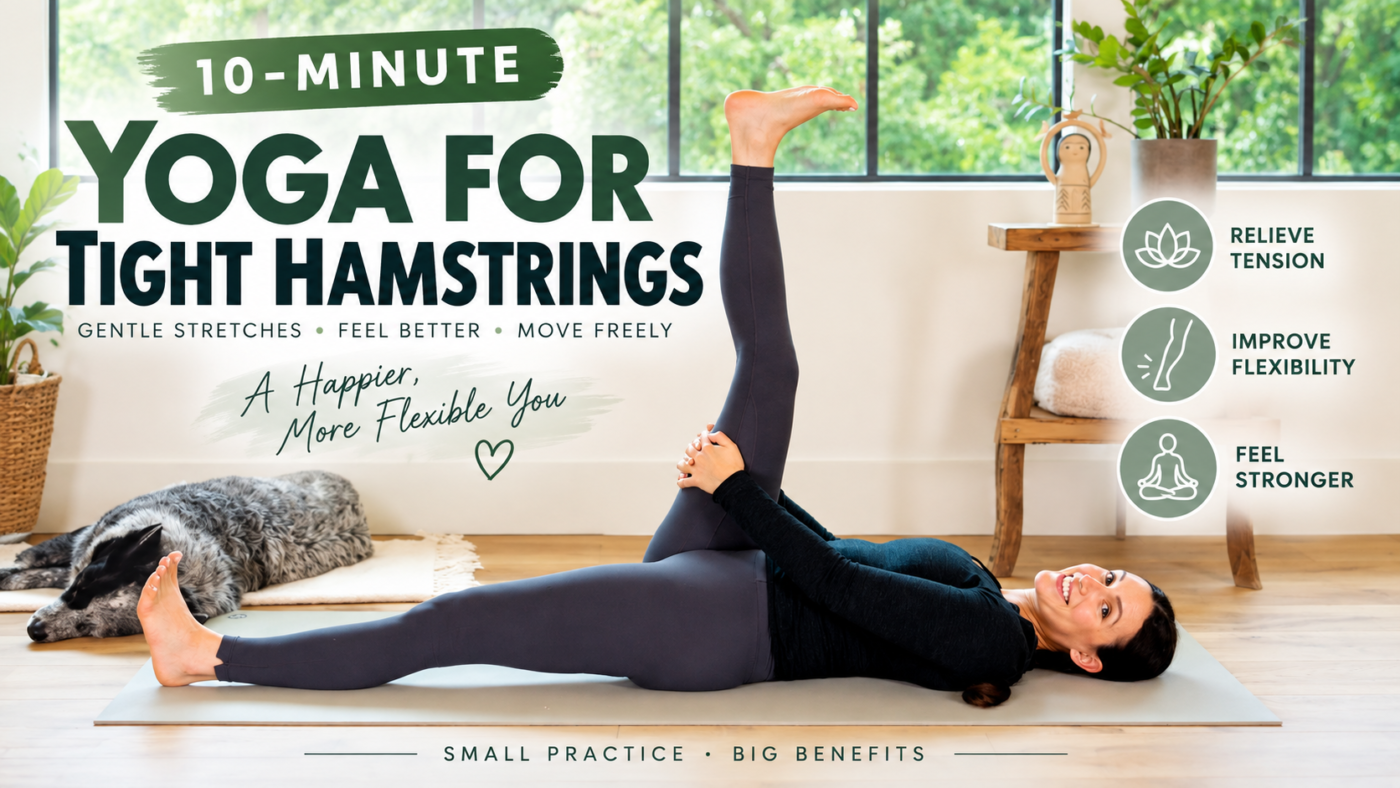
Slowly release the seated fold and lie comfortably on your back with both knees bent and the feet on the floor.
Lift the right leg upward.
Flex the foot and place your hands behind the right thigh.
Keep a soft bend in the knee.
If reaching the leg comfortably is difficult, loop a yoga strap or towel around the thigh or foot for support.
Depending on your mobility, you may remain with the hands behind the thigh or gradually move them farther toward the lower leg or ankle.
The objective is not to pull the leg as close to the body as possible. Instead, find a position that allows the shoulders, jaw, and breathing to remain relaxed.
For a slightly deeper variation, extend the left leg along the floor while maintaining gentle activity through the foot.
Supine Left-Leg Hamstring Stretch
Lower the right foot and lift the left leg.
Repeat the same setup on this side.
Use your hands, a strap, or a towel for support and maintain a slight bend in the knee.
Notice any differences between the two sides without trying to make them identical.
Continue breathing slowly and allow the shoulders to settle toward the floor.
Finish With a Gentle Release
Lower the leg and draw both knees toward the chest.
Give the legs a comfortable hug and gently rock from side to side if that feels good.
Take a final moment to notice your breathing and how the backs of the legs feel compared with the beginning of the practice.
A short stretching session does not need to create dramatic changes in flexibility to be worthwhile. Repeated gentle practice can help you become more aware of your movement limits and make stretching feel less forced and more controlled.
How Often Can You Practice?
This sequence is short enough to use as a regular mobility practice, particularly after long periods of sitting or whenever the backs of the legs feel unusually stiff.
The most important principle is consistency without force.
Stretch only to the point of mild to moderate tension. Sharp pain, tingling, numbness, sudden pulling sensations, or pain that travels down the leg are signals to stop and reassess the movement.
If you have a recent muscle injury, significant back pain, sciatica-like symptoms, joint problems, or another medical condition affecting movement, seek appropriate professional guidance before beginning a new stretching routine.
Final Thoughts
Tight hamstrings are rarely best approached by simply pulling harder on the muscles.
A more balanced practice combines breathing, gentle spinal movement, calf and ankle mobility, hip positioning, bent-knee hamstring stretches, and gradual changes in range of motion.
These ten minutes can become a simple way to slow down, reconnect with the body, and give the backs of the legs focused attention without turning flexibility into a test.
Move slowly, keep breathing, and allow your available range of motion to develop at its own pace.
FAQ
Is 10 minutes of yoga enough for tight hamstrings?
A short yoga session can still be useful when practiced consistently. Ten minutes gives you enough time to move gradually through several positions, work both sides of the body, and focus on controlled breathing without forcing flexibility.
Should I keep my knees straight during hamstring stretches?
Not necessarily. A soft bend in the knee can make many hamstring stretches more comfortable and may help you maintain better control. The original routine repeatedly uses a gentle bend rather than forcing the knee completely straight.
Do my heels need to touch the floor in Downward-Facing Dog?
No. Your heels do not need to reach the mat. The routine specifically allows the heels to remain lifted while you gradually explore the stretch through the backs of the legs.
Can beginners do this hamstring yoga routine?
The sequence is generally beginner-friendly because several movements can be modified. You can sit on a blanket or block, keep the knees bent, and use a yoga strap or towel during the lying hamstring stretch.
Should hamstring stretching hurt?
No. Stretching may create mild or moderate tension, but sharp pain, numbness, tingling, or sudden pulling sensations are reasons to stop. Flexibility work should remain controlled rather than painful.
How often can I practice this routine?
Many people can use a gentle mobility routine regularly, especially after extended sitting. Frequency should still be adjusted according to your exercise history, recovery, mobility level, and any existing injuries or medical conditions.
Medical Disclaimer
This article is provided for educational and informational purposes only and is not medical advice. Exercise and stretching should be adapted to your individual abilities and health status. Stop any movement that causes sharp pain, numbness, dizziness, or unusual discomfort, and consult a qualified healthcare professional when appropriate.
This article is for general education and does not replace individualized care from a qualified health professional. Seek appropriate advice for persistent, severe, or concerning symptoms.
Read the full medical disclaimer