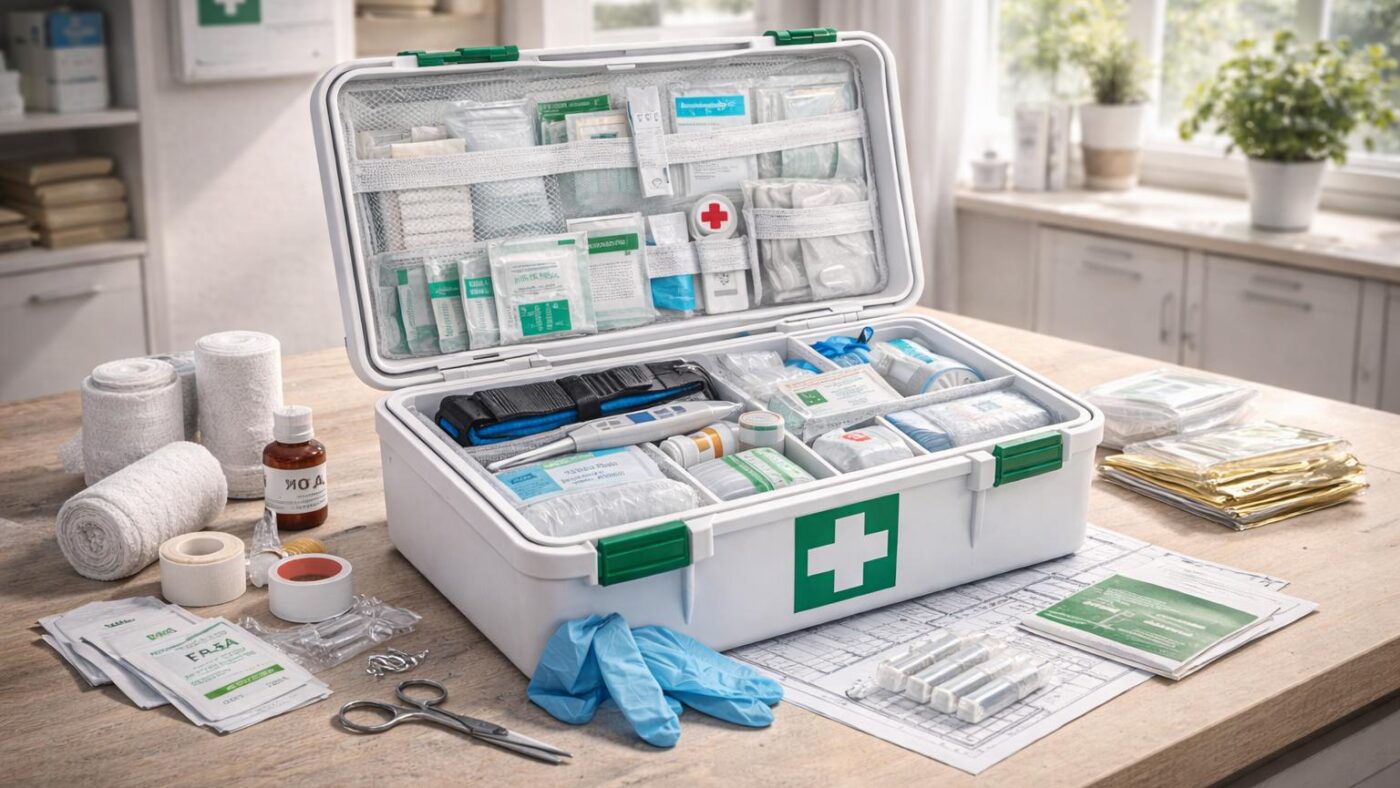
Accidents and minor illnesses can happen unexpectedly. A small kitchen cut, a scraped knee, a mild headache, or a sudden fever may be easier to manage when basic first aid supplies are readily available.
A well-organized home first aid kit can help families respond promptly to minor injuries, manage certain symptoms appropriately, and provide initial assistance while professional help is being arranged.
However, a home first aid kit is not a substitute for medical care.
Serious bleeding, difficulty breathing, severe allergic reactions, suspected stroke, chest pain, poisoning, and other medical emergencies require immediate professional attention.
The most useful home kit is not necessarily the largest or most expensive. It is one that contains reliable essentials, is regularly maintained, and can be used safely by household members.
This guide explains what to include in a home first aid kit, which over-the-counter medicines may be useful, which outdated remedies should be avoided, and how to store medical supplies safely.
1. Why Every Household Should Have a First Aid Kit
A home first aid kit serves several practical purposes.
It provides immediate access to supplies for cleaning and covering minor wounds, managing small injuries, checking temperature, and responding to common health needs.
It can also help caregivers organize essential medical information, including medication lists, allergies, and emergency contact details.
During an emergency, having the necessary supplies in a clearly identified location may reduce delays in providing appropriate first aid.
However, equipment alone is not enough.
Knowledge of basic first aid, cardiopulmonary resuscitation (CPR), and when to call emergency services is just as important.
Households should periodically review their supplies and ensure that responsible adults know where the kit is stored.
2. Essential First Aid Equipment
A basic home first aid kit should contain equipment suitable for common injuries and minor health concerns.
Digital Thermometer
A reliable digital thermometer helps measure body temperature when someone feels unwell.
Choose a device appropriate for the age of household members.
Follow the manufacturer’s instructions for measurement, cleaning, and maintenance.
Avoid relying on old mercury-containing glass thermometers because of the hazards associated with breakage and mercury exposure.
Disposable Medical Gloves
Nitrile gloves can help reduce contact with blood and other body fluids during first aid.
Gloves should be worn when available, particularly when assisting someone with an open wound.
Hand hygiene remains important before and after providing care.
Tweezers
Clean tweezers can be useful for removing small, superficial splinters that are easily accessible.
Do not probe deeply into a wound or attempt to remove large embedded objects.
Deeply lodged foreign material, eye injuries, or wounds involving significant pain require professional assessment.
Blunt-Tipped Scissors
Small medical scissors can help cut bandages, dressings, or medical tape.
Blunt tips reduce the risk of accidental injury during routine use.
Instant Cold Pack
A cold pack may help reduce discomfort and swelling after minor bruises or certain soft tissue injuries.
Wrap the pack in a cloth or towel rather than applying it directly to bare skin.
Cold application is not a substitute for assessment when a fracture or serious injury is suspected.
Flashlight
A small flashlight can help caregivers examine minor injuries or locate supplies during power outages.
A flashlight should not be used to make a medical diagnosis.
Emergency Contact Information
Keep emergency telephone numbers and important health information available.
Information may include:
- Local emergency medical services
- Poison control services
- Family emergency contacts
- Medication allergies
- Current prescription medications
- Relevant medical conditions
Keep sensitive medical information secure while ensuring authorized caregivers can access it in an emergency.
3. Wound Care and Dressing Supplies
Minor cuts and scrapes are among the most common household injuries.
Appropriate wound care begins with clean hands, gentle cleaning, bleeding control, and protection of the injured area.
Sterile Gauze Pads
Sterile gauze can be used to cover wounds and apply direct pressure to bleeding injuries.
Keep several sizes available.
Adhesive Bandages
Adhesive bandages are useful for small cuts and scrapes.
Choose a variety of sizes to accommodate different body areas.
Change dressings when they become wet, dirty, or loose.
Non-Adherent Dressings
Non-adherent dressings can help protect certain wounds without sticking as firmly to the healing surface.
They may be particularly useful for superficial abrasions.
Medical Tape
Medical tape helps secure dressings.
People with sensitive skin may benefit from appropriate hypoallergenic products.
Roller Bandages
Roller bandages can help secure dressings and support certain minor injuries.
Bandages should not be applied so tightly that they interfere with circulation.
Sterile Saline
Sterile saline can be useful for rinsing minor wounds or removing loose surface debris.
Clean running tap water is also appropriate for cleaning many uncomplicated minor cuts and scrapes where the water supply is safe.
Do not use wound irrigation to delay medical assessment of deep, heavily contaminated, or complex injuries.
4. How to Care for a Minor Cut or Scrape
For a small, uncomplicated wound, basic first aid usually involves a few simple steps.
First, wash your hands and use gloves if available.
If the wound is bleeding, apply gentle but firm direct pressure using clean gauze or another appropriate dressing.
Once bleeding is controlled, rinse the wound with clean running water to remove surface dirt.
Clean the surrounding skin carefully.
Avoid repeatedly pouring harsh chemicals into the wound.
An antiseptic may be appropriate in certain circumstances according to its product instructions, but routine aggressive application of alcohol, concentrated iodine, or hydrogen peroxide into open tissue can cause irritation.
Cover the wound with a suitable dressing when necessary.
Monitor for increasing redness, swelling, warmth, pus, worsening pain, or fever.
Deep cuts, animal bites, significant puncture wounds, heavily contaminated wounds, or injuries involving impaired movement or sensation require medical evaluation.
Tetanus vaccination status should also be reviewed when appropriate.
5. Severe Bleeding: When a First Aid Kit Becomes an Emergency Resource
Severe external bleeding can be life-threatening.
Warning signs include rapidly flowing or spurting blood, a large amount of blood loss, and signs of shock.
Call emergency services immediately.
Apply firm, continuous direct pressure to the bleeding site with gauze or another suitable material.
For life-threatening bleeding from an arm or leg, a commercially manufactured tourniquet may be used according to recognized first aid guidance, particularly by someone who has received training.
Do not use narrow elastic tubing or improvised devices as a routine substitute for an appropriate tourniquet.
Do not periodically loosen a properly applied emergency tourniquet.
Record the application time when possible and communicate it to emergency responders.
Training is strongly recommended because incorrect use can cause harm or fail to control bleeding.
For major injuries, provide care only within your training and prioritize rapid access to emergency medical assistance.
6. Should a Home First Aid Kit Include a Blood Pressure Monitor?
A blood pressure monitor can be useful in households where members have hypertension or have been advised to monitor blood pressure at home.
A validated automatic upper-arm monitor is generally more practical for routine home use than a manual cuff requiring a stethoscope.
Choose an appropriately sized cuff and follow the instructions for accurate measurement.
Home monitoring can help provide information for ongoing care, but a single reading should be interpreted in context.
A blood pressure monitor does not replace assessment for symptoms such as chest pain, severe shortness of breath, sudden weakness, or confusion.
These symptoms may require emergency care regardless of the reading.
7. Over-the-Counter Medicines: What May Be Useful?
A home medicine box may include a small selection of over-the-counter products.
However, the appropriate choice depends on the ages of household members, allergies, medical conditions, medications, pregnancy status, and local regulations.
Not every medicine is appropriate for every family.
Before using a medicine, read the Drug Facts label or local equivalent and follow the manufacturer’s instructions.
Avoid unnecessary duplication of active ingredients.
Pain and Fever Relief
Acetaminophen, also called paracetamol in many countries, is commonly used for certain types of pain and fever.
Excessive doses can cause serious liver injury.
Some combination cold-and-flu products also contain acetaminophen, creating a risk of accidental double dosing.
Ibuprofen is another commonly used pain reliever, but it may be unsuitable for people with certain kidney problems, stomach ulcers, bleeding risks, or other medical conditions.
A pharmacist or healthcare professional can help determine which options are appropriate.
Children require age- and weight-appropriate products and dosing instructions.
Aspirin should not routinely be given to children or teenagers with viral illnesses because of the risk of Reye syndrome.
Medicines for Cold Symptoms
Many common colds are caused by viruses.
Over-the-counter products may relieve certain symptoms but do not cure the underlying viral infection.
Combination cold medicines can contain multiple active ingredients, increasing the risk of unintended duplication.
Some decongestants may be unsuitable for people with hypertension or other conditions.
Young children should not be given adult cold medicines.
Use pediatric products only when they are appropriate for the child’s age and supported by current labeling and professional advice.
Allergy Medicines
A non-sedating oral antihistamine may be useful for some people with seasonal allergies or mild allergic symptoms.
However, antihistamines are not a substitute for epinephrine in anaphylaxis.
People with a history of severe allergic reactions may require prescribed epinephrine auto-injectors and a personalized emergency action plan.
Constipation Relief
Constipation can sometimes improve with adequate fluids, dietary fiber, physical activity, and appropriate toileting habits.
Some people may benefit from an over-the-counter laxative, selected according to the type and duration of symptoms.
Laxatives differ in their mechanisms and safety considerations.
Persistent constipation, severe abdominal pain, vomiting, blood in the stool, or unexplained weight loss should prompt medical evaluation.
Diarrhea Management
Diarrhea can cause dehydration, particularly in young children and older adults.
Oral rehydration solution can be useful for replacing fluid and electrolytes during certain diarrheal illnesses.
Antidiarrheal medicines are not appropriate in every situation.
Fever, bloody diarrhea, severe abdominal pain, dehydration, or prolonged symptoms require medical attention.
Antibiotics should not be used routinely for diarrhea without appropriate medical evaluation.
Itch and Minor Skin Irritation
Some over-the-counter topical products may help relieve mild itching associated with insect bites or minor skin irritation.
Products containing hydrocortisone or other active ingredients have specific age limits, application instructions, and precautions.
Do not apply these preparations indiscriminately to infected skin, large areas, open wounds, or near the eyes.
8. Medicines and Chemicals That Should Not Be Routine Home Kit Essentials
Older first aid recommendations sometimes included chemicals or prescription medicines that are no longer appropriate for routine unsupervised household use.
Chloramphenicol Eye Drops
Antibiotic eye drops should not be routinely used after swimming or kept for self-treatment of every red or irritated eye.
Eye redness may result from infection, allergy, chemical exposure, injury, or other causes.
Some eye conditions require urgent assessment.
Antibiotic eye drops should be used only when clinically appropriate and according to applicable prescribing and pharmacy requirements.
Oral Antibiotics
Antibiotics such as ofloxacin should not be stockpiled for self-treatment of diarrhea, colds, or unexplained symptoms.
Unnecessary antibiotic use can cause adverse effects and contributes to antimicrobial resistance.
Antibiotics do not treat viral infections.
Do not save leftover antibiotics for future illnesses or share prescriptions with family members.
Strong Chemical Disinfectants
Concentrated potassium permanganate, ammonia solutions, phenolic disinfectants, and other harsh chemicals should not be included in a routine household first aid kit for wound treatment.
Incorrect use can cause chemical burns, poisoning, or additional tissue damage.
Household surface disinfectants are not automatically safe for application to skin or wounds.
Injection and Infusion Equipment
Untrained household members should not attempt intravenous infusions or injections.
These procedures can cause infection, tissue injury, medication errors, and other serious complications.
If a household member needs prescribed injectable medication, the appropriate supplies, training, and safe sharps disposal procedures should be arranged through their healthcare team.
Homemade Mouth Gags
Objects intended to hold a person’s mouth open should not be placed into the mouth during a seizure.
This can cause dental injury, choking, or airway obstruction.
During a seizure, protect the person from nearby hazards, cushion the head when possible, and follow recognized seizure first aid guidance.
Never force an object into the mouth.
9. Personalized Supplies for Specific Medical Conditions
A general first aid kit can be supplemented with condition-specific supplies when appropriate.
Examples include:
Asthma: Prescribed rescue inhalers and an asthma action plan.
Severe allergies: Prescribed epinephrine auto-injectors and an anaphylaxis action plan.
Diabetes: Blood glucose monitoring supplies and appropriate treatment for low blood glucose, according to the person’s care plan.
Heart conditions: Prescribed medications and a written emergency plan when indicated.
Mobility limitations: Additional dressings, protective supplies, or equipment recommended by the person’s healthcare team.
Prescription medicines should be labeled, stored appropriately, and used only by the intended patient.
Families should also understand when emergency services are necessary.
10. First Aid Kits for Families With Children
Children are at particular risk of accidental medication ingestion.
Medicines should be stored in secure, preferably locked locations and kept out of sight and reach.
Child-resistant packaging provides protection but is not completely childproof.
Pediatric medicines should be clearly separated from adult products when appropriate.
Dosing devices should match the medication and be used exactly as instructed.
Do not use household kitchen spoons to measure liquid medicine.
Parents should avoid giving children medications intended for adults or estimating doses without reliable instructions.
Emergency contact details and information about known allergies should be accessible to caregivers.
11. First Aid Considerations for Older Adults
Older adults may take multiple prescription medicines and have conditions that affect the safety of over-the-counter products.
Some pain relievers can increase bleeding, kidney, or gastrointestinal risks.
Certain cold and allergy medicines can cause drowsiness, confusion, urinary difficulties, or other unwanted effects.
A household medicine review with a pharmacist may help identify duplicate products, interactions, and unnecessary medicines.
A blood pressure monitor, medication list, and emergency contact information can be particularly useful when recommended.
Caregivers should also consider whether the person can open containers, read labels, and use devices safely.
12. How to Store a Home First Aid Kit Safely
Proper storage helps maintain the quality and effectiveness of medical supplies.
Choose a Cool, Dry Location
Many medicines should be stored at controlled room temperature, away from excessive heat and moisture.
Bathrooms may be unsuitable because of humidity and temperature fluctuations.
Always follow the storage instructions provided with each product.
Some medicines require refrigeration, while others should not be refrigerated.
Keep Medicines in Their Original Packaging
Original packaging preserves essential information such as the product name, active ingredients, strength, expiration date, and safety instructions.
Moving tablets into unmarked containers increases the risk of medication errors.
Protect Children and Pets
Store medicines securely.
High shelves alone may not prevent access by children.
A locked cabinet or other secure storage system is preferable when accidental access is a concern.
Check Expiration Dates
Review medicines and sterile supplies regularly.
Expired products may be less effective or unsafe.
Do not use expired medicines or visibly damaged sterile packaging.
Dispose of Unwanted Medicines Properly
Medicine take-back programs are generally preferred for disposing of most expired or unwanted medicines.
Follow local disposal guidance and product-specific instructions.
Do not automatically flush medicines down the toilet or throw them into household trash without checking the applicable recommendations.
13. How Often Should You Review Your First Aid Kit?
A practical routine is to inspect the kit at least twice a year and after significant use.
Check for missing supplies, damaged packaging, expired medicines, depleted batteries, and products that are no longer appropriate for the household.
Review medication lists when prescriptions change.
Replace used dressings, gloves, and other disposable supplies promptly.
The kit should be easy for responsible adults to locate while remaining inaccessible to young children.
14. When Home Treatment Is Not Enough
A home first aid kit is intended for minor injuries and initial emergency response.
Seek immediate emergency assistance for:
- Severe bleeding that cannot be controlled
- Difficulty breathing or signs of severe allergic reaction
- Sudden chest pain or symptoms of a possible heart attack
- Sudden facial drooping, arm weakness, or speech difficulty
- Loss of consciousness
- Seizures lasting unusually long or involving breathing difficulties
- Suspected poisoning
- Severe burns or major trauma
- Suspected spinal injury
- Serious injuries involving the eyes
These situations require professional emergency care.
Do not delay calling emergency services while searching for medicines or attempting home remedies.
15. A Practical Home First Aid Checklist
Basic equipment
- Digital thermometer
- Disposable nitrile gloves
- Blunt-tipped scissors
- Clean tweezers
- Instant cold pack
- Flashlight
- Emergency contact information
Wound care
- Sterile gauze pads
- Adhesive bandages
- Non-adherent dressings
- Roller bandages
- Medical tape
- Sterile saline
Optional emergency supplies
- Commercial tourniquet, with appropriate first aid training
- CPR face shield
- Emergency blanket
- Blood pressure monitor when indicated
Medicines and condition-specific supplies
- Appropriate over-the-counter pain or fever medicine
- Suitable allergy medication if needed
- Oral rehydration solution
- Selected digestive or skin-care products when appropriate
- Individually prescribed emergency medicines
Do not add medications simply to make the kit appear more complete.
A smaller, well-maintained collection of appropriate supplies is generally safer than a large assortment of unfamiliar medicines.
Frequently Asked Questions
What should every home first aid kit contain?
A practical kit should include dressings, gauze, medical tape, gloves, a digital thermometer, scissors, tweezers, and emergency contact information. Additional supplies depend on household needs.
Should every family keep antibiotics at home?
No. Antibiotics should be used for appropriate bacterial infections under professional guidance. They should not be stockpiled for self-treatment of colds or other unexplained illnesses.
Can alcohol or hydrogen peroxide be used on every wound?
No. Harsh antiseptics can irritate damaged tissue. Many minor wounds can be cleaned with safe running water or sterile saline. More serious wounds require medical assessment.
Is a tourniquet necessary in a home first aid kit?
A commercially manufactured tourniquet may be useful for life-threatening limb bleeding, particularly when household members have received appropriate training. It is not used for ordinary minor cuts.
Should a home first aid kit contain eye antibiotics?
Routine antibiotic eye drops are not recommended for every household. Eye symptoms have different causes, and treatment should be selected appropriately.
How often should medicines be replaced?
Check expiration dates regularly and replace expired, damaged, recalled, or otherwise unusable products. Follow each product’s storage and disposal instructions.
Where is the safest place to store medicines?
A cool, dry, secure location away from children and pets is generally suitable for many medicines. Always follow product-specific instructions.
Can a home first aid kit replace emergency medical treatment?
No. A first aid kit supports minor injury care and initial emergency response. Serious symptoms require immediate professional assessment and treatment.
Conclusion
A properly organized home first aid kit is an important part of household health preparedness.
It provides essential supplies for managing minor cuts, scrapes, bruises, and selected everyday health concerns. It can also help family members begin appropriate first aid while emergency assistance is arranged.
The most important principles are simplicity, safety, preparation, and regular maintenance.
Families should avoid stockpiling unnecessary prescription medicines, using hazardous chemicals on wounds, or relying on outdated emergency practices.
Instead, choose reliable supplies, store medicines correctly, review expiration dates, and learn essential first aid skills.
A well-prepared household understands not only how to use its first aid kit, but also when to seek professional medical care.
References and Further Reading
- American Red Cross. Bleeding: Life-Threatening External.
https://www.redcross.org/take-a-class/resources/learn-first-aid/bleeding-life-threatening-external - American Red Cross. How to Apply a Tourniquet.
https://www.redcross.org/take-a-class/resources/articles/how-to-apply-a-tourniquet - American Heart Association and American Red Cross. 2024 Guidelines for First Aid.
https://professional.heart.org/en/science-news/2024-aha-and-american-red-cross-guidelines-for-first-aid - Centers for Disease Control and Prevention. Healthy Habits: Antibiotic Do’s and Don’ts.
https://www.cdc.gov/antibiotic-use/about/ - U.S. Food and Drug Administration. Don’t Be Tempted to Use Expired Medicines.
https://www.fda.gov/drugs/safe-disposal-medicines/dont-be-tempted-use-expired-medicines - U.S. Food and Drug Administration. Disposal of Unused Medicines: What You Should Know.
https://www.fda.gov/drugs/safe-disposal-medicines/disposal-unused-medicines-what-you-should-know
Editorial Notice: First aid procedures and medication availability vary by country. Follow local emergency service guidance, product labeling, and advice from qualified healthcare professionals.
Educational content only. Not medical advice.


Wound Care Essentials

Home Health Equipment

Medication Storage

Emergency Preparedness
This article is for general education and does not replace individualized care from a qualified health professional. Seek appropriate advice for persistent, severe, or concerning symptoms.
Read the full medical disclaimer

