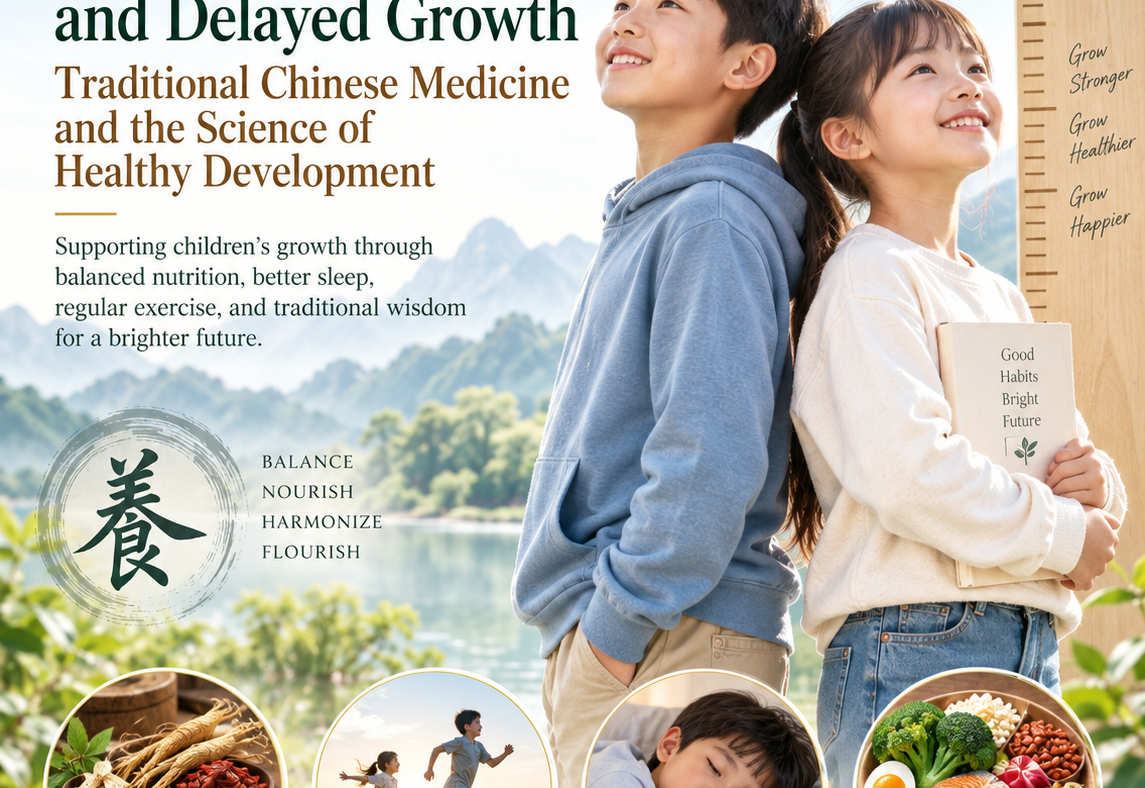
Understanding childhood growth, Kidney Essence, bone development, nutrition, sleep, and the importance of supporting healthy growth during adolescence.
Human growth is one of the most remarkable processes in life. From infancy through adolescence, the body undergoes continuous changes in height, bone structure, muscle development, hormonal activity, and physical maturity.
Traditional Chinese Medicine (TCM) has long emphasized the importance of supporting children during their developmental years. Classical health cultivation describes childhood and puberty as periods when the body’s vital resources are actively involved in growth and maturation.
Modern medicine provides additional insight into these processes through the study of genetics, growth hormones, skeletal development, nutrition, and the biological mechanisms that determine adult height.
Understanding both perspectives can help families develop realistic expectations, recognize potential growth concerns, and support children in reaching their individual growth potential.
Understanding Short Stature and Childhood Growth
Every child grows according to an individual developmental pattern.
Some children are naturally taller than their peers, while others are shorter because of inherited characteristics or differences in the timing of puberty.
Height alone does not determine whether a child is healthy.
In clinical practice, short stature is commonly defined as height below the third percentile for children of the same age and sex, using an appropriate growth reference.
However, a single measurement cannot provide a complete understanding of a child’s growth.
Growth velocity, family height patterns, nutritional status, medical history, and pubertal development are also important.
A child who is shorter than average but continues growing steadily may simply have a familial pattern of short stature.
By contrast, a child whose growth rate slows unexpectedly may require further investigation, even when their current height remains within the typical range.
The objective is not to make every child reach an arbitrary height. It is to understand whether growth is progressing appropriately for that individual.
The Traditional Chinese Medicine Perspective on Growth and Development
Traditional Chinese Medicine approaches growth through the relationships among the body’s functional systems, Qi, Blood, Yin, Yang, and Essence.
Within this framework, the Kidneys and Liver are considered particularly important for physical development.
Classical Chinese medicine states:
“The Kidneys govern the bones, and the Liver governs the sinews.”
The traditional Kidney system is associated with the preservation of Essence, growth, reproduction, and aging.
The Liver system is traditionally associated with Blood storage and the nourishment of tendons and other connective tissues.
These concepts are part of TCM’s historical framework and should not be interpreted as direct equivalents of the anatomical kidneys and liver.
Kidney Essence and Skeletal Development
In Traditional Chinese Medicine, Kidney Essence is regarded as a foundational resource involved in growth and maturation.
Classical practitioners describe sufficient Kidney Essence as supporting the healthy development of bones, teeth, and other bodily structures.
When a child experiences delayed growth, a traditional practitioner may consider patterns involving Kidney Essence deficiency.
However, short stature does not independently establish such a pattern, and a traditional diagnosis cannot replace medical evaluation for growth disorders.
Modern medicine recognizes that skeletal growth depends on genetic influences, hormonal regulation, adequate nutrition, and the activity of specialized growth plates within developing bones.
Liver Blood and the Nourishment of the Body
Traditional Chinese Medicine also associates the Liver with the nourishment of sinews and the smooth regulation of bodily functions.
Within this framework, the relationship between Liver Blood and Kidney Essence reflects the traditional principle that these two functional systems share a common source.
This concept encourages attention to the child’s overall constitution, nourishment, physical activity, and developmental condition.
Modern physiology explains these processes through distinct biological mechanisms involving nutrient delivery, tissue synthesis, endocrine signaling, and musculoskeletal development.
Both perspectives highlight the importance of supporting the body during childhood, although their explanatory models are not medically interchangeable.
Why Puberty Is an Important Period for Height Growth
Puberty is characterized by substantial hormonal and physical changes.
During this period, the body experiences increased activity of growth hormone, insulin-like growth factor 1 (IGF-1), and sex hormones.
These hormonal signals contribute to the adolescent growth spurt, a period of accelerated height gain.
The timing and duration of this growth spurt vary considerably.
Girls generally begin puberty earlier than boys, but there is a wide range of normal development.
Some children mature early, while others experience a later growth spurt.
Consequently, there is no universal age at which all girls or boys stop growing.
Although traditional literature sometimes emphasizes specific developmental ages, modern medicine assesses growth according to the individual’s biological maturity rather than chronological age alone.
The Role of Growth Plates in Determining Height
Longitudinal bone growth occurs primarily at specialized regions called growth plates, or epiphyseal plates.
These cartilage-rich structures are located near the ends of many developing bones.
During childhood and adolescence, cartilage cells within the growth plates multiply, mature, and are gradually replaced by bone tissue.
This process contributes to increasing bone length.
As skeletal maturation progresses, the growth plates eventually close.
Once the growth plates have fused, further natural lengthening of those bones is no longer possible.
This is why growth potential depends not only on age but also on skeletal maturity and the timing of puberty.
For children with suspected growth disorders, healthcare professionals may recommend a bone-age examination.
This commonly involves an X-ray of the left hand and wrist to assess skeletal maturity and estimate remaining growth potential.
Bone age helps guide clinical assessment, although it cannot predict final adult height with complete certainty.
Why Some Children Grow More Slowly Than Others
Several factors can influence childhood growth.
Genetics plays an important role in determining an individual’s expected height range.
Children with shorter parents may naturally have a lower adult height than children with taller parents.
Other children may experience constitutional delay of growth and puberty, meaning their developmental timetable is later than that of many peers.
However, certain medical conditions can also interfere with growth.
Potential contributing factors include inadequate nutrition, growth hormone deficiency, thyroid disorders, chronic inflammatory conditions, gastrointestinal disorders affecting nutrient absorption, and some genetic conditions.
Children born small for gestational age may also require additional growth monitoring.
Because the underlying causes differ, effective treatment depends on identifying the specific problem.
A child with a nutritional deficiency may benefit from correcting that deficiency, while a child with a diagnosed endocrine disorder may require specialized medical treatment.
No single supplement, herbal formula, or exercise program can address every cause of short stature.
The Importance of Nutrition During Childhood and Adolescence
Adequate nutrition provides the building materials necessary for healthy growth.
The body requires sufficient energy, protein, vitamins, and minerals to support developing bones, muscles, organs, and other tissues.
Protein contributes to the production and maintenance of structural tissues.
Calcium and vitamin D are important for normal bone development and mineralization.
Other nutrients, including zinc, iron, magnesium, and phosphorus, contribute to a wide range of physiological processes involved in growth and general health.
A balanced diet that includes suitable sources of protein, vegetables, fruit, whole grains, and calcium-rich foods can help children meet their nutritional requirements.
However, consuming large amounts of a particular nutrient does not guarantee additional height.
Supplementation is most appropriate when dietary intake is inadequate, a deficiency has been identified, or a healthcare professional recommends it.
Children with significant dietary restrictions, unexplained weight changes, or concerns about nutrient absorption may benefit from professional nutritional assessment.
Sleep and Growth Hormone: Why Rest Matters
Sleep is an essential component of healthy childhood development.
Growth hormone is released in pulses throughout the day and night, with substantial secretion commonly occurring during deep sleep.
However, it would be inaccurate to suggest that all height growth occurs exclusively during sleep.
Longitudinal growth is a continuous biological process supported by hormonal regulation, nutrition, skeletal development, and overall health.
Adequate sleep helps create the conditions necessary for normal growth and physical recovery.
Children and adolescents also require sufficient sleep to support learning, emotional regulation, immune function, and general well-being.
Recommended Sleep Duration
| Age | Recommended sleep per day |
|---|---|
| 3–5 years | 10–13 hours |
| 6–12 years | 9–12 hours |
| 13–18 years | 8–10 hours |
These recommendations include naps where applicable.
Consistent bedtimes, a comfortable sleeping environment, and limiting stimulating activities before bedtime may help children establish healthier sleep patterns.
Adequate sleep supports normal development, but sleeping beyond the recommended amount does not guarantee extra height.
Physical Activity and Healthy Bone Development
Regular physical activity supports children’s overall physical development.
Movement helps maintain muscle strength, coordination, cardiovascular fitness, and healthy skeletal function.
Age-appropriate activities may include walking, running, swimming, cycling, jumping, sports, and active outdoor play.
Resistance exercises can also be appropriate for children and adolescents when adapted to their developmental stage and performed with suitable supervision.
Traditional practices such as Tai Chi may provide additional opportunities to develop coordination, balance, body awareness, and controlled movement.
However, no particular stretching technique, hanging exercise, or traditional movement sequence has been established as a reliable method for permanently increasing bone length beyond a person’s biological growth potential.
The primary goal of exercise should be to promote physical health, confidence, and functional development rather than to pursue a specific height at any cost.
Can Traditional Chinese Medicine Help Children Grow Taller?
Traditional Chinese Medicine offers a historical perspective on supporting growth through nourishment, balanced living, and individualized health cultivation.
However, claims that Kidney-tonifying herbs or traditional wellness products can reliably produce rapid increases in height are not supported by sufficient high-quality clinical evidence.
Reports of substantial height increases over a short period may reflect normal pubertal growth, differences in measurement, or other factors rather than a treatment effect.
A child’s growth rate should be evaluated over time and interpreted in the context of age, pubertal stage, and previous measurements.
Traditional wellness practices may be incorporated into a healthy lifestyle when appropriate, but herbal preparations should not be given to children without qualified professional guidance.
Herbal products may vary in composition and quality, and some can cause adverse effects or interact with medications.
Children with persistent growth concerns should receive appropriate pediatric assessment rather than relying exclusively on traditional remedies.
Can Adults Naturally Increase Their Height?
Many commercial products promise that adults can become taller through supplements, stretching routines, or hormone-related interventions.
These claims require careful evaluation.
Once skeletal growth plates have closed, ordinary exercise, nutritional supplements, and herbal products cannot restart natural longitudinal bone growth.
Improving posture and strengthening muscles may help a person stand more comfortably and appear more upright.
However, these changes should not be confused with permanent lengthening of the bones.
Adults concerned about their height should be cautious of products promising predictable increases without credible clinical evidence.
Short Stature and Delayed Growth: When Should Parents Seek Medical Advice?
Parents should consider discussing growth concerns with a pediatric healthcare professional when a child is substantially shorter than peers, shows a marked decline in growth velocity, or experiences unexpectedly delayed or early pubertal development.
A healthcare professional may review the child’s growth chart, family history, nutritional status, medical conditions, and pubertal stage.
Depending on the findings, additional investigations may be recommended.
These can include bone-age assessment, blood tests, and evaluation for specific endocrine or genetic conditions.
Some growth disorders have treatments that are most useful when identified before growth plates close.
For this reason, early assessment is preferable to waiting until late adolescence when growth potential may be more limited.
Healthy Growth Is About More Than Height
Height is only one aspect of childhood development.
A child’s physical strength, nutritional status, emotional well-being, learning, mobility, and overall health are equally important.
Excessive pressure to achieve a particular height can negatively affect confidence and body image.
A more supportive approach encourages children to develop healthy habits while respecting their natural differences.
Traditional Chinese health cultivation emphasizes the importance of nourishing the body during its developmental years.
Modern medicine provides the tools to distinguish normal growth variation from medical conditions that may require treatment.
Together, these perspectives can encourage parents to pay attention to growth without turning height into the sole measure of health.
The goal of healthy development is not to make every child taller. It is to give every child the opportunity to grow, mature, and thrive according to their individual biological potential.
Frequently Asked Questions
1. What causes short stature and delayed growth in children?
Short stature and delayed growth may result from genetic factors, constitutional delay of growth and puberty, nutritional deficiencies, hormonal disorders, chronic medical conditions, or certain genetic syndromes. A child’s growth pattern should be evaluated over time rather than judged by a single height measurement.
2. Can Traditional Chinese Medicine help children grow taller?
Traditional Chinese Medicine traditionally associates growth with Kidney Essence and the nourishment of bones and connective tissues. However, there is insufficient high-quality clinical evidence to establish that traditional Kidney-tonifying herbs or wellness products reliably increase height. Children with growth concerns should receive appropriate pediatric assessment.
3. At what age do children stop growing taller?
There is no universal age at which all children stop growing. Growth depends on genetics, pubertal timing, hormonal development, and skeletal maturity. Once the growth plates have fused, natural longitudinal growth of those bones is no longer possible.
4. Does sleeping more help children grow taller?
Adequate sleep supports normal growth, hormonal regulation, and general health. However, sleeping beyond an individual’s needs does not guarantee additional height. Children aged 6–12 generally need 9–12 hours of sleep per day, while teenagers aged 13–18 generally need 8–10 hours.
5. What foods support healthy childhood growth?
A balanced diet containing sufficient energy, protein, calcium, vitamin D, zinc, iron, and other essential nutrients supports normal growth and development. Food choices should be appropriate for the child’s age, nutritional requirements, and individual health needs.
6. Can exercise increase a child’s height?
Regular physical activity supports healthy bones, muscles, coordination, and overall development. However, no specific stretching routine, sport, or exercise has been established as a guaranteed method for increasing adult height beyond an individual’s biological growth potential.
7. What is a bone-age examination?
A bone-age examination commonly involves an X-ray of the left hand and wrist to assess skeletal maturity. Healthcare professionals may use this information alongside growth charts, family history, and other clinical findings when evaluating a child’s growth potential.
8. When should parents consult a doctor about their child’s height?
Parents should seek professional advice if their child is substantially shorter than expected, grows more slowly than before, crosses downward through growth-chart percentiles, or shows concerning changes in pubertal development. Early assessment can help identify medical conditions that may require treatment.
Medical Disclaimer
This article is intended for educational and informational purposes only and does not constitute medical advice, diagnosis, or treatment. Traditional Chinese Medicine concepts are presented as historical and cultural health frameworks and should not be interpreted as established biomedical diagnoses. Parents concerned about a child’s height, growth rate, pubertal development, or nutritional status should consult a qualified pediatric healthcare professional. Herbal remedies, supplements, and commercial height-increasing products should not replace appropriate medical evaluation or treatment.
This article is for general education and does not replace individualized care from a qualified health professional. Seek appropriate advice for persistent, severe, or concerning symptoms.
Read the full medical disclaimer