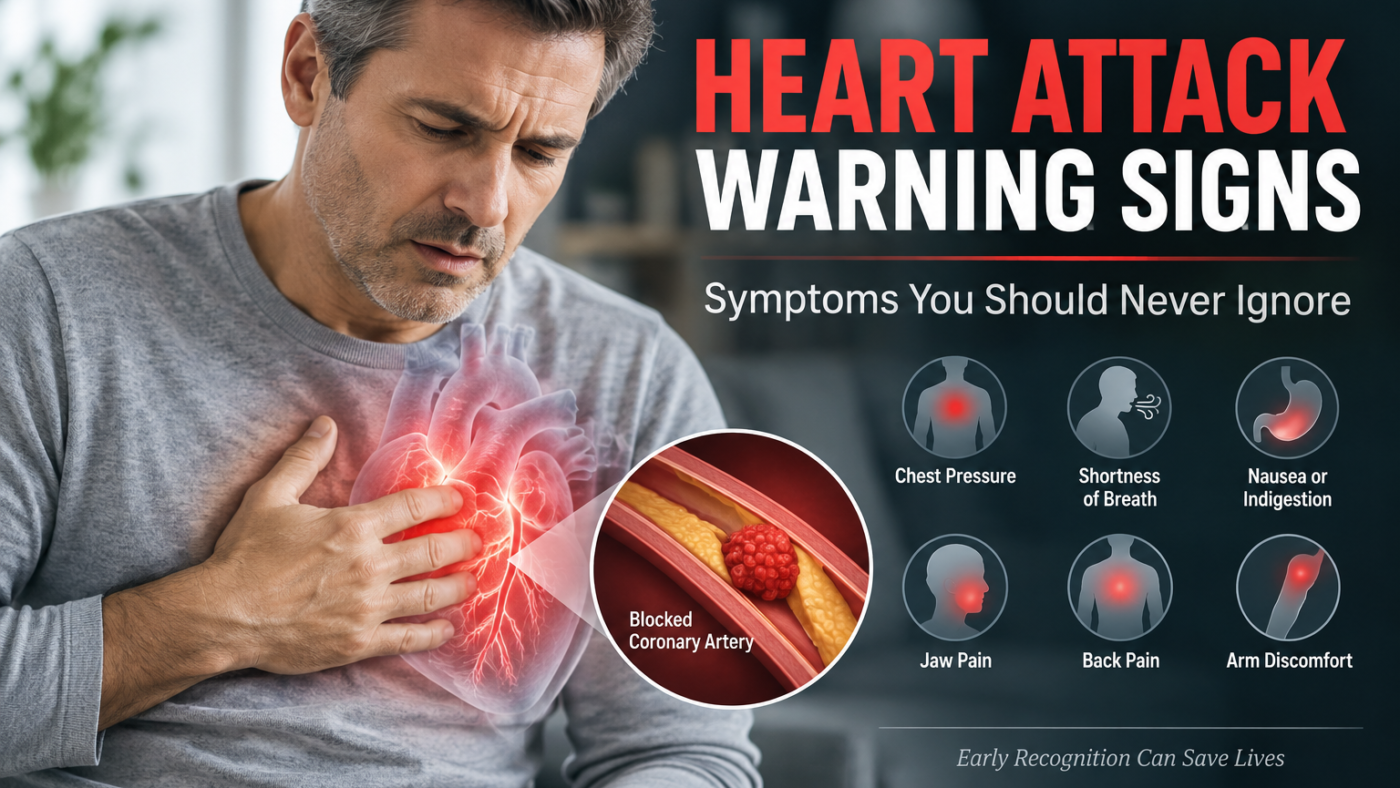
Heart attack warning signs are not always obvious. A heart attack may begin with chest pressure, shortness of breath, nausea, unusual fatigue, jaw or back discomfort, or symptoms that feel like indigestion. Recognizing these signs early and seeking emergency care quickly can help limit heart damage and save lives.A recent medical emergency involving 49-year-old Taiwanese entertainer and basketball executive Chen Chien-chou has drawn renewed attention to one of the most dangerous realities of a heart attack: the warning signs are not always dramatic.
According to media reports, Chen developed chest discomfort while attending a basketball event and was later diagnosed with an acute myocardial infarction. His wife told reporters that one of his coronary arteries was approximately 90% blocked. He underwent emergency treatment, including placement of a coronary stent, and was reported to be recovering after the procedure.
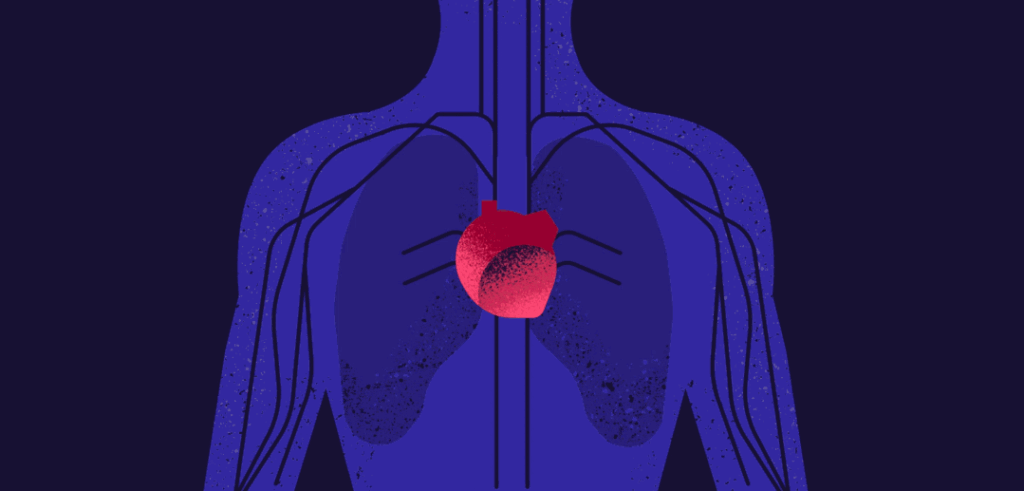
The case attracted particular attention because Chen had a long history of sports and regular exercise. But physical fitness does not make a person immune to coronary artery disease.
More importantly, heart attacks do not always begin with the crushing chest pain often portrayed in movies. Some start gradually. Others feel like indigestion, pressure, nausea, unusual fatigue, shortness of breath, jaw discomfort, back pain or a vague sense that something is seriously wrong.
Recognizing those signals early can save heart muscle — and potentially a life.
What Actually Happens During a Heart Attack?
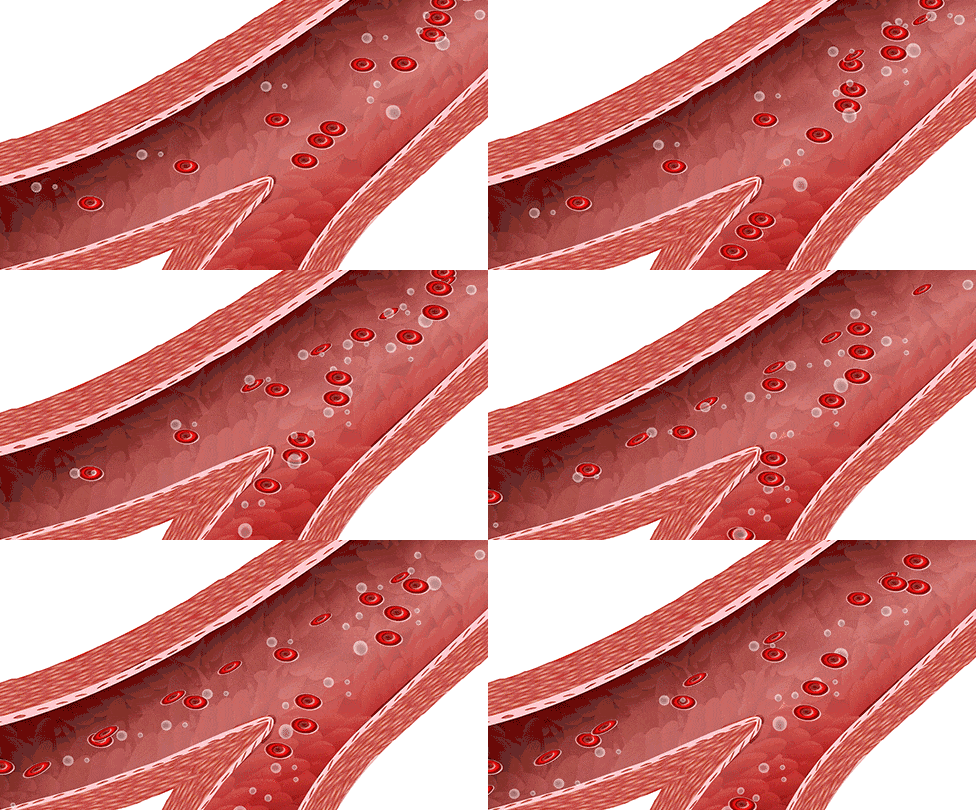
A heart attack, medically known as myocardial infarction, occurs when blood flow through a coronary artery becomes severely reduced or blocked.
In many cases, the underlying process begins years earlier as cholesterol-rich plaque gradually develops within the artery wall. A heart attack may occur when one of these plaques suddenly ruptures or erodes, triggering formation of a blood clot.
That clot can rapidly reduce or completely stop blood flow to part of the heart muscle.
Without enough oxygen, heart muscle cells begin to suffer injury and eventually die. This is why emergency cardiology often emphasizes a simple principle: time is muscle.
The longer blood flow remains blocked, the greater the potential damage.
Importantly, a heart attack does not necessarily require an artery to have been severely narrowed for months or years beforehand. A plaque that previously caused only moderate narrowing can become dangerous if it suddenly ruptures and produces a large clot.
This also explains why someone may exercise normally one day and experience an acute coronary event shortly afterward.
Heart Attack Symptoms Can Be Easy to Misinterpret
The classic symptom is pressure, squeezing, heaviness, tightness or pain in the center of the chest.
Some people describe the sensation as if a heavy object were sitting on their chest. But symptoms vary considerably from person to person.
Discomfort may spread into one or both arms, the shoulders, neck, jaw, upper abdomen or back. Shortness of breath may occur either with or without obvious chest pain.
Other warning signs may include cold sweating, nausea, vomiting, dizziness, lightheadedness, unusual weakness, fatigue or a rapid or irregular heartbeat.
Some people experience relatively mild discomfort rather than severe pain. Symptoms may disappear temporarily and then return.
This is one reason a heart attack may initially be mistaken for acid reflux, indigestion, muscle strain, anxiety or exhaustion.
Why “Stomach Pain” Can Sometimes Be a Heart Warning
The heart, esophagus and upper abdominal organs share complex nerve pathways. Because of this, the brain may not always identify the exact origin of internal pain correctly.
A cardiac problem can therefore occasionally produce discomfort that feels as though it is coming from the upper stomach.
Nausea, vomiting and indigestion-like sensations can also accompany an acute coronary syndrome.
This does not mean that ordinary stomach discomfort is usually caused by heart disease. Most digestive symptoms have non-cardiac explanations.
The important distinction is context.
New or unexplained upper abdominal discomfort becomes more concerning when it occurs together with chest pressure, shortness of breath, sweating, dizziness, unusual weakness or discomfort spreading toward the arm, back, neck or jaw.
When several of these symptoms appear together — particularly in someone with cardiovascular risk factors — it is safer to treat the situation as potentially serious rather than waiting to see whether an antacid solves the problem.
These heart attack warning signs can sometimes be mistaken for digestive problems, especially when chest discomfort is mild or unusual.
There Is No Universal “One-Hour Warning”
Heart attacks do not follow a precise countdown.
Some people develop symptoms gradually over several hours. Others experience intermittent warning signs during the preceding days. Some heart attacks occur suddenly with little obvious warning.
For this reason, statements suggesting that everyone receives a recognizable warning exactly one hour before a heart attack can be misleading.
What matters is not memorizing a particular timeline. What matters is noticing a new pattern of suspicious symptoms and responding quickly.
Increasing chest pressure, worsening shortness of breath, sweating, nausea or pain spreading through the upper body should never be ignored simply because the symptoms do not fit a textbook description.
Fit People Can Still Have Heart Attacks
Regular physical activity is one of the most powerful ways to reduce cardiovascular risk, but exercise cannot completely eliminate it.
Coronary artery disease is influenced by many factors, including blood pressure, LDL cholesterol, blood glucose, smoking, family history, age, abdominal obesity, chronic kidney disease, inflammatory disorders and other metabolic conditions.
Genetics also matter.
Someone may appear lean, athletic and physically strong while still having elevated cholesterol, high blood pressure or developing coronary plaque.
Exercise should therefore be viewed as an important protective factor rather than a guarantee against cardiovascular disease.
This distinction becomes increasingly important after age 40, when cardiovascular risk factors often begin accumulating even in people who feel completely healthy.
Even in physically active adults, heart attack warning signs should never be dismissed simply because a person appears fit and healthy.
A Normal Health Check Does Not Guarantee Zero Risk
Routine health screening is extremely valuable, but no single test can guarantee that a future heart attack will not occur.
A resting electrocardiogram, for example, records the heart’s electrical activity during a short period of time. A normal result does not necessarily show whether coronary plaque is present.
Likewise, someone may have acceptable blood pressure or cholesterol measurements at one appointment while still carrying other cardiovascular risks.
This does not make routine screening useless. It means results should be interpreted as part of a broader cardiovascular picture.
Blood pressure, blood lipids, blood glucose, body composition, lifestyle, smoking history and family history should all be considered together.
People with strong family histories of premature coronary disease or multiple cardiovascular risk factors may need more individualized assessment.
Heart Attack and Cardiac Arrest Are Not the Same Thing
These terms are frequently confused, but they describe different medical emergencies.
A heart attack is primarily a circulation problem. Blood flow through a coronary artery becomes severely reduced or blocked, depriving heart muscle of oxygen.
Cardiac arrest is an electrical emergency in which the heart suddenly stops pumping blood effectively. A person usually becomes unresponsive and stops breathing normally.
A severe heart attack can trigger a dangerous arrhythmia and lead to cardiac arrest, but many people experiencing a heart attack remain conscious and continue breathing.
If someone suddenly collapses, becomes unresponsive and is not breathing normally, emergency services should be contacted immediately. CPR should begin as quickly as possible, and an automated external defibrillator, or AED, should be used when available.
Immediate action can dramatically improve the chance of survival.
What to Do When a Heart Attack Is Suspected
Do not wait for symptoms to become unbearable.
Persistent or unexplained chest pressure, squeezing or heaviness — particularly when accompanied by shortness of breath, sweating, nausea, weakness or upper-body discomfort — deserves urgent medical attention.
Contact emergency medical services rather than driving yourself to the hospital whenever possible.
Emergency medical teams can assess the patient, begin treatment and alert the hospital before arrival. If the condition suddenly deteriorates into cardiac arrest, trained responders are also equipped to provide resuscitation.
Trying different stomach medications, sleeping through the symptoms or waiting several hours to see whether the discomfort disappears can cost valuable time.
When the heart is being deprived of blood, minutes matter.
Reducing Your Long-Term Heart Attack Risk
Most heart attacks develop from risk factors accumulating over many years.
Avoiding tobacco is one of the most important preventive measures. Smoking damages blood vessels, promotes inflammation and significantly increases cardiovascular risk.
Blood pressure, LDL cholesterol and blood glucose should also be monitored and treated when necessary.
A heart-healthy diet emphasizes vegetables, fruits, legumes, whole grains, nuts, fish and other minimally processed foods while limiting excessive sodium, highly processed foods and large amounts of saturated fat.
Regular movement matters as well. For most adults, international health guidelines recommend approximately 150–300 minutes of moderate-intensity aerobic activity each week, together with muscle-strengthening exercise on at least two days.
Alcohol should not be considered a cardiovascular health strategy. Alcohol consumption carries health risks, and greater consumption generally produces greater harm.
Sleep, recovery and stress management are also important components of long-term cardiovascular health.
Most importantly, prevention is not about relying on one “perfect” number. Cardiovascular health is the combined result of blood pressure, cholesterol, glucose control, smoking status, physical activity, nutrition, body composition, genetics and many other factors.
The Most Important Lesson
Heart attacks do not only happen to people who look unhealthy.
They do not always begin with dramatic chest pain.
And they do not follow a predictable one-hour countdown.
Sometimes the earliest warning is simply an unfamiliar pressure in the chest, unusual breathlessness, nausea, back or jaw discomfort, or a sensation that feels surprisingly similar to indigestion.

The safest response is not panic — but prompt recognition and appropriate emergency care.
When suspicious cardiovascular symptoms are new, persistent, worsening or accompanied by sweating, breathing difficulty, dizziness or spreading upper-body discomfort, seeking emergency medical attention quickly can make an enormous difference.
Heart muscle cannot wait.
FAQ
Can a heart attack feel like indigestion?
Yes. Some people experiencing a heart attack may feel pressure, burning, nausea or discomfort in the upper abdomen that resembles indigestion. New or unexplained digestive-like symptoms accompanied by chest pressure, sweating, shortness of breath, dizziness or discomfort spreading to the arm, jaw or back require urgent medical attention.
Can you have a heart attack without chest pain?
Yes. Although chest pressure or discomfort is common, some heart attacks present with shortness of breath, nausea, unusual fatigue, sweating, dizziness, back pain, jaw discomfort or upper abdominal symptoms without severe chest pain.
Are there warning signs one hour before a heart attack?
There is no universal one-hour warning period. Some people experience symptoms hours or days beforehand, while others develop symptoms suddenly. New, persistent or worsening cardiovascular symptoms should therefore be taken seriously regardless of when they begin.
Can physically fit people have heart attacks?
Yes. Regular exercise lowers cardiovascular risk but does not eliminate it. Genetics, high blood pressure, elevated LDL cholesterol, diabetes, smoking, chronic inflammation and coronary artery plaque can still contribute to heart disease in physically active people.
Can a normal ECG rule out a future heart attack?
No. A normal resting ECG does not guarantee that coronary artery disease is absent or that a future heart attack cannot occur. Cardiovascular risk should be assessed using multiple factors, including blood pressure, cholesterol, blood glucose, lifestyle and family history.
What should I do if I think I am having a heart attack?
Seek emergency medical assistance immediately. Do not wait for severe pain or attempt to diagnose the symptoms yourself. Emergency treatment is particularly important when chest discomfort occurs with shortness of breath, sweating, nausea, dizziness or spreading upper-body pain.
What is the difference between a heart attack and cardiac arrest?
A heart attack occurs when blood flow to part of the heart muscle becomes severely reduced or blocked. Cardiac arrest occurs when the heart suddenly stops pumping blood effectively. A severe heart attack can sometimes trigger cardiac arrest, but they are not the same condition.
How can I lower my risk of heart attack?
Avoid tobacco, maintain healthy blood pressure, cholesterol and glucose levels, stay physically active, eat a balanced diet, maintain a healthy weight, sleep adequately and receive appropriate medical care for cardiovascular risk factors.
Medical Disclaimer
This article is for educational and informational purposes only and is not intended to provide medical advice, diagnosis or treatment. Symptoms of heart attack can vary significantly between individuals. Anyone experiencing possible symptoms of a heart attack or another medical emergency should contact local emergency medical services immediately.
This article is for general education and does not replace individualized care from a qualified health professional. Seek appropriate advice for persistent, severe, or concerning symptoms.
Read the full medical disclaimer