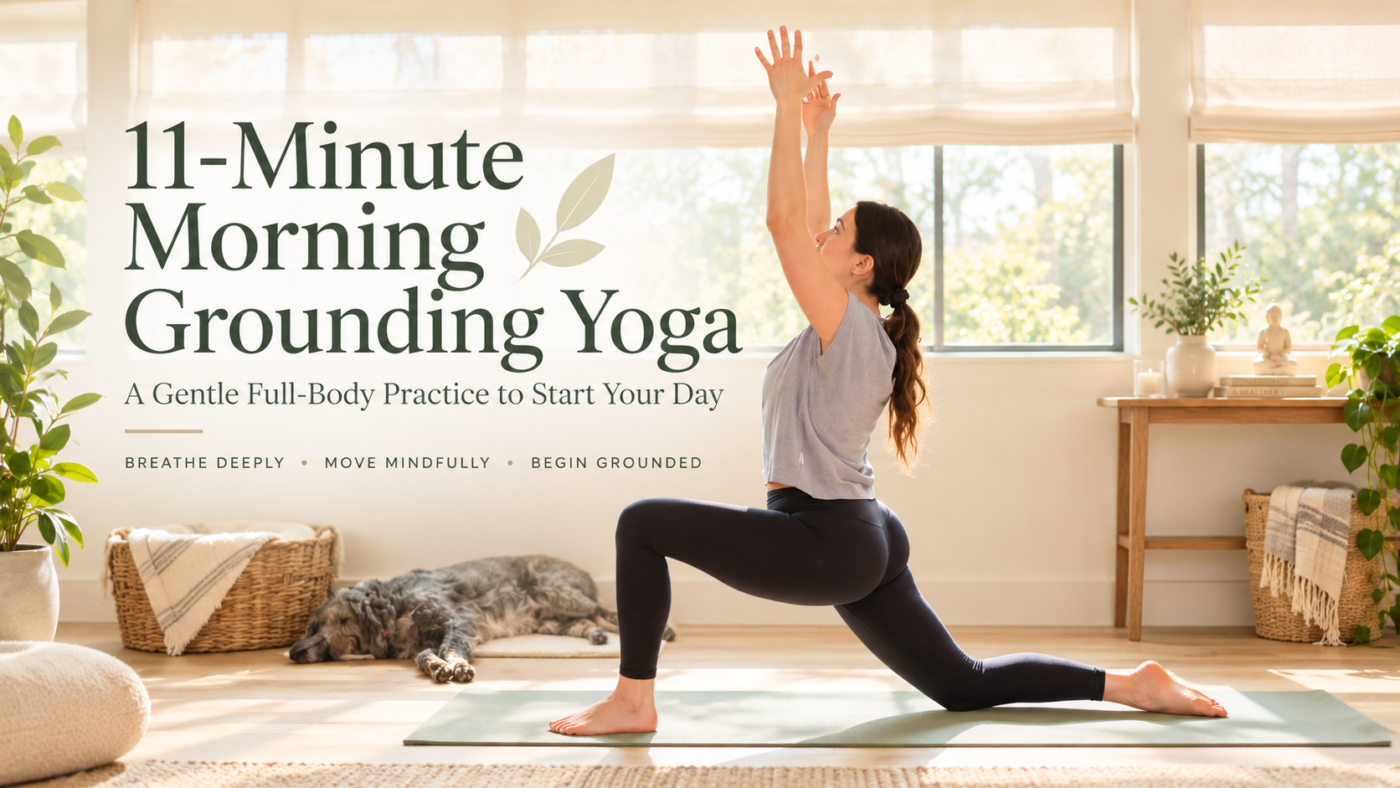
11-minute morning grounding yoga can be a simple way to move, breathe, and reconnect with your body before the demands of the day begin. This gentle full-body practice combines seated breathing, spinal mobility, calf stretching, low lunges, forward folds, standing stretches, and balance work without requiring an intense workout.
The emphasis is not on pushing flexibility or working harder. Instead, the sequence encourages controlled movement, steady breathing, and a gradual transition from stillness into activity.
A calm morning does not require a long workout. Sometimes a few minutes of deliberate breathing, gentle mobility, balance work, and full-body stretching can be enough to help you transition from sleep into the day with greater awareness.
This approximately 11-minute morning grounding yoga practice begins in a comfortable seated position with slow breathing and a simple intention for the day, then progresses through spinal mobility, calf and ankle stretching, low lunges, forward folds, standing stretches, and gentle balance work.
The emphasis is not on intensity. Instead, the practice encourages steady breathing, controlled movement, and a sense of connection to the body before the demands of the day begin.
Begin With a Comfortable Seat
Start in any seated position that allows you to feel supported.
If your hips or lower back feel restricted, sit on a folded blanket, cushion, or yoga block. A little elevation beneath the hips can make it easier to lengthen through the spine without straining.
Sit tall without becoming rigid.
Take a deep breath in.
As you exhale, allow the shoulders to become heavy and move away from the ears.
Repeat for several breaths.
You may also explore a few very small movements through the neck if that feels comfortable.
The purpose of these first moments is simple: arrive physically and mentally before beginning the more active part of the practice.
Set a Simple Intention for the Day
Bring the palms together in front of the chest in Anjali Mudra, or prayer position.
Lower the chin slightly and let the back of the neck lengthen.
Take a moment to choose one simple intention.
It does not need to be complicated.
You might choose a word such as:
Calm
Patience
Focus
Energy
Kindness
Steadiness
Or choose a short sentence that reflects how you would like to move through your day.
An intention is not a prediction or a promise. It is simply a point of attention you can return to later.
Wake Up the Spine With Cat-Cow
Move onto your hands and knees.
Position the wrists approximately beneath the shoulders and the knees beneath the hips.
As you inhale, gently lower the belly, open through the chest, and look slightly forward.
As you exhale, press into the hands, round the spine, and bring the chin toward the chest.
Continue for several slow cycles.
Let your breathing guide the movement rather than rushing from one position to another.
This simple spinal sequence creates movement through both the front and back of the torso and prepares the body for the stretches that follow. The original routine specifically pairs inhalation with opening the front body and exhalation with rounding the spine.
Stretch the Calves and Achilles
Return to a neutral tabletop position.
Extend the right leg behind you and tuck the right toes under.
Press backward through the heel while keeping the toes on the floor.
Slowly rock the body forward and backward.
You may feel the stretch through the foot, Achilles tendon, and calf.
Keep pressing through the hands and maintain gentle support through the abdomen.
After several movements, return to center and repeat on the left side.
There is no need to create a strong stretch. A small, controlled movement is enough.
Add Gentle Balance From Tabletop
From hands and knees, extend the right leg behind you and lift it until it feels stable.
Try to keep the pelvis relatively level.
If your balance feels comfortable, extend the left arm forward.
Reach in opposite directions through the lifted heel and fingertips.
Take one slow breath.
Then lower the arm and leg with control.
Repeat with the left leg and right arm.
This position asks the body to coordinate the shoulders, trunk, hips, and balance system while remaining connected to the breath.
If extending the arm makes the movement unstable, keep both hands on the floor.
Give Your Wrists a Break
After working in tabletop, sit back briefly and take pressure off the wrists.
Circle them slowly in both directions.
You can also gently massage the hands and wrists.
This short pause is especially useful if you spend much of the day typing, using a phone, or working at a desk.
Then return to all fours.
Move Into a Low Lunge
Extend the right leg behind you.
On an exhale, bring the right foot forward between the hands.
Keep the back knee on the floor and adjust it slightly backward until the position feels spacious.
Aim to keep the front knee approximately above the ankle.
Bring the hands to the waist.
Lengthen through the torso and gently engage the abdominal area.
Stay here if this already feels like enough.
For a larger movement, allow the hips to settle slightly forward while keeping the position controlled.
If comfortable, inhale and sweep both arms overhead.
Lift through the chest without forcing the lower back into a large arch.
Take a slow breath, then lower the hands and return to all fours.
Repeat on the left side.
The practice emphasizes building each lunge slowly from the ground up rather than simply swinging into position. 粘贴的文本 (1).txtTXT
Pause in a Standing Forward Fold
After completing the second lunge, bring the back foot forward until both feet are approximately hip-width apart.
Fold forward.
Bend the knees generously.
Allow the abdomen to move toward the thighs.
You do not need straight legs.
Let the head and neck remain relaxed while you take several slow breaths.
Feel the entire surface of each foot on the floor.
Rather than focusing only on stretching the hamstrings, experience the position as a whole-body pause.
Rise Slowly Into Mountain Pose
Keep the knees slightly bent.
Bring the hands to the waist.
Press through the feet and slowly rise to standing.
Once upright, pause in Mountain Pose.
Let both feet feel firmly connected to the ground.
Lengthen gently through the legs and torso.
Imagine the crown of the head moving upward while the feet continue pressing downward.
Avoid locking the knees or holding the breath.
This is a useful moment to notice the difference between standing automatically and standing with deliberate awareness.
Add a Full-Body Side Stretch
Reach both arms overhead.
Take hold of the left wrist with the right hand.
Lengthen upward first, then gently lean to the right.
Keep both feet grounded.
Return to center.
Switch the grip and lean to the left.
The goal is not to move as far sideways as possible. Focus on creating length through the side of the torso while maintaining a stable lower body.
Return to the center.
Open the Chest
Bend the elbows into a cactus-arm position.
Then lower the arms and interlace the fingers behind the back if that movement is comfortable for your shoulders.
Gently draw the hands away from the body as the chest opens.
Keep the neck relaxed.
Take several slow breaths.
If clasping the hands behind your back feels uncomfortable, simply keep the arms alongside the body and broaden gently across the chest.
Finish With Simple Toe Balance
Bring the palms together near the chest.
If you would like an additional balance challenge, bring the feet closer together.
Choose a stationary point in front of you to look at.
This visual focal point is sometimes called a drishti.
Slowly lift the heels and rise onto the balls of the feet.
Pause briefly.
Lower with control.
Repeat two more times.
Do not worry about how high you lift.
The purpose is to practice steadiness, not to test yourself.
Keep a chair or wall nearby if you would feel more secure with support.
Return to Your Intention
Finish by standing comfortably with the palms together.
Take one final breath.
Notice your body.
Notice your breathing.
Recall the intention you chose at the beginning of the practice.
You do not need to feel dramatically different after 11 minutes.
The value of a short morning practice can simply come from having moved deliberately, breathed consciously, and paid attention before continuing with the rest of the day.
Why This Routine Works Well in the Morning
A useful morning movement practice does not have to be exhausting.
This sequence combines several different movement qualities:
Gentle spinal mobility
Calf and ankle stretching
Low-lunge hip movement
Cross-body balance
Forward folding
Standing posture awareness
Side-body stretching
Chest opening
Simple standing balance
Because the movements change gradually from seated to kneeling and finally to standing, the routine provides a natural progression from stillness toward greater activity.
Make the Practice Fit Your Body
Yoga should be adapted rather than forced.
If sitting on the floor is uncomfortable, elevate the hips.
If the wrists are sensitive, reduce the amount of time spent on hands and knees.
If a low lunge feels too deep, shorten the stance.
If forward folding creates excessive tension, bend the knees more.
If balancing on the toes feels unstable, keep one hand against a wall or chair.
Your version of the practice does not need to look identical to anyone else’s.
Final Thoughts
Morning movement can be simple.
A few slow breaths, several gentle mobility exercises, a pair of lunges, a forward fold, and a moment of standing balance can create a structured transition into the day without requiring a long workout.
The most important elements are not flexibility or perfect technique.
Move slowly.
Stay aware of your breath.
Use modifications when needed.
And let the practice help you begin the day feeling connected to where you are right now.
FAQ
Is 11 minutes of morning yoga enough?
Yes. A short routine can still provide meaningful movement variety when it includes breathing, mobility, stretching, and balance. This practice moves progressively from seated breathing to kneeling and then standing movements.
Is this 11-minute morning grounding yoga suitable for beginners?
It can be adapted for many beginners because the movements are slow and several positions can be modified. You can sit on a cushion, shorten the lunge, bend the knees in forward folds, or use a wall or chair for balance.
What does grounding mean in yoga?
In this context, grounding means bringing attention to physical contact with the floor, breathing, posture, and present-moment body awareness. It is not a medical treatment or a claim about changing the body’s electrical state.
Can I practice this yoga routine every morning?
Many people can use a gentle routine regularly, but frequency should depend on comfort, recovery, current fitness, and any existing injuries or medical conditions.
Do I need to be flexible?
No. Flexibility is not required. The original sequence specifically allows bent knees, supported sitting, adjustable lunges, and gradual movement.
What if my wrists feel uncomfortable in tabletop?
Reduce the amount of time on your hands, take wrist breaks, or modify the position. The original practice itself includes a pause to circle or massage the wrists.
Yes. A wall or chair can provide additional stability during the final toe-balance portion.
Is this routine a workout?
It is better described as a gentle mobility and yoga practice rather than a high-intensity workout. Its purpose is controlled movement, breathing, posture awareness, and light balance work.
Medical Disclaimer
This article is provided for educational and informational purposes only and is not medical advice. Exercise and yoga should be adapted to your individual abilities, mobility, and health status. Stop any movement that causes sharp pain, dizziness, numbness, tingling, or unusual discomfort. If you have a recent injury, significant joint or balance problems, or another health condition that may affect your ability to exercise safely, seek appropriate professional guidance before beginning a new movement routine.
This article is for general education and does not replace individualized care from a qualified health professional. Seek appropriate advice for persistent, severe, or concerning symptoms.
Read the full medical disclaimer