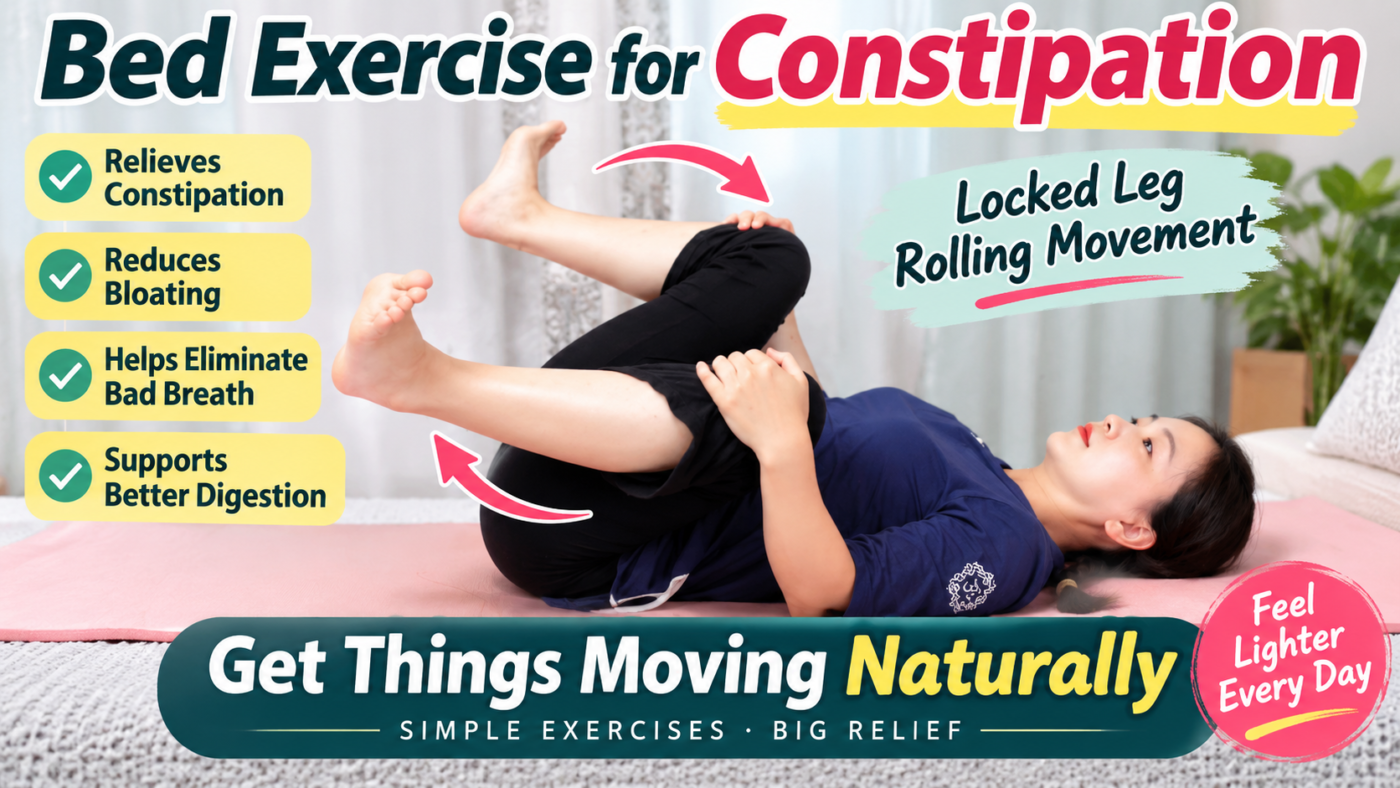
Morning exercises for constipation can be a gentle way to start the day when you feel bloated, heavy, or uncomfortable. While no single exercise can cure chronic constipation, light movement may help some people feel more comfortable by supporting regular physical activity, relaxing abdominal tension, and building a consistent morning routine.Constipation can leave you feeling heavy, bloated, uncomfortable, and reluctant to start the day. While no single exercise can cure chronic constipation, gentle movement may help some people feel more comfortable by encouraging overall body movement, relaxing abdominal tension, and supporting a regular morning routine.
The good news is that movement does not always have to mean getting dressed for a workout or heading outside for a walk.
This simple four-movement routine can be performed while lying in bed shortly after waking. It combines gentle rocking, knee-to-chest positions, controlled breathing, and light trunk movement into a routine that takes about 10 minutes.
Think of it as a gentle way to wake up your hips, lower back, abdomen, and entire body before getting out of bed.
Why Gentle Morning Movement May Help
The digestive system follows natural daily rhythms, and bowel activity often becomes more active after waking and eating breakfast. Regular movement, adequate fluid intake, sufficient dietary fiber, and consistent bathroom habits can all contribute to healthy bowel function.
The movements in this routine repeatedly bring the thighs toward the abdomen while gently changing pressure through the trunk. They may also stretch the lower back and hips, which can feel especially useful after several hours of sleep or for people who spend much of the day sitting.
Some people notice abdominal gurgling or an urge to pass gas during knee-to-chest movements. This can happen as the position of the abdomen changes, but it should not be interpreted as proof that constipation has been “cleared” or that toxins are being removed.
The goal is simply comfortable movement.
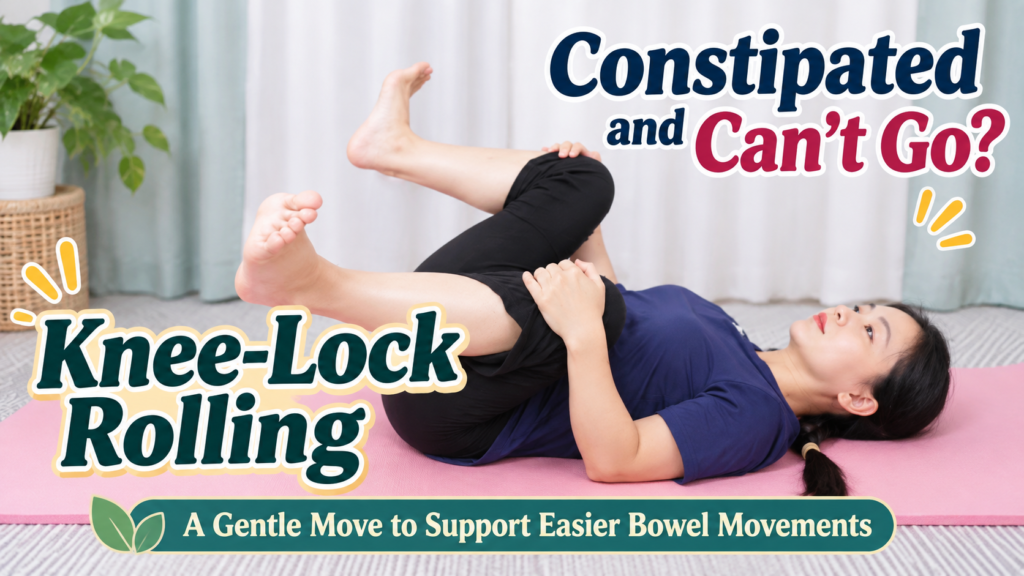
Movement 1: Knee-to-Chest Rolling
Begin by lying comfortably on your back.
Bend both knees and bring them toward your chest. Wrap your hands around your shins and hold your legs comfortably in position.
Keep your shoulders relaxed.
Side-to-Side Rocking
With both knees held toward your chest, gently roll your body toward the left.
Allow your shoulder, back, and hip to move together rather than twisting aggressively through the spine. You may notice a mild stretch through one side of the waist and lower back.
Return to the center and roll toward the right.
Continue slowly from side to side.
Try approximately three gentle rolls in each direction.
The movement should feel smooth rather than forceful. There is no need to push your knees as far as possible toward the mattress.
Gentle Forward-and-Back Rocking
From the same knees-to-chest position, you can progress to a small forward-and-back rocking motion if it feels comfortable.
Engage your abdominal muscles lightly and allow your body to rock along the curve of your back.
The movement should remain controlled.
Avoid throwing your head forward or rolling directly onto your neck. If you have neck pain, significant back problems, osteoporosis, poor balance, or simply do not feel secure performing this variation, skip it and continue with the gentler side-to-side version.
A practical starting point is about 10 controlled rocks. Rest and repeat if comfortable.
The original routine uses up to three rounds, but beginners do not need to start with the full amount.
Movement 2: Static Double Knee-to-Chest Hold
After the rolling movement, remain on your back.
Bend both knees and draw them toward your torso. Hold your shins or the backs of your thighs.
Instead of repeatedly rocking, stay still.
Allow the thighs to rest comfortably toward the abdomen without forcing them downward.
Keep breathing normally.
You can gently lift your head and shoulders if this feels comfortable, but this is optional. For many people, keeping the head supported on the bed is more relaxing and places less stress on the neck.
Hold the position for approximately three slow breaths.
Then release your legs, extend them briefly, and relax.
Repeat three to five times if the position remains comfortable.
This static version provides a gentle stretch through the hips and lower back while allowing the abdominal wall to relax between repetitions.
Movement 3: Single-Leg Knee-to-Chest Stretch
Return to a comfortable lying position with both legs extended.
Keep the left leg long while bending your right knee.
Bring the right knee toward your torso and hold the shin or back of the thigh with both hands.
Keep your pelvis relaxed and avoid lifting the hip aggressively away from the bed.
Take a slow breath in.
As you exhale, gently draw the knee a little closer if your mobility allows. There is no need to force the knee against the chest.
You may optionally lift your head and shoulders slightly toward the knee, but this should never cause neck strain.
Inhale as you relax.
Repeat approximately three to five times.
Then switch sides.
Perform the same sequence with the left leg while keeping the right leg comfortably extended.
This unilateral version can be particularly pleasant for people who wake with stiffness around the hips, waist, or lower back.
Movement 4: Relaxed Double Knee-to-Chest Pose
Finish the sequence with the simplest position.
Lie flat on your back.
Bend both knees and bring them toward your chest.
Place your hands around your knees, shins, or behind your thighs, depending on what feels most comfortable.
Keep your shoulders, neck, and jaw relaxed.
Rather than pulling aggressively, allow the knees to rest gently toward the torso.
Stay here for five to eight slow breaths.
With every exhalation, think about releasing unnecessary tension from the abdomen, hips, and lower back.
Then slowly lower the legs.
Rest for several seconds.
If comfortable, repeat the position three times. More repetitions are not necessarily better.
A Simple 10-Minute Morning Sequence
A practical routine might look like this:
Knee-to-chest side-to-side rocking: about 1–2 minutes.
Gentle forward-and-back rocking: up to 1–2 minutes if appropriate.
Static double knee-to-chest hold: about 2 minutes.
Single-leg knee-to-chest movement: about 2–3 minutes.
Relaxed double knee-to-chest breathing: about 2 minutes.
The entire routine can be completed in approximately 10 minutes.
You do not have to perform every repetition from the first day. Comfort and consistency matter more than intensity.
What You May Notice
After completing the routine, some people may notice that their abdomen feels less tense, their hips and lower back feel looser, or they pass gas more easily.
Others may notice no immediate digestive effect at all.
Both responses can be normal.
It is important not to judge the effectiveness of a movement routine by whether it immediately causes a bowel movement. Constipation is influenced by many factors, including diet, hydration, physical activity, medications, stress, medical conditions, pelvic-floor function, and established bowel habits.
These movements should therefore be viewed as one small part of a broader healthy routine rather than a constipation treatment on their own.
Make the Routine More Effective
After getting out of bed, continue supporting healthy bowel habits throughout the morning.
Drink fluids regularly according to your needs.
Include fiber-rich foods such as vegetables, fruits, beans, whole grains, nuts, and seeds as appropriate for your diet.
Stay physically active during the day.
Walking can be especially useful because it provides gentle whole-body movement without requiring complicated exercises.
Try to maintain a consistent bathroom routine rather than repeatedly suppressing the urge to have a bowel movement.
For some people, placing the feet on a small stool while sitting on the toilet can also create a more comfortable position for bowel emptying.
Changes should be gradual, particularly when increasing dietary fiber, since increasing fiber too quickly can temporarily worsen gas and bloating.
When Not to Push Through the Exercise
Gentle movement should not cause sharp pain.
Stop if you develop significant abdominal pain, dizziness, nausea, worsening back or neck pain, numbness, or any other unusual symptoms.
People who are pregnant or who have recently had abdominal or spinal surgery, significant osteoporosis, a hernia, serious spinal conditions, or another medical condition affecting movement should ask an appropriate healthcare professional whether these exercises are suitable for them.
The forward-and-back rolling variation is the most demanding part of the sequence and can simply be omitted.
The remaining knee-to-chest positions provide a much gentler alternative.
Chronic Constipation Deserves Attention
Occasional constipation is common, but persistent or unexplained constipation should not automatically be treated as something that can be solved with exercise.
Seek medical evaluation if constipation is persistent, suddenly changes without an obvious explanation, or occurs together with symptoms such as blood in the stool, severe or persistent abdominal pain, vomiting, unexplained weight loss, fever, marked abdominal swelling, or other concerning changes.
A healthcare professional can help determine whether medications, diet, pelvic-floor problems, gastrointestinal conditions, or other factors may be contributing.
The Bottom Line
You do not need an intense workout immediately after waking to get your body moving.
A few minutes of gentle knee-to-chest movement, controlled rocking, relaxed breathing, and lower-back mobility can provide a comfortable transition from sleep into the day.
For people who experience occasional bloating, stiffness, or sluggish mornings, this 10-minute bed routine can be a simple habit worth trying.
Just remember what the routine is designed to do: encourage gentle movement and relaxation.
It is not a detox, it does not physically “clean” the intestines, and it cannot guarantee an immediate bowel movement.
Used alongside regular physical activity, adequate hydration, appropriate dietary fiber, and healthy bowel habits, however, it can become a calm and practical part of a well-rounded morning routine.
Morning exercises for constipation work best as part of a broader routine that also includes regular physical activity, adequate fluids, appropriate dietary fiber, and healthy bowel habits.
Medical Disclaimer
This content is for general educational purposes only and is not intended to diagnose, treat, cure, or prevent any medical condition. Persistent constipation, significant abdominal symptoms, or unexplained changes in bowel habits should be discussed with a qualified healthcare professional.
This article is for general education and does not replace individualized care from a qualified health professional. Seek appropriate advice for persistent, severe, or concerning symptoms.
Read the full medical disclaimer