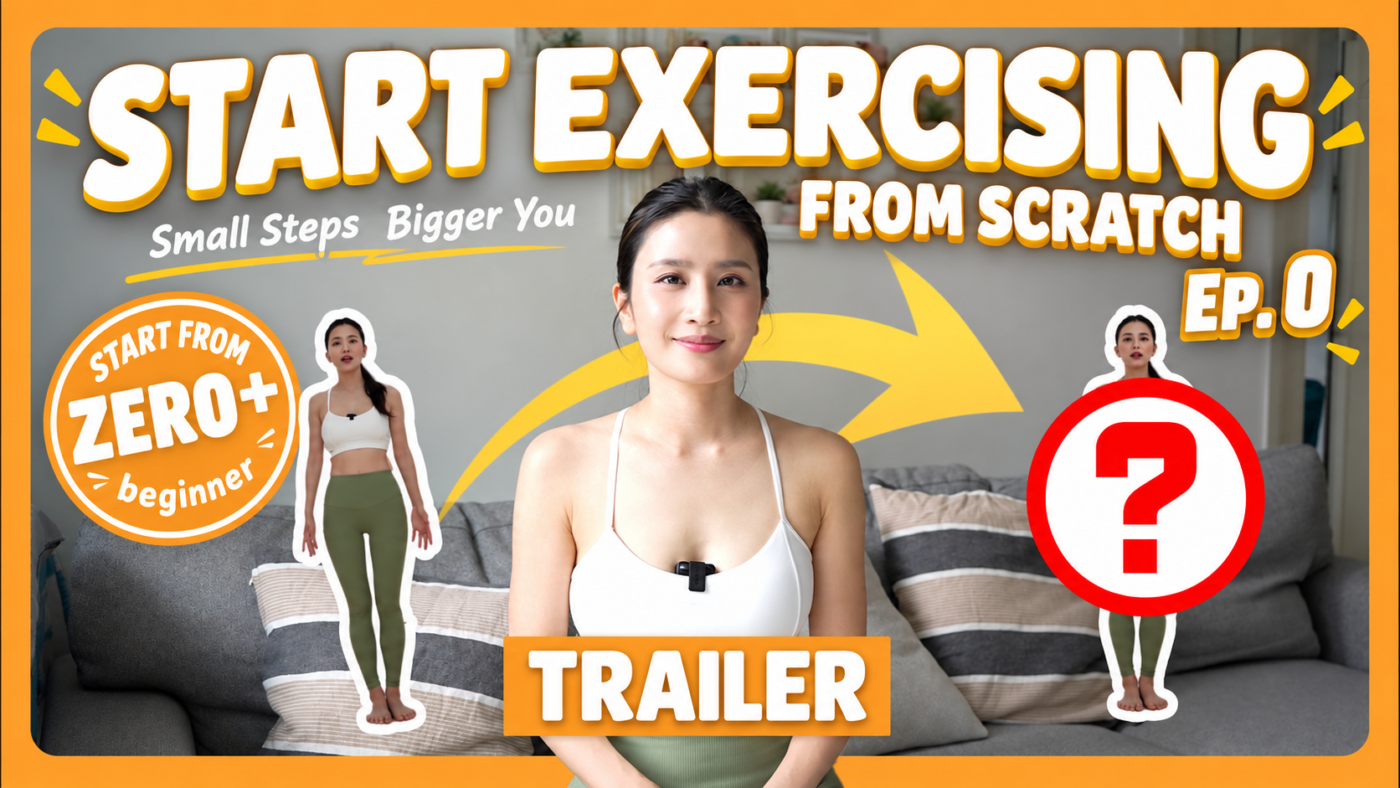
Postpartum fitness restart should focus on rebuilding strength, muscle, energy, confidence, and long-term health—not rushing back to a pre-pregnancy body.
Returning to exercise after having a baby can be much harder than people expect. You may plan to restart at three months postpartum, then suddenly discover that six or seven months have passed because of illness, poor sleep, childcare, work, or family responsibilities.
Returning to exercise after having a baby can be much harder than people expect.
You may plan to restart at three months postpartum, then suddenly discover that six or seven months have passed.
There may be illnesses.
Poor sleep.
Family responsibilities.
Childcare.
Work.
Fatigue.
And days when simply getting through normal life already feels like enough.
That does not mean you have failed.
It means your fitness journey needs to fit your real life.
For many women, the most important goal after pregnancy should not be to “get the old body back.”
A better goal is to rebuild physical capacity.
Strength.
Muscle.
Energy.
Mobility.
Confidence.
And the ability to stay active for decades to come.
Why Restarting Exercise Matters Beyond Appearance
It is understandable to care about body shape.
But appearance is only one small part of what exercise can provide.
Regular physical activity can help support:
Muscle strength
Cardiorespiratory fitness
Bone health
Metabolic health
Mobility
Balance
Physical function
Mood
Sleep quality
Energy
Long-term independence
For a parent, these benefits have an even more practical meaning.
You want enough energy to carry your children.
Run with them.
Travel with them.
Play with them.
Keep up with them.
And ideally remain active as they grow into adults.
That is a much more meaningful reason to exercise than chasing one number on a scale.
Postpartum Recovery Does Not Follow One Timeline
One of the biggest mistakes in postpartum fitness is assuming that every woman should recover on the same schedule.
There is no universal timeline.
Some women may feel ready for structured exercise relatively early.
Others need much longer.
Pregnancy and childbirth can affect:
The abdominal wall
Pelvic floor
Core strength
Joint stability
Sleep
Energy levels
Hormonal balance
Body composition
Cardiovascular fitness
Movement confidence
Recovery can also differ depending on whether someone had a vaginal birth, Cesarean birth, pregnancy complications, pelvic floor symptoms, pain, anemia, infection, or other health issues.
This is why postpartum exercise should be individualized.
There is no prize for rushing.
The goal is sustainable progression.
Why Someone Can Look “Recovered” Without Training Much
Sometimes a person may appear to regain their previous body shape relatively quickly even if they have done very little structured exercise.
Several factors can contribute.
Pre-pregnancy muscle mass
Genetics
Body-fat distribution
Hormonal changes
Changes in fluid retention
Breastfeeding status
Daily activity
Sleep
Nutrition
Previous training history
A person who trained regularly before pregnancy may also regain strength and muscle more quickly once training resumes because previously trained muscles often respond faster than completely untrained muscles.
This is sometimes described as muscle memory.
However, looking relatively lean does not necessarily mean that strength, endurance, muscle mass, pelvic floor function, or cardiovascular fitness have fully recovered.
Appearance and physical capacity are not the same thing.
That is why restarting exercise still matters.
Muscle Is One of Your Most Valuable Long-Term Assets
Muscle is not just about looking toned.
Skeletal muscle plays a major role in:
Movement
Strength
Balance
Glucose regulation
Metabolic health
Bone loading
Physical resilience
Independence with aging
After long periods of inactivity, muscle strength and conditioning can decline.
The good news is that they can also be rebuilt.
That is why returning to resistance exercise is especially valuable after months of reduced activity.
And the earlier in adulthood you build and preserve muscle, the more physical reserve you may carry into later life.
You do not need to become a bodybuilder.
You simply need enough muscle to support the life you want to live.
Weight-Loss Injections and Muscle Loss: What Actually Matters
This is an area where social media often becomes oversimplified.
Modern prescription weight-management medications can be very effective for some people with obesity or other appropriate medical indications.
They are not automatically “bad,” and they should not be dismissed as shortcuts.
At the same time, they are prescription treatments—not casual cosmetic tools.
Whether someone is an appropriate candidate depends on medical history, body composition, weight-related health risks, current medications, and clinical evaluation.
During substantial weight loss, some lean mass may also be lost along with fat.
This can happen with many forms of weight loss, not only medication-assisted weight loss.
That is why preserving muscle becomes important.
A comprehensive strategy often includes:
Adequate protein intake
Resistance training
Appropriate calorie intake
Good nutrition
Monitoring body composition when useful
Progressive physical activity
Medical supervision when medication is involved
The objective is not simply to make the scale fall as quickly as possible.
It is to improve health while preserving as much functional tissue as possible.
Why “Thin” Does Not Always Mean Strong or Fit
A person can have a low body weight and still have:
Low muscle mass
Poor endurance
Weakness
Low exercise tolerance
Poor balance
Persistent aches
Low bone density
Poor metabolic health
A scale cannot tell you everything.
This is why body composition, strength, physical performance, and general health matter more than body weight alone.
For postpartum women especially, a “slim” appearance does not automatically mean the body has fully recovered.
You may look lean but still notice:
Reduced core control
Weakness through the hips
Poor endurance
Shoulder fatigue
Reduced upper-body strength
Back discomfort
Pelvic floor symptoms
Loss of muscle tone
These are all reasonable areas to address gradually through training.
Do All Mothers Develop Anterior Pelvic Tilt?
No.
Anterior pelvic tilt is often discussed online as though it is a universal postpartum problem.
It is not.
Pelvic position varies naturally from person to person.
Pregnancy can influence posture, abdominal function, hip mechanics, breathing patterns, and movement habits, but not every mother develops the same alignment.
And having some anterior pelvic tilt does not automatically mean something is wrong.
If you feel discomfort, weakness, or poor control, the better question is not:
“How do I force my pelvis into the perfect position?”
It is:
“Can I move comfortably, control my trunk, and perform daily activities without pain?”
Useful training may include:
Core strengthening
Glute strengthening
Hip mobility
Breathing coordination
Pelvic floor rehabilitation when needed
General resistance training
Gradual return to normal activity
The goal is function, not chasing one supposedly perfect posture.
Why the Core Often Feels Weak After Pregnancy
The abdominal wall goes through major changes during pregnancy.
The rectus abdominis stretches.
The deep abdominal muscles adapt.
The pelvic floor experiences significant loading.
Breathing mechanics may change.
The body also develops new movement strategies to accommodate a growing abdomen.
After childbirth, these systems need time and practice to regain strength and coordination.
That does not mean the core is permanently damaged.
But it does mean postpartum core training should usually begin with control before intensity.
Useful early goals may include:
Breathing comfortably under load
Controlling the pelvis
Managing abdominal pressure
Performing basic trunk movements without pain
Building endurance gradually
Progressing toward stronger exercises over time
More crunches are not always the answer.
Core function is much broader than abdominal appearance.
Why Previous Training Helps
A long history of exercise can provide a major advantage when returning after a break.
The nervous system is already familiar with movement patterns.
Your body has previously adapted to resistance.
You know what training feels like.
You may regain strength faster than a complete beginner.
This does not mean you should immediately return to your old training intensity.
Your cardiovascular fitness, connective tissues, joints, pelvic floor, and overall recovery capacity may not be ready for the workload you previously tolerated.
The best strategy is to use your previous experience without letting it become pressure.
Restart below your old level.
Then progress.
The Right Way to Restart After Months of Inactivity
A practical restart plan should feel almost too easy at first.
That is intentional.
Week 1
Focus on walking, mobility, breathing, light core work, and basic bodyweight movements.
Keep sessions short.
10 to 20 minutes can be enough.
Week 2
Add basic resistance exercises.
Examples include:
Squats to a chair
Glute bridges
Wall push-ups
Rows with resistance bands
Supported split squats
Light carries
Simple core exercises
Week 3
Increase repetitions or resistance gradually.
Add moderate cardio such as brisk walking, cycling, or low-impact circuits.
Week 4 and Beyond
Progress toward a balanced routine containing:
Strength training
Aerobic exercise
Mobility work
Daily walking
Core training
Adequate recovery
You do not need to train hard every day.
You need to train often enough to make progress and recover well enough to keep going.
Consistency Beats Intensity
A six-month challenge is much more useful than a six-day crash program.
Why?
Because most meaningful fitness changes require time.
Strength increases gradually.
Muscle develops gradually.
Endurance improves gradually.
Movement quality improves gradually.
Body composition changes gradually.
The best program is not the hardest one.
It is the one you can continue.
A sustainable target might be:
2 to 4 strength sessions per week
Regular walking or aerobic activity
Short mobility sessions
Adequate rest
Progressive increases in training load
That is enough to produce major changes over time.
Protein Powder Is Not a Substitute for Exercise
Protein is important for muscle maintenance and growth.
But protein powder is simply a convenient food product.
It is not a muscle-building drug.
You do not need protein powder to become stronger.
You can obtain protein from normal foods such as:
Eggs
Fish
Poultry
Lean meat
Dairy products
Soy foods
Beans
Lentils
Other protein-rich foods
Protein supplements can be useful when normal food intake is insufficient or inconvenient.
But muscle growth depends on several factors working together:
Resistance training
Adequate protein
Enough total energy
Recovery
Sleep
Progressive overload
Training stimulates the body to adapt.
Protein provides amino acids that support muscle protein synthesis and repair.
The process is more complex than the popular idea that exercise “tears muscles apart” and protein powder simply repairs them.
Resistance exercise creates mechanical and metabolic signals that stimulate adaptation.
Protein helps provide the building blocks.
Both matter.
Do You Need to Diet Aggressively to Get Lean?
No.
Extreme restriction is rarely necessary.
A better approach is usually:
Eat enough protein
Base most meals on minimally processed foods
Include vegetables and fruit
Choose appropriate portions
Reduce excessive liquid calories
Limit frequent overeating
Keep physically active
Build and preserve muscle
Sleep as well as possible
If fat loss is a goal, a moderate, sustainable calorie deficit is generally easier to maintain than severe restriction.
A program that makes you miserable is unlikely to last.
Why Energy Levels Matter More Than the Scale
One of the best signs that a fitness program is working is not necessarily weight loss.
It may be that you notice:
You can climb stairs more easily.
You can carry your child longer.
You recover faster.
You sleep better.
You have less stiffness.
You can walk farther.
You feel stronger.
You have more energy during the day.
These are meaningful improvements.
Fitness is the ability to live your life better.
The scale captures only a small part of that.
How to Track Your Starting Point
If you are beginning a long-term fitness challenge, it can be helpful to record where you started.
Possible measurements include:
Body weight
Waist circumference
Hip circumference
Strength
Walking pace
Resting heart rate
Exercise endurance
Mobility
Energy level
Sleep quality
Photos if you choose
Body-composition measurements can also be used, but they should be interpreted cautiously.
Devices such as bioelectrical impedance analyzers can estimate body fat and lean mass, but hydration, food intake, menstrual cycle, recent exercise, and other factors can affect the result.
Use trends rather than obsessing over one reading.
The Most Important Baseline Is Function
Ask yourself:
How many controlled squats can I perform?
How long can I walk comfortably?
Can I climb stairs without becoming exhausted?
Can I hold a plank with good control?
Can I carry groceries without difficulty?
Can I lift my child comfortably?
Can I get up from the floor easily?
Can I exercise for 20 minutes without feeling destroyed afterward?
These are practical measures of fitness.
And they often matter much more than whether your body fat percentage changes by one point.
A Better Six-Month Fitness Goal
Instead of making your goal:
“I want to weigh exactly what I weighed before pregnancy.”
Try:
“I want to become stronger every month.”
“I want to regain my endurance.”
“I want to rebuild my core.”
“I want to preserve muscle.”
“I want enough energy to play with my children.”
“I want to be physically capable at 60, 70, and 80.”
Those goals create a completely different relationship with exercise.
They make fitness part of your future rather than punishment for your current body.
Exercise as an Investment in Healthy Aging
The most powerful idea in this entire journey is simple.
The body you build today becomes part of the physical reserve you carry into later life.
You cannot control everything about aging.
But you can influence many things.
You can build muscle.
You can maintain cardiovascular fitness.
You can train balance.
You can maintain mobility.
You can support bone health.
You can practice getting stronger.
You can keep moving.
Physical changes in the mirror are useful bonuses.
The deeper reward is independence.
Being able to travel.
Walk.
Carry things.
Play.
Explore.
And continue living on your own terms.
That is a much stronger reason to exercise than simply trying to become smaller.
Final Thoughts
You do not need to return to your old body.
You need to build the body that can support your next chapter.
If you have been inactive for months, begin where you are.
Not where you used to be.
Not where someone else is.
Not where social media tells you that you should be.
Start with a manageable workout.
Repeat it.
Recover.
Add a little more.
Build strength.
Preserve muscle.
Improve endurance.
And continue.
Six months from now, the most important transformation may not be what you see in the mirror.
It may be what your body can do.
Frequently Asked Questions
How soon can I start exercising after having a baby?
The appropriate timing varies depending on the pregnancy, delivery, recovery, symptoms, and type of exercise. Gentle movement may begin relatively early for some women, while more demanding exercise may require additional recovery. Individual medical guidance is especially important after complications, surgery, persistent pain, pelvic floor symptoms, or other concerns.
Does muscle memory help after pregnancy?
Previous training may make it easier to regain strength and muscle once training resumes. However, the speed of recovery varies, and previous fitness does not eliminate the need for gradual progression.
Can weight-loss injections cause muscle loss?
Significant weight loss can include some loss of lean mass, regardless of the method used. Resistance training, adequate protein, appropriate nutrition, and medical monitoring can help support muscle preservation. Prescription weight-management medications should be used based on individual medical indications and professional supervision.
Is protein powder necessary to rebuild muscle?
No. Protein powder is optional. Adequate dietary protein combined with resistance training is what matters. Supplements can be useful for convenience but are not required.
Can exercise fix anterior pelvic tilt after pregnancy?
Not everyone has problematic anterior pelvic tilt, and pelvic position varies naturally. Strength, mobility, breathing, core control, and general movement may improve function, but the goal should be comfortable movement rather than forcing the pelvis into one idealized position.
How often should I exercise when restarting?
For many people, two to four structured sessions per week plus regular walking is a practical starting point. The ideal amount depends on your fitness level, recovery, health, and schedule.
Should I focus on weight loss or strength first?
For many postpartum women, rebuilding strength, muscle, energy, and exercise consistency is a more useful first goal. Body composition can improve gradually as part of a balanced program.
Medical Disclaimer
This article is for general educational purposes only and is not medical advice. Postpartum recovery varies greatly between individuals. Anyone experiencing pelvic pain, pelvic floor symptoms, urinary leakage, abdominal bulging, significant back pain, dizziness, unusual bleeding, chest pain, shortness of breath, or other concerning symptoms should seek appropriate medical evaluation before beginning or progressing an exercise program. Prescription weight-management medications should only be used under qualified medical supervision.
This article is for general education and does not replace individualized care from a qualified health professional. Seek appropriate advice for persistent, severe, or concerning symptoms.
Read the full medical disclaimer