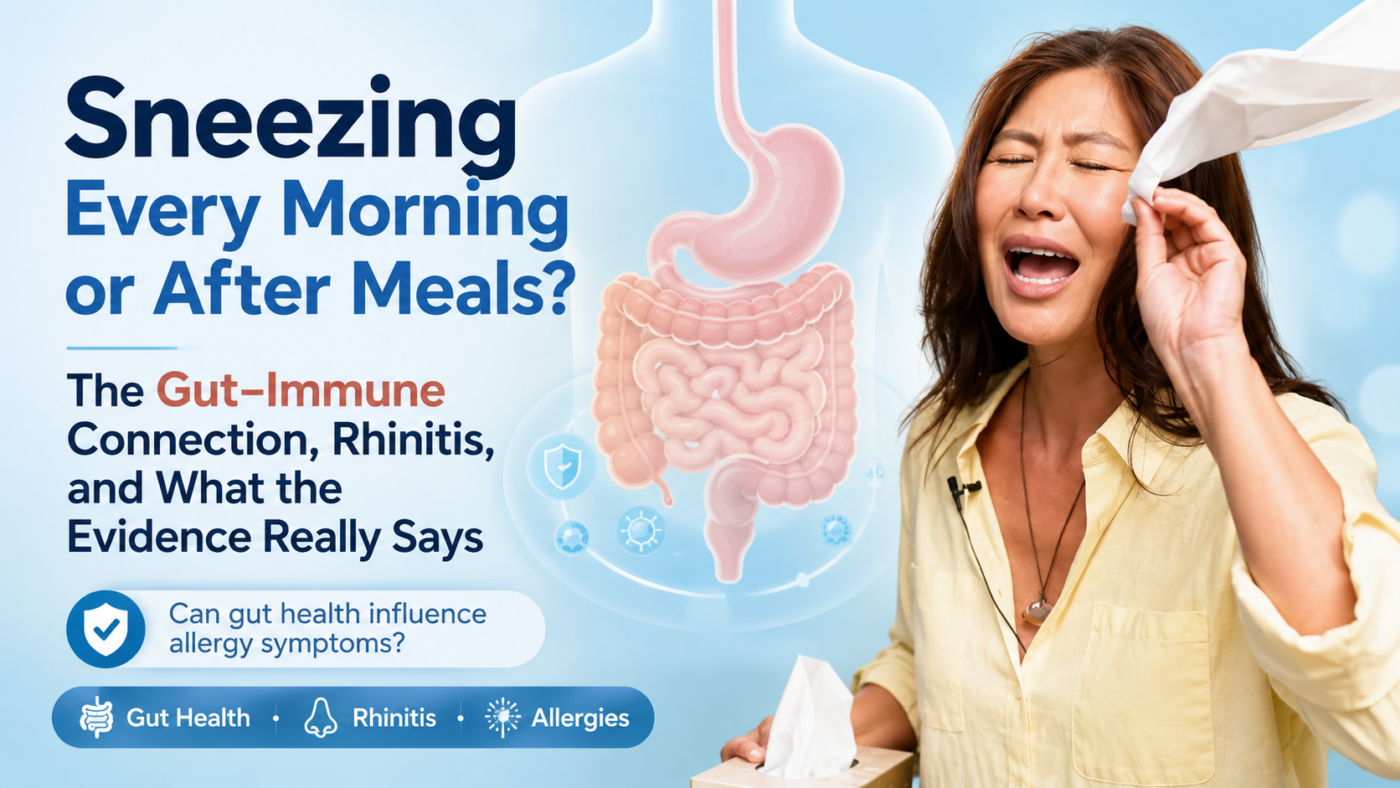
If you wake up every morning sneezing, reaching for tissues, or dealing with a runny or congested nose, you may wonder whether something deeper is happening inside your body.
Some people notice another curious pattern: their nose begins running shortly after they eat.
You may have heard claims that these symptoms are caused by “leaky gut,” poor digestion, an unhealthy microbiome, or damage to the intestinal lining.
There is a real and fascinating relationship between the gut, the immune system, and allergic disease.
But the story is more complicated than saying:
“Your gut is leaking, so your nose is running.”
Morning sneezing can be caused by allergic rhinitis, dust mites, indoor allergens, temperature changes, dry air, nonallergic rhinitis, infections, medications, or other factors.
A runny nose immediately after eating can also occur through a condition known as gustatory rhinitis, which is primarily driven by a nerve reflex rather than by food “leaking” through the intestine.
At the same time, research increasingly suggests that intestinal barrier function and the gut microbiome interact with the immune system and may influence susceptibility to certain allergic diseases.
Understanding the difference between these mechanisms can help you make better decisions without falling for overly simple explanations.
Your Intestines Are Much More Than a Food Tube
The digestive tract does far more than break down lunch and absorb calories.
The intestinal lining is one of the largest interfaces between the outside environment and the inside of your body.
Every day it must perform two seemingly opposite jobs.
It must allow water, electrolytes, vitamins, minerals, fatty acids, amino acids, sugars, and other useful nutrients to cross into the body.
At the same time, it must help restrict unwanted microorganisms, toxins, and potentially harmful substances.
That requires an extraordinarily sophisticated barrier system.
The intestinal barrier includes intestinal epithelial cells, tight junctions between those cells, mucus, antimicrobial substances, immune cells, and trillions of microorganisms living within the digestive tract.
These components interact continuously.
Healthy gut function therefore depends on much more than digestion alone.
What Does “Leaky Gut” Actually Mean?
The phrase “leaky gut” is commonly used online, but the medical concept behind it is usually called increased intestinal permeability.
Your intestine is naturally permeable.
It has to be.
If nothing could cross the intestinal wall, you would not be able to absorb nutrients.
The important issue is whether that permeability is appropriately regulated.
Certain diseases and inflammatory conditions can alter intestinal barrier function and increase the passage of substances across the intestinal epithelium.
However, “leaky gut syndrome” should not be used as a universal diagnosis for fatigue, headaches, allergies, skin problems, nasal congestion, brain fog, weight gain, or virtually every unexplained symptom.
Increased intestinal permeability is a biological phenomenon.
It is not an explanation for every chronic health complaint.
The Mucus Layer: Your Gut’s Protective Interface
The intestinal surface is protected in part by mucus produced largely by specialized cells called goblet cells.
This mucus does not act like a simple plastic sheet.
It forms a dynamic environment that helps separate microbes from the epithelial surface while supporting chemical and immune defenses.
The mucus layer also interacts with the gut microbiome.
That relationship is especially important in the colon, where bacteria metabolize fermentable carbohydrates and dietary fibers.
One group of compounds produced through microbial fermentation is called short-chain fatty acids.
These include acetate, propionate, and butyrate.
Why Butyrate Matters
Butyrate has received considerable scientific attention because it plays several roles in intestinal biology.
It is an important energy source for colonocytes, the cells lining much of the colon.
It also participates in signaling pathways related to immune regulation and intestinal barrier function.
Certain fiber-fermenting gut bacteria can produce butyrate.
This is one reason diets containing a variety of fiber-rich plant foods are often associated with a healthier and more diverse intestinal ecosystem.
However, the relationship should not be oversimplified into:
“Eat one vegetable, feed one probiotic, produce butyrate, repair the gut.”
Human microbiomes are extremely complex.
Different bacterial species use different substrates.
Different foods produce different metabolic effects.
And microbiome composition varies significantly from person to person.
Fiber Helps Feed the Gut Microbiome
Vegetables, legumes, fruits, whole grains, nuts, and seeds contain different types of dietary fiber and plant compounds.
Some fibers reach the colon, where they can be fermented by intestinal microorganisms.
A diet containing a diverse range of minimally processed plant foods may therefore support microbial diversity and production of beneficial metabolites.
You do not need to rely on one so-called superfood.
Variety matters.
For example, a gut-supportive diet may include:
Leafy greens.
Beans and lentils.
Oats.
Barley.
Berries.
Apples.
Onions.
Garlic.
Nuts.
Seeds.
Whole grains.
Other vegetables and fruits.
Increase fiber gradually if your current intake is low.
A sudden large increase may cause bloating, abdominal discomfort, or gas.
The Gut Microbiome and the Immune System
The gut contains an enormous concentration of immune tissue.
That makes sense.
Every day the immune system must decide what should be tolerated and what requires a response.
Food proteins are foreign molecules, yet the immune system normally learns to tolerate them.
Gut microorganisms also constantly interact with immune cells without triggering uncontrolled inflammation.
This balance is known broadly as immune tolerance.
Research suggests that disturbances in microbiome composition and intestinal barrier function may participate in the development of food allergy in susceptible individuals.
But this relationship is multidirectional.
Food allergy itself can influence intestinal inflammation and permeability.
Inflammation can influence the microbiome.
The microbiome can influence immune development.
Genetics and environmental exposures influence all of them.
There is no single switch.
Does Increased Intestinal Permeability Cause Food Allergy?
There is an association between intestinal barrier dysfunction and food allergy, and researchers are actively studying whether increased permeability can contribute to allergic sensitization in susceptible individuals.
However, this does not mean that everyone with increased intestinal permeability develops a food allergy.
Nor does it mean that all food allergies begin because the intestine suddenly becomes “full of holes.”
Food allergy involves immune recognition of specific food proteins, usually through mechanisms involving allergen-specific antibodies and immune cells.
Once a person is sensitized, exposure to the allergen may activate mast cells and other immune pathways, releasing histamine and additional inflammatory mediators.
That is a genuine allergic reaction.
But it should not be confused with every case of sneezing after breakfast.
Why Histamine Causes Allergy Symptoms
Histamine is one of the best-known chemical mediators involved in allergic reactions.
When mast cells are activated during certain allergic responses, histamine can contribute to:
Sneezing.
Itching.
Watery eyes.
Nasal swelling.
Runny nose.
Hives.
Other allergy symptoms.
This is why antihistamines can help many people with allergic rhinitis.
But the presence of nasal symptoms does not automatically prove that histamine was released because food particles crossed a damaged intestinal wall.
Many different pathways can produce a runny nose.
Why Do I Sneeze Every Morning?
Morning sneezing has several possible explanations.
One of the most common is allergic rhinitis.
If symptoms are strongest in bed or immediately after waking, consider allergens present in the bedroom.
Dust mites are a common example.
They can accumulate in:
Mattresses.
Pillows.
Blankets.
Carpets.
Upholstered furniture.
Humidity can also influence dust-mite populations.
Animal dander, mold, pollen entering through windows, and other indoor allergens may contribute as well.
Morning temperature changes can trigger symptoms in people with sensitive nasal passages.
Dry air or irritation may also play a role.
The pattern therefore deserves to be evaluated as a nasal and allergy problem rather than automatically being attributed to the intestine.
Why Does My Nose Run After Eating?
If your nose begins running almost immediately after eating, another condition deserves attention.
It is called gustatory rhinitis.
The classic symptom is clear watery nasal discharge associated with eating.
Hot or spicy foods are particularly common triggers, although other foods can provoke symptoms in some people.
Unlike a classic food allergy, gustatory rhinitis is generally considered a form of nonallergic rhinitis.
The mechanism is largely related to nerve reflexes controlling nasal secretions.
That means:
Runny nose after eating does not automatically equal food allergy.
And it certainly does not automatically equal leaky gut.
What Does a True Food Allergy Look Like?
Food allergy can be serious.
Symptoms may involve more than the nose.
Depending on the person and the allergen, reactions can include:
Hives.
Itching.
Swelling of the lips or tongue.
Vomiting.
Abdominal pain.
Diarrhea.
Coughing.
Wheezing.
Difficulty breathing.
Throat tightness.
Dizziness.
A sudden drop in blood pressure.
Anaphylaxis.
If eating a particular food repeatedly causes rapid systemic symptoms, especially breathing difficulty, throat swelling, widespread hives, faintness, or multiple organ systems reacting at once, seek medical assessment.
Anaphylaxis is a medical emergency.
Your Nasal Mucosa Has Its Own Defense System
The inside of the nose is lined with specialized mucosal tissue.
One of its jobs is to condition inhaled air before it reaches the lungs.
Structures known as nasal turbinates increase the surface area inside the nasal cavity.
Together with the mucosal lining, they help warm, humidify, and filter incoming air.
The nose also contains blood vessels, glands, sensory nerves, immune cells, and cilia that move mucus.
When these tissues become inflamed or overly reactive, you may experience congestion, sneezing, or increased mucus production.
Again, that does not mean the nasal lining is “malnourished because the gut lining is thin.”
The two tissues participate in the body’s broader mucosal immune system, but they have distinct local biology.
The Gut–Lung and Gut–Airway Connection Is Real, but Complicated
Scientists increasingly study what is sometimes called the gut–lung axis.
The idea is that microorganisms and metabolites originating in the gut can influence immune activity elsewhere in the body, including the respiratory tract.
Likewise, immune and inflammatory processes in the lungs and airways may affect other systems.
This is biologically plausible and supported by a growing body of research.
But it remains a developing research field.
It should not be converted into simplistic claims such as:
“Repair your gut and your rhinitis will disappear.”
A person with nasal allergies may still need allergen avoidance, antihistamines, nasal corticosteroids, other treatments, allergy testing, or medical evaluation.
Gut health is part of overall health.
It is not a substitute for appropriate treatment of respiratory disease.
Do Antibiotics Damage the Gut Microbiome?
Antibiotics can alter gut microbial communities.
That effect is well established.
The degree and duration of disruption vary according to the specific antibiotic, treatment duration, dose, age, baseline microbiome, diet, and other factors.
This does not mean antibiotics should be avoided when they are medically necessary.
Antibiotics can be lifesaving.
The appropriate lesson is:
Do not use antibiotics unnecessarily.
But do use them when prescribed appropriately for bacterial infections.
What About Sugar and Refined Carbohydrates?
It is often claimed that eating sugar causes “bad bacteria” to take over the intestine.
The real relationship is more complicated.
Diet strongly influences the microbiome, and patterns dominated by highly processed foods may differ metabolically from diets rich in minimally processed plants.
However, microorganisms do not divide neatly into “sugar-loving bad bacteria” and “fiber-loving good bacteria.”
A more evidence-based approach is to focus on the overall dietary pattern.
Reduce excessive reliance on ultra-processed foods.
Eat adequate protein.
Consume diverse plant foods.
Include fiber-rich carbohydrates.
And choose foods you can tolerate consistently.
Are Food Emulsifiers Destroying Your Gut?
This is another area where online health claims often move faster than the science.
Certain food additives, including some emulsifiers, are being studied because laboratory and animal experiments suggest that particular compounds may influence the gut microbiome, mucus layer, or inflammation under certain conditions.
That research deserves attention.
But it does not justify saying that every emulsifier behaves like dishwashing detergent inside the human intestine.
Different additives have different chemical properties.
They cannot be treated as one substance.
What About Xanthan Gum?
Xanthan gum is commonly used as a thickener or stabilizer in foods.
It is not accurate to say that xanthan gum simply dissolves the intestinal mucus layer and punches holes through the gut wall.
Xanthan gum is largely not absorbed intact and can interact with intestinal microbes.
Research continues into how widespread food additives influence the microbiome, but current evidence does not justify classifying ordinary dietary exposure to xanthan gum as a proven cause of “leaky gut.”
Someone may still choose to limit heavily processed foods.
That is a reasonable dietary preference.
But the recommendation should be based on the overall food pattern, not fear of a single ingredient.
Cellulose Is Not Simply a Dangerous Synthetic Emulsifier Either
Cellulose is a naturally occurring structural carbohydrate found in plants.
Various cellulose-derived compounds are also used in processed foods.
Different cellulose derivatives have different properties.
Grouping all of them together and saying they behave like detergents inside the gut is misleading.
The science of food additives should be evaluated compound by compound.
Is Bone Broth a Gut-Healing Treatment?
Bone broth can be a perfectly reasonable food.
It provides fluid, flavor, minerals in varying quantities, and amino acids and peptides depending on how it is prepared.
It can fit well into a nutritious diet.
But there is currently no good evidence that drinking bone broth directly “patches” holes in the intestinal lining or rebuilds intestinal mucus.
Collagen does not travel intact from your bowl to your intestinal lining.
Like other dietary proteins, it is digested into smaller peptides and amino acids before absorption.
Those nutrients can contribute to the body’s overall protein pool.
That is very different from claiming that bone broth specifically repairs leaky gut.
Enjoy it because you like it and because it contributes to a balanced diet.
Do not treat it as a proven medical therapy.
Protein Still Matters
The fact that bone broth is not a miracle treatment does not mean protein is unimportant.
Your body needs amino acids for continuous tissue maintenance and repair.
Good protein sources can include:
Fish.
Eggs.
Poultry.
Lean meat.
Dairy products.
Soy foods.
Beans.
Lentils.
Other protein-rich foods.
The best source depends on your dietary preferences, allergies, digestion, health conditions, and nutritional requirements.
Hydration Supports Normal Mucosal Function
Adequate hydration is important for overall health.
Water contributes to normal circulation, digestion, kidney function, temperature regulation, and mucus production.
Dehydration can make secretions feel thicker and may worsen discomfort in some people.
However, you do not need to rigidly multiply your body weight by 33 and force yourself to drink exactly that number of milliliters every day.
Fluid needs vary according to:
Body size.
Climate.
Activity.
Pregnancy.
Diet.
Kidney function.
Medications.
Illness.
Sweating.
Other individual factors.
Use thirst, urine color, activity level, environmental conditions, and professional advice when appropriate.
Do Coffee and Tea Dehydrate You?
The claim that every cup of coffee or tea must be replaced with extra water is also too simplistic.
Caffeine can have a mild diuretic effect, particularly in people who are not accustomed to it.
But ordinary amounts of coffee and tea still contribute fluid.
Moderate consumption does not automatically cause dehydration in healthy habitual consumers.
Water should still be your primary everyday beverage, but you do not need to fear every cup of tea.
Should You Take Probiotics?
Probiotics are not one universal product.
Different strains have different effects.
Even two products labeled “probiotic” may contain completely different organisms at different doses.
Research suggests that gut microorganisms play an important role in immune development and intestinal health, and probiotics are being studied in several gastrointestinal and allergic conditions.
But evidence is condition-specific and strain-specific.
More strains do not automatically mean a better product.
More colony-forming units do not automatically mean better results.
And probiotics are not a proven cure for unexplained rhinitis or “leaky gut syndrome.”
Healthy people can often focus first on diet, fiber, sleep, activity, and unnecessary antibiotic avoidance.
People with significant health conditions should discuss probiotic supplementation with an appropriate healthcare professional.
Do You Need Digestive Enzymes?
Most healthy people produce the digestive enzymes they need.
Specific enzyme supplements can be extremely useful when there is a specific problem.
For example, lactase can help some people with lactose intolerance.
Prescription pancreatic enzymes are important for people with pancreatic insufficiency.
But taking broad digestive-enzyme supplements “just in case” is not a proven treatment for morning sneezing, food allergy, or intestinal permeability.
Food also does not simply “rot inside the intestine” whenever digestion is imperfect.
Digestive symptoms deserve proper evaluation if they are persistent.
Four Evidence-Based Ways to Support Gut and Mucosal Health
Instead of trying to repair your body with one supplement, use a broader approach.
1. Stay Appropriately Hydrated
Drink regularly throughout the day.
Increase fluid intake when you are sweating heavily, exercising, or spending time in hot environments.
Do not force extreme amounts.
People with kidney disease, heart disease, or fluid restrictions should follow individualized medical advice.
2. Build a Diverse, Fiber-Rich Diet
Eat a variety of vegetables, fruits, legumes, whole grains, nuts, and seeds if tolerated.
Increase fiber gradually.
Different plants provide different fibers and phytochemicals, which may support a more diverse intestinal ecosystem.
3. Reduce Your Dependence on Ultra-Processed Foods
You do not need to panic about every ingredient you cannot pronounce.
Instead, look at the whole diet.
If most of your meals are built from minimally processed foods and your overall diet is nutritionally balanced, occasional processed foods are unlikely to determine your entire gut health.
4. Use Supplements for a Reason
Do not assume that everyone needs probiotics, digestive enzymes, collagen, glutamine, or a “gut repair” formula.
Choose supplements when there is a clear goal and reasonable evidence for your situation.
If symptoms are persistent, diagnosis should come before supplement shopping.
A Fifth Step That Is Often Forgotten: Sleep
The gut, immune system, nervous system, and circadian rhythm interact.
Poor sleep is associated with changes in immune regulation, appetite, metabolism, and health behavior.
If you are trying to improve overall health, protecting your sleep may be just as important as choosing a probiotic.
Aim for a consistent sleep schedule when possible.
Exercise Also Matters
Regular physical activity is associated with numerous benefits for metabolic, cardiovascular, immune, and gastrointestinal health.
You do not need an extreme workout program.
Walking.
Cycling.
Strength training.
Mobility work.
Swimming.
Dancing.
Any form of sustainable physical activity can contribute to healthier daily physiology.
The best exercise is one you can continue.
Stress and the Gut–Brain Axis
The digestive system communicates continuously with the nervous system.
Stress can alter:
Gut motility.
Pain sensitivity.
Appetite.
Bowel habits.
Sleep.
Eating behavior.
Immune signaling.
That does not mean gastrointestinal symptoms are “all in your head.”
It means the brain and gut are biologically connected.
Stress management can therefore be one part of a comprehensive digestive-health strategy.
If Your Symptoms Happen Every Morning, Start With the Bedroom
Before purchasing gut supplements, investigate your environment.
Ask yourself:
Are symptoms worse immediately after waking?
Do they improve after leaving the bedroom?
Is the bedroom humid?
Do you have carpeting?
How old are your pillows and mattress?
Do pets sleep in the room?
Do symptoms change during pollen seasons?
These clues may be more useful than assuming your intestine is the source of the problem.
If Your Nose Runs With Meals, Look at the Pattern
Write down what happens.
Does your nose run only with spicy food?
Does hot soup trigger it?
Does cold food trigger it?
Does it begin during the meal or hours later?
Are there any hives?
Does your throat itch?
Do your lips swell?
Do you wheeze?
Do you develop gastrointestinal symptoms?
Immediate isolated watery rhinorrhea during meals points toward a very different mechanism from a systemic food-allergic reaction.
Patterns matter.
When Allergy Testing May Be Useful
Testing is most useful when your symptoms and medical history suggest a specific allergic mechanism.
Random panels of dozens or hundreds of foods can create confusion.
A positive test does not automatically mean you have a clinically meaningful food allergy.
Allergy diagnosis requires interpretation in the context of actual symptoms and exposures.
If you suspect a true food allergy, consult an allergy specialist rather than unnecessarily eliminating large numbers of foods.
Don’t Eliminate Healthy Foods Without a Clear Reason
One unfortunate consequence of “leaky gut” messaging is that people sometimes remove gluten, dairy, eggs, soy, corn, legumes, fruit, nightshades, grains, and multiple other foods simultaneously.
Highly restrictive diets can create nutritional problems and anxiety around eating.
Unless you have a diagnosed allergy, intolerance, medical indication, or clearly reproducible reaction, unnecessary elimination is rarely the best first step.
A diverse diet is usually more helpful for nutritional adequacy and microbial diversity than a progressively shrinking list of “safe foods.”
Morning Sneezing Is a Signal, Not a Diagnosis
Your symptoms are telling you something.
But they do not tell you the diagnosis by themselves.
Morning sneezing could involve allergens.
Meal-related rhinorrhea could involve a nasal nerve reflex.
True food allergy could involve the immune system.
Digestive symptoms could reflect a gastrointestinal problem.
And intestinal barrier biology may interact with immune health without being the direct cause of your nasal symptoms.
This is why careful reasoning matters.
When You Should See a Doctor
Seek medical assessment if nasal symptoms are persistent, severe, interfere with sleep, repeatedly affect breathing, or fail to improve with reasonable measures.
You should also seek evaluation if you experience:
Recurring sinus infections.
Persistent one-sided nasal obstruction.
Frequent nosebleeds.
Loss of smell that does not recover.
Wheezing.
Shortness of breath.
Significant digestive symptoms.
Unexplained weight loss.
Blood in the stool.
Persistent diarrhea.
Severe abdominal pain.
Difficulty swallowing.
Or suspected food allergy.
Emergency care is required for signs of anaphylaxis such as difficulty breathing, throat swelling, faintness, rapidly spreading hives, or severe systemic symptoms after eating.
The Bottom Line
The gut–immune connection is real.
The intestinal barrier matters.
The microbiome matters.
Diet matters.
Fiber matters.
And researchers are increasingly discovering how intestinal biology interacts with allergic disease.
But good science requires us to resist explanations that are too simple.
Morning sneezing does not prove that you have a leaky gut.
A runny nose after eating does not automatically mean food particles crossed your intestinal barrier.
Xanthan gum does not simply act like detergent and punch holes in the intestine.
Bone broth is nutritious food, not a proven gut-repair treatment.
Probiotics can be useful in specific contexts, but they are not universal allergy medicine.
Digestive enzymes should be used for a reason, not because every symptom is blamed on incomplete digestion.
If you want to support both your gut and your immune system, begin with the fundamentals:
Eat a varied, minimally processed diet.
Get adequate fiber.
Stay appropriately hydrated.
Move regularly.
Sleep well.
Use antibiotics appropriately.
Manage stress.
Avoid unnecessary dietary restriction.
And investigate persistent nasal or gastrointestinal symptoms rather than assuming one fashionable diagnosis explains everything.
Your gut is an important part of your health.
But good health comes from understanding the whole body.
Frequently Asked Questions
Can leaky gut cause sneezing?
Increased intestinal permeability is being studied in relation to food allergy and immune regulation, but ordinary morning sneezing should not automatically be attributed to “leaky gut.” Allergic rhinitis, dust mites, temperature changes, nonallergic rhinitis, and other nasal conditions are common explanations.
Why do I sneeze every morning?
Morning symptoms can be associated with bedroom allergens such as dust mites, animal dander or mold, seasonal pollen, changes in temperature or humidity, and allergic or nonallergic rhinitis.
Why does my nose run after I eat?
A condition called gustatory rhinitis can cause clear nasal discharge during or shortly after eating, particularly with hot or spicy foods. It is generally considered a nonallergic nerve-mediated response.
Can food allergy cause a runny nose?
Food allergy can cause nasal symptoms as part of a broader allergic reaction, but isolated rhinitis without other allergic symptoms is not the typical presentation of IgE-mediated food allergy.
Is leaky gut a real medical condition?
Increased intestinal permeability is a real biological phenomenon and can occur in several diseases. However, “leaky gut syndrome” is often used much more broadly online than current clinical evidence supports.
Can eating vegetables improve gut health?
Fiber-rich vegetables can contribute to a healthy dietary pattern and provide substrates that certain gut microbes ferment. A diverse range of plant foods is generally more useful than relying on one vegetable or supplement.
Does bone broth heal leaky gut?
There is not enough clinical evidence to say that bone broth heals increased intestinal permeability. It can provide fluid, protein-derived amino acids and other nutrients as part of a balanced diet.
Are food emulsifiers bad for the gut?
Some emulsifiers are being studied for possible effects on intestinal microbes and inflammation, especially in experimental models. Evidence varies greatly between compounds, and it is inaccurate to say all emulsifiers damage the gut.
Is xanthan gum dangerous for the intestinal lining?
Current evidence does not support the claim that normal dietary exposure to xanthan gum acts like detergent and creates holes in the intestinal lining.
Should everyone take probiotics?
No. Probiotic effects depend on the strain, dose, condition and individual. More strains or a higher bacterial count does not automatically mean a better product.
Do I need digestive enzymes for gut health?
Most healthy people do not require digestive-enzyme supplements. They are useful for certain diagnosed conditions and specific intolerances, but they are not a general treatment for rhinitis or intestinal permeability.
How much water should I drink each day?
There is no single formula suitable for everyone. Fluid needs depend on body size, activity, climate, diet, medical conditions and other factors. Drink regularly and adjust according to your individual circumstances.
Does coffee dehydrate you?
Moderate coffee and tea consumption still contributes fluid and does not automatically cause dehydration in healthy habitual consumers.
When should I see an allergist?
Consider professional evaluation if symptoms are persistent, significantly affect quality of life, repeatedly follow exposure to particular foods or environments, or are accompanied by hives, swelling, breathing problems or other systemic allergy symptoms.
Medical Disclaimer
This article is for educational and general wellness purposes only and is not intended to diagnose, treat, cure, or prevent any medical condition. Persistent rhinitis, suspected food allergy, gastrointestinal symptoms, or other unexplained health problems should be evaluated by a qualified healthcare professional. Severe allergic reactions involving difficulty breathing, throat swelling, fainting, or rapidly progressing systemic symptoms require emergency medical attention.
This article is for general education and does not replace individualized care from a qualified health professional. Seek appropriate advice for persistent, severe, or concerning symptoms.
Read the full medical disclaimer