Breakfast has changed dramatically over the past few generations.
Traditional breakfasts built around foods such as rice porridge, steamed buns and soy milk have increasingly been replaced by toast, sandwiches, pancakes, bacon, ham, sausages, fried noodles, sweetened drinks and convenience-store meals.
Some of these newer options are quick and tasty. But convenience can also introduce a familiar nutritional problem: refined carbohydrates, added fats, processed meats and sugary sauces appearing together in the same meal.
That does not mean everyone needs an elaborate “perfect breakfast” every morning.
A healthier approach is much simpler:
Choose foods that are minimally processed, include a useful source of protein, avoid unnecessary amounts of oil and processed meat, and build the meal around what you or your child can realistically eat.
For busy families, a glass of milk and a simple whole food may sometimes be a better breakfast than an elaborate but heavily processed breakfast-shop meal.
Does Everyone Really Need Breakfast?
Breakfast is often described as “the most important meal of the day.”
The reality is more nuanced.
Some studies associate regular breakfast consumption with better dietary quality, concentration and metabolic outcomes, particularly in children. Other research suggests that simply eating breakfast does not automatically make a person healthier.
What matters enormously is what the breakfast actually contains.
A person who skips a fried, sugary breakfast does not necessarily become less healthy than someone who eats:
- processed sausage
- fried noodles
- sweetened milk tea
- mayonnaise-heavy sandwiches
- pastries
every morning.
Likewise, eating only two meals on a weekend is not automatically unhealthy if those meals provide adequate nutrition.
The discussion behind this article emphasizes an important idea:
Meal frequency is not the only issue. Total nutritional quality across the day matters.
If your schedule allows three meals, distribute your food comfortably across three meals.
If you occasionally eat two meals, make those two meals nutritionally meaningful rather than feeling guilty about missing an arbitrary schedule.
Children and Breakfast: Avoid Turning It Into a Daily Battle
Parents often feel enormous pressure to make children eat a large breakfast before school.
That can turn mornings into negotiations:
“Eat another bite.”
“Finish your egg.”
“You can’t go to school with an empty stomach.”
For some children, especially those who wake early or have little appetite immediately after waking, a full meal may simply be difficult.
The source discussion offers a more practical approach.
If the alternative is a stressful battle over greasy breakfast-shop food, something simple such as:
- milk
- unsweetened soy milk
- an egg
- a piece of fruit
- a small whole-grain food
may be enough to create a manageable morning routine.
Nutrition should support family life rather than turning every breakfast into a test of parental performance.
Why High-Fat, Refined-Carbohydrate Breakfasts Can Feel So Heavy
Foods such as scallion pancakes and certain fried breakfast breads combine two things very efficiently:
refined starch + substantial fat
The flour provides carbohydrate, while preparation can involve repeated layers of oil.
That combination creates a calorie-dense meal that may be easy to overeat.
Similar patterns occur with:
- fried dough
- greasy breakfast sandwiches
- heavily buttered pastries
- some fried noodles
- oversized dumpling or bun meals
The original discussion describes people feeling sleepy and heavy after such breakfasts.
It would be too simplistic to claim that one specific breakfast automatically causes several hours of drowsiness in everyone. Sleepiness after eating can depend on meal size, sleep quality, blood glucose responses and individual physiology.
But as a general nutritional principle, very large meals rich in refined carbohydrates and fat are often less suitable for a light, alert start to the day than a more balanced meal.
A Home-Cooked Breakfast Is Not Automatically Healthy
Cooking at home has many advantages.
You control:
- ingredients
- oil
- salt
- portion size
- sauces
But homemade food can still be nutritionally poor.
If the home breakfast is primarily:
- fried pancake
- refined flour
- large quantities of oil
- processed meat
it may not be substantially healthier than buying the same foods outside.
The advantage of cooking at home is not merely “homemade.”
The advantage is control.
Use that control to simplify the meal.
The Convenience-Store Breakfast Can Actually Work
Convenience stores are often treated as the enemy of healthy eating, but they can provide surprisingly useful options.
The key is choosing individual foods rather than automatically buying highly processed combination meals.
Better carbohydrate choices
The source discussion recommends relatively simple starches such as:
- sweet potato
- corn
- potato
- plain rice-based options
These provide carbohydrate without necessarily carrying large amounts of added fat.
A simple rice ball can also be reasonable when the filling and ingredient list are straightforward.
The issue is not that rice is “bad.”
The issue is what else comes with it.
A basic rice ball containing rice plus a relatively simple protein filling may be very different nutritionally from a heavily sauced version with a long list of processed ingredients.
Read the Ingredient List
One useful rule for packaged breakfast food is:
The more complicated the product becomes, the more carefully you should look at the label.
Traditional or simpler flavors often contain fewer components.
Newer “loaded” products may contain multiple:
- sauces
- emulsifiers
- flavorings
- processed fillings
- added sugars
- fats
A long ingredient list does not automatically make a food dangerous.
But when choosing an everyday breakfast, simpler options make it easier to understand what you are actually eating.
Processed Meat Should Not Be the Everyday Breakfast Protein
Ham, bacon, sausage and hot dogs are deeply embedded in modern breakfast culture.
They are convenient.
They are flavorful.
They are also processed meats.
Processed meat has been classified by the International Agency for Research on Cancer as carcinogenic to humans based on evidence linking regular consumption particularly with colorectal cancer.
That classification does not mean that eating a slice of bacon is equivalent in risk to smoking.
It means the evidence supporting a causal relationship is strong.
For breakfast, it makes sense to treat processed meat as an occasional food rather than a default daily protein.
Better routine choices include:
- eggs
- tofu
- unsweetened soy milk
- plain yogurt
- milk
- fish
- minimally processed meat
Red Meat and Processed Meat Are Not the Same Category
The source discussion also distinguishes red meat from processed meat.
That distinction matters.
Processed meats such as:
- bacon
- sausage
- ham
- hot dogs
have stronger evidence linking habitual consumption to cancer risk.
Unprocessed red meat has a different evidence classification and should not simply be treated as identical to processed meat.
For practical breakfast planning, the easiest rule is:
Prefer minimally processed protein most of the time.
What About Breakfast Sandwiches?
A sandwich does not have to be unhealthy.
Even ordinary white toast may be acceptable occasionally if the rest of the sandwich is relatively simple.
For example:
toast + egg + fresh vegetables
is very different from:
toast + processed meat + cheese sauce + mayonnaise + sweetened drink
Whole-grain bread is preferable when available, but perfection is not required.
If whole-grain bread is unavailable, reducing unnecessary sauces and highly processed fillings can still improve the meal considerably.
A Fast Egg-and-Vegetable Breakfast
One of the most practical ideas from the discussion is preparing an egg mixture the night before.
Combine:
- eggs
- chopped vegetables
- tomato
- a small amount of oats or bread if desired
Refrigerate it overnight.
In the morning, bake it in a small tray or muffin-style mold.
This produces a warm vegetable-and-egg breakfast with minimal morning preparation.
It can be paired with:
- whole-grain toast
- fruit
- milk
- unsweetened soy milk
This is particularly useful for parents who want a homemade breakfast without spending half an hour cooking before school.
Yogurt Can Be an Easy Breakfast Base
Plain yogurt is another practical option.
Add:
- blueberries
- fresh fruit
- oats
- unsweetened whole-grain cereal
- a small amount of nuts for older children and adults where appropriate
Choose plain or lower-sugar yogurt when possible.
Many flavored yogurts can contain substantial added sugar.
The original discussion mentions using fruit to provide sweetness rather than relying entirely on sweetened sauces.
That is a useful habit.
Bagels and Bread: Look Beyond the Name
A bagel may be relatively low in added fat compared with some pastries, but the word “bagel” does not automatically make a product healthy.
Modern specialty bagels can contain:
- cream cheese fillings
- butter
- sugary spreads
- large amounts of cheese
- sweet toppings
Likewise, “multigrain” on the package does not guarantee that a bread is mostly whole grain.
When possible, look for breads in which whole grains are prominent in the ingredient list.
A dense whole-grain bread paired with avocado, egg or vegetables can make a practical breakfast.
An Easy Avocado Spread
A simple homemade avocado spread can replace butter-heavy or mayonnaise-heavy toppings.
Mash ripe avocado and, if desired, add:
- chopped tomato
- cucumber
- onion
- herbs
- a small amount of seasoning
Spread it on whole-grain bread or a simple bagel.
Avocado provides mostly unsaturated fat and creates a creamy texture without requiring a heavily processed sauce.
Traditional Chinese-Style Breakfast Can Also Be Balanced
There is no need to choose between “Western breakfast” and “traditional breakfast.”
Either can be healthy or unhealthy depending on preparation.
A simple breakfast such as:
steamed bun + egg + vegetables + unsweetened soy milk
can be practical and balanced.
The key is to distinguish a relatively plain steamed product from oily fried pastries and highly processed fillings.
Traditional does not automatically mean healthy.
Western does not automatically mean unhealthy.
Food composition matters more than cultural label.
What Should You Buy at a Convenience Store?
A simple approach is to combine one item from each major group.
Carbohydrate
Choose one:
- sweet potato
- corn
- potato
- simple rice ball
- whole-grain bread
Protein
Choose one:
- boiled or tea egg
- tofu
- plain yogurt
- milk
- unsweetened soy milk
Produce
Add when practical:
- banana
- apple
- tomato
- cucumber
- other fresh fruit
You do not need ten different foods.
Three sensible choices can create a better breakfast than one giant processed meal.
Milk or Soy Milk?
Both can fit into a healthy diet.
Milk provides:
- protein
- calcium
- vitamin B12
- other nutrients depending on fortification
Soy milk provides plant protein and can be a useful alternative.
Choose unsweetened varieties when possible.
Calcium content varies substantially among soy beverages, so fortified products can be useful.
The source discussion mentions sesame-containing soy drinks as another variation, but consumers should still check sugar and total ingredient content.
Coffee Is Fine for Many Adults—Watch the Additions
For many adults, morning coffee is part of everyday life.
The biggest nutritional problem is often not coffee itself.
It is what gets added:
- sugar
- syrup
- whipped cream
- sweetened creamer
Plain coffee or coffee with modest amounts of milk is very different from a dessert-style coffee beverage.
Children, however, have different caffeine considerations and should not simply copy adult coffee habits.
Don’t Double Up on Carbohydrates Without Realizing It
Another practical idea from the source is avoiding accidental “starch plus starch” breakfasts.
For example:
sweet potato + sweetened oat drink
may provide substantially more carbohydrate than the person realizes.
If you already have:
- potato
- corn
- rice
- bread
you may want the beverage to contribute protein rather than another large carbohydrate load.
Possible combinations include:
sweet potato + milk
corn + egg + soy milk
whole-grain toast + yogurt
rather than automatically stacking several starch-rich products together.
Add Vegetables or Fruit Wherever It Is Easy
Breakfast is often the meal with the least produce.
That can be improved without elaborate cooking.
Quick options include:
- tomato
- cucumber
- berries
- banana
- apple
- prewashed fruit
- leftover vegetables
A tomato does not need to become a salad.
Wash it and eat it.
The goal is practicality.
What About Protein Powder for Children?
Protein powder has become so common that some parents treat it almost like a standard breakfast ingredient.
For most healthy young children eating an adequate diet, routine protein supplementation is generally unnecessary.
Milk, yogurt, eggs, tofu, beans, fish and other foods can usually provide the protein needed for normal growth.
Protein supplements may be appropriate in particular medical or nutritional circumstances, but those decisions are better made with a pediatrician or registered dietitian.
Children should not automatically consume adult fitness supplements simply because they are marketed as “healthy.”
Whole Foods First
This principle applies beyond protein powder.
A health product designed for an adult athlete may not be appropriate for a preschool child.
Before adding:
- protein powders
- meal replacements
- concentrated supplements
- “fitness” drinks
to a child’s diet, ask whether the child actually needs them.
For most healthy children:
real food should remain the foundation.
A Practical 5-Minute Breakfast Formula
You do not need a complicated nutrition chart.
Use this simple framework:
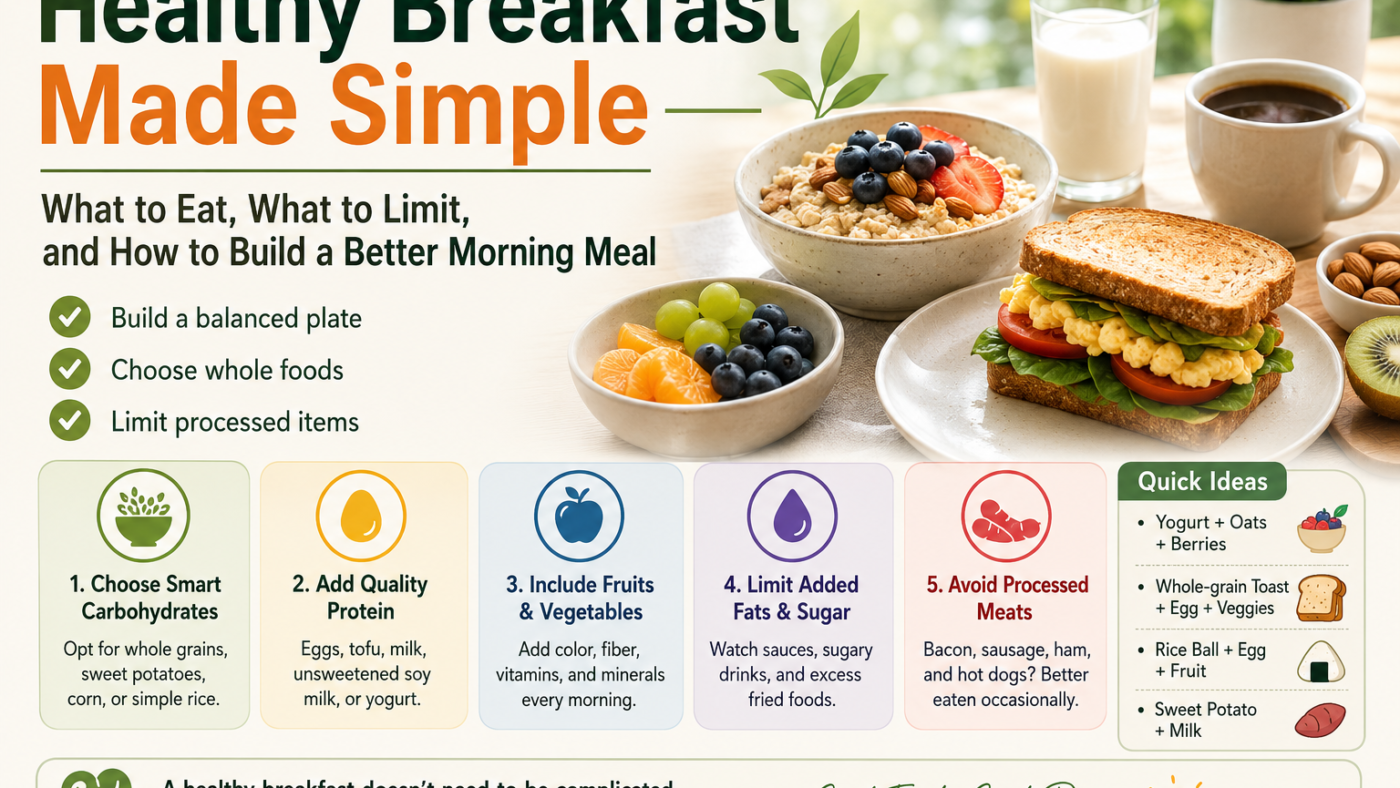
1 carbohydrate + 1 protein + 1 fruit or vegetable
Examples:
Sweet potato + egg + tomato
Whole-grain toast + milk + banana
Rice ball + egg + fruit
Steamed bun + unsweetened soy milk + cucumber
Plain yogurt + oats + berries
Whole-grain toast + vegetable omelet + milk
That is enough to build dozens of variations.
What to Limit
Foods do not need to be forbidden forever.
But some foods make more sense as occasional choices than everyday breakfast staples.
Try not to build most breakfasts around:
- bacon
- sausage
- hot dogs
- heavily processed ham
- fried dough
- oil-heavy pancakes
- heavily sauced sandwiches
- sugary drinks
- oversized pastries
- ultra-processed frozen breakfast products
An occasional weekend meal will not determine someone’s health.
The repeated everyday pattern matters much more.
The Best Breakfast Is the One You Can Sustain
Healthy eating fails when it becomes too complicated.
Parents do not need to wake up an hour early every morning.
Children do not need a restaurant-quality breakfast before school.
Adults do not need a perfect nutrition bowl photographed for social media.
A sustainable breakfast might simply be:
milk + fruit
or:
egg + sweet potato
or:
plain yogurt + oats
That is completely different from thinking:
“If I cannot prepare the perfect breakfast, I have failed.”
Nutrition works through patterns accumulated over months and years.
Not one imperfect Tuesday morning.
Breakfast Should Make Life Easier, Not Harder
The deeper lesson from this discussion is not that one breakfast food is universally good and another universally bad.
It is that breakfast can become healthier when we remove unnecessary complexity.
Choose more:
- whole foods
- vegetables and fruit
- eggs
- tofu
- milk or unsweetened soy milk
- whole grains
- simple starches
Choose less:
- processed meat
- excessive oil
- sugary sauces
- heavily refined packaged foods
And above all, build a breakfast routine your household can actually maintain.
Healthy eating should become a normal part of life—not another source of morning anxiety.
Frequently Asked Questions
Is breakfast absolutely necessary every day?
Not necessarily for every healthy adult. Overall diet quality, total nutrient intake and individual needs matter. Children, people with certain medical conditions and people taking medications may have different requirements.
Is skipping breakfast healthier than eating an unhealthy breakfast?
That cannot be answered universally, but eating breakfast does not automatically provide a health benefit if the meal is dominated by highly processed foods, added sugar and excessive fat.
Is a rice ball healthy for breakfast?
A relatively simple rice ball can be a convenient carbohydrate choice. Check the filling, sodium and ingredient list, and ideally pair it with protein or fruit.
Are bacon and sausage good breakfast proteins?
They provide protein, but they are processed meats and are better treated as occasional foods rather than everyday staples.
What is a quick healthy breakfast for children?
Examples include milk with fruit, egg with sweet potato, whole-grain toast with egg, or yogurt with oats and fruit.
Can children use protein powder?
Most healthy children do not routinely need protein supplements when they eat an adequate diet. Supplements should be considered individually with a healthcare professional.
Is white toast automatically unhealthy?
No. Whole-grain bread generally provides more fiber and nutrients, but an occasional simple white-toast sandwich with egg and vegetables can still fit into a balanced diet.
Is soy milk a good breakfast drink?
Yes, particularly unsweetened fortified soy milk. Check calcium, protein and added sugar on the nutrition label.
Is brunch unhealthy?
Not inherently. Occasional brunch can fit into a healthy eating pattern if the day’s overall nutritional intake remains balanced.
What is the easiest breakfast rule to remember?
Choose a simple carbohydrate, add protein, and include fruit or vegetables whenever possible.
Medical Disclaimer
This article is for general educational purposes and is not individualized medical or nutritional advice. Children, pregnant people, people with diabetes, food allergies, gastrointestinal disorders, kidney disease or other medical conditions may require individualized meal planning. Consult an appropriate healthcare professional or registered dietitian when necessary.
This article is for general education and does not replace individualized care from a qualified health professional. Seek appropriate advice for persistent, severe, or concerning symptoms.
Read the full medical disclaimer