Feet-on-the-wall exercises can look almost too simple to count as a workout. You lie on your back, place your feet against a wall, move your hips and knees, add gentle pushing or bouncing, and suddenly your core, glutes, thighs and hip muscles are all involved.
These movements are often promoted online as a way to burn fat, “unlock” the hips, eliminate knee or back pain, improve circulation and even reverse aging. Some of those claims are exaggerated. A wall-supported routine cannot guarantee fat loss, cure joint pain or make blood vessels “age backward.”
But the basic idea has real value.
Using a wall for support can make lower-body movement more accessible, reduce balance demands, create a comfortable way to mobilize the hips and engage the core, and give people who dislike traditional workouts another way to move.
Why Feet-on-the-Wall Exercise Feels Different
When you exercise standing up, your body has to manage its full weight while maintaining balance.
Lying on your back with your feet supported by a wall changes those demands.
The floor supports your trunk, while the wall gives your feet a stable surface to push against. This can make certain hip and leg movements feel easier and more controlled.
For people who spend long periods sitting, the position can also provide an opportunity to move the hips through ranges that are rarely used during the day.
1. Start With a Comfortable Wall Position
Lie on your back near a sturdy wall.
Place both feet flat against the wall.
Keep your knees bent to approximately a comfortable right angle, although the exact position depends on your height and mobility.
Your lower back should feel comfortable rather than aggressively flattened or arched.
Relax your shoulders.
Take several slow breaths before beginning.
2. Gentle Hip Rocking
Begin by making small, comfortable movements through the pelvis.
You can gently rock or shift the hips while keeping both feet supported.
This is not meant to “realign” the pelvis permanently.
Instead, it gives you a low-load way to explore pelvic and hip movement.
People who sit for many hours may find these small movements surprisingly refreshing.
3. Let the Knees Open Gently
Keep your feet against the wall and allow your knees to move slightly outward.
Do not force them.
Move only within a comfortable range.
This position can stretch portions of the inner thighs and hips while the wall continues to support the legs.
Slow breathing may help reduce unnecessary muscular tension.
If you have significant hip or groin pain, keep the range smaller or skip the movement.
4. Add Controlled Wall Presses
Press both feet gently into the wall.
You may feel the glutes, hamstrings and abdominal muscles become more active.
Hold for several seconds.
Relax.
Repeat.
This is a simple isometric exercise, meaning the muscles generate tension without large joint movements.
It can be an accessible way to practice lower-body muscle activation.
5. Try Small Wall Bounces or Pulses
Some routines include small rhythmic pushes against the wall.
If you choose to do this, keep the movement controlled rather than explosive.
Push gently through the feet and allow the hips and knees to bend and straighten slightly.
The movement can increase muscular activity in the legs and may elevate your heart rate if repeated for long enough.
But it should not be painful.
There is no need to bounce aggressively to make the exercise effective.
6. Wall-Supported Marching
Keep both feet against the wall.
Lift one foot slightly, return it, then alternate sides.
This creates a marching-style movement while your trunk remains supported.
Your abdominal muscles have to help stabilize the pelvis as each leg moves independently.
This is one reason wall exercises can be useful for core training without traditional crunches.
7. Hip Rotation Movements
With your feet supported, slowly move the knees inward and outward.
Keep the motion gentle.
This allows controlled hip rotation without requiring you to bear full body weight.
Avoid forcing the knees into extreme positions.
A feeling of mild muscular stretch is acceptable.
Sharp pain is not.
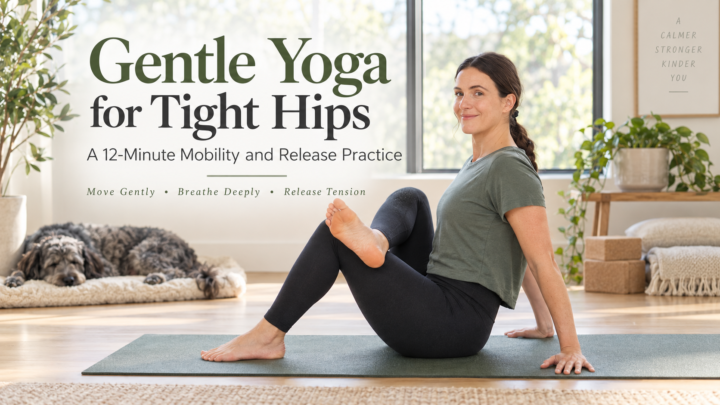
8. Figure-Four Hip Stretch
Place one ankle across the opposite thigh.
Keep the supporting foot on the wall.
Adjust the distance between your body and the wall until you feel a comfortable stretch around the hip or glute.
Hold while breathing normally.
Then switch sides.
This is a common hip mobility position and can be easier to control with wall support than when performed unsupported.
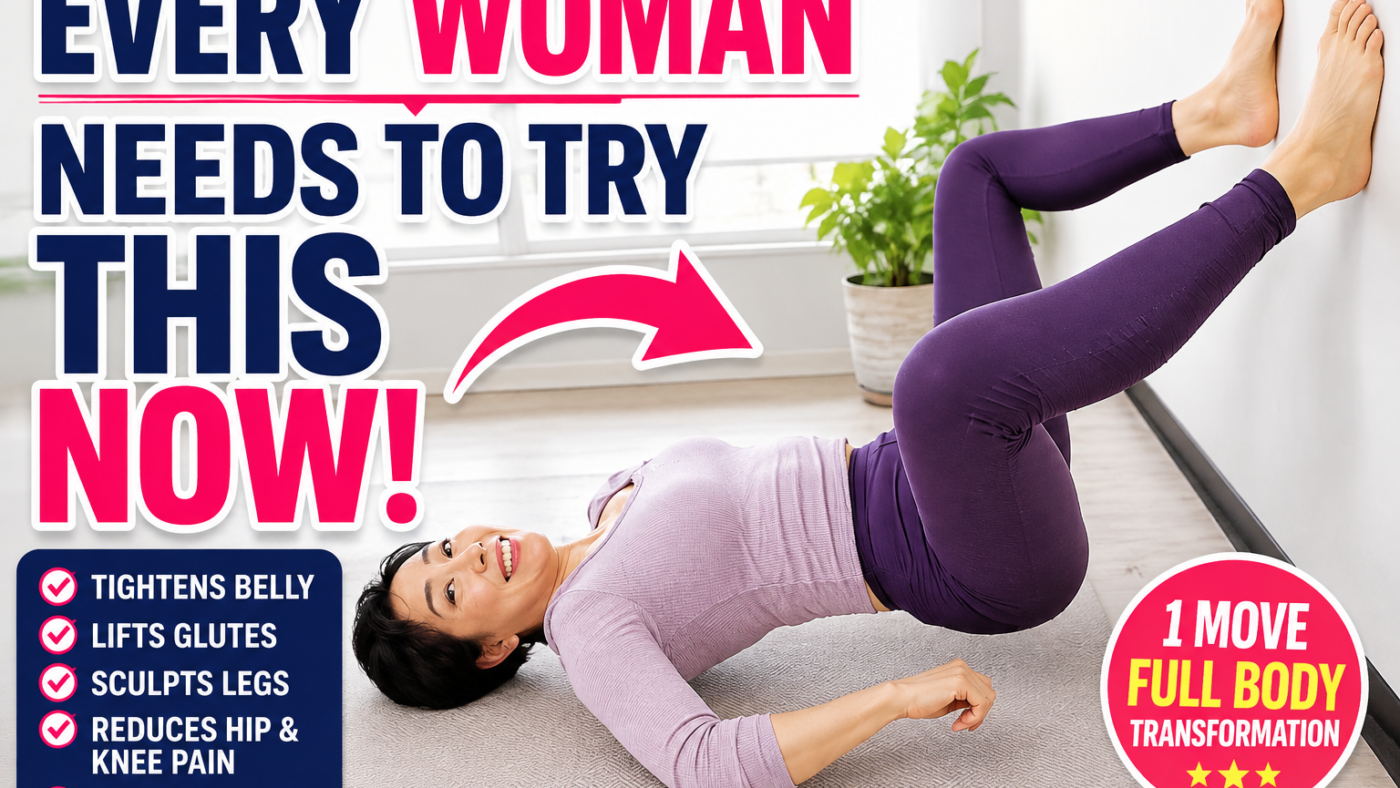
9. Legs-Up Rest Position
After the active movements, you can simply rest with your legs supported against the wall.
This may feel relaxing after prolonged standing or sitting.
Elevating the legs can temporarily assist venous return and may help some people feel less heaviness in the lower legs.
However, it should not be described as permanently improving circulation or reversing vascular aging.
10. Gentle Leg Shaking
With the legs elevated, lightly shake the feet and legs if comfortable.
The movement can help the muscles relax after exercise.
It may also feel refreshing.
Claims that shaking directly “drains toxins” or rejuvenates blood vessels are not supported by strong evidence.
The simpler explanation is that you are moving the limbs and changing muscular tension.
Can Wall Exercise Burn Belly Fat?
Not specifically.
Any physical activity can contribute to overall energy expenditure, but no wall exercise selectively removes belly fat.
Fat loss occurs throughout the body according to genetics, hormones, energy balance and other factors.
Wall exercises can still help by increasing physical activity and strengthening muscles.
They should be viewed as part of a broader movement routine rather than a targeted fat-burning trick.
Can Wall Exercise Strengthen the Core?
Yes, depending on the movement.
When you push against the wall, march your feet, stabilize the pelvis or move one leg independently, the trunk muscles help control the body.
This can engage muscles including the transverse abdominis, obliques and other stabilizers.
You do not necessarily need crunches to train your core.
Core function involves resisting unwanted movement as much as actively bending the spine.
Can Wall Exercises Activate the Glutes?
Yes.
Pressing through the feet, extending the hips or stabilizing the pelvis can recruit the gluteal muscles.
The amount of activation depends on your position, effort and exercise variation.
However, lying wall exercises are not automatically equivalent to loaded squats or resistance training.
If building significant strength or muscle is your goal, progressive resistance training remains important.
Are Wall Exercises Good for Hip Pain?
They may feel comfortable for some people because the body is supported.
But “hip pain” has many possible causes.
A wall exercise cannot be assumed to treat arthritis, tendon problems, labral injuries or other conditions.
If a movement reduces stiffness and feels comfortable, that can be useful.
If it worsens pain, stop.
Persistent or severe hip pain should be professionally evaluated.
What About Knee Pain?
Wall-supported movements may reduce some balance and loading demands compared with standing exercise.
That does not mean they are automatically safe for every knee problem.
Keep knee movement controlled and avoid deep or forceful bending if it causes pain.
Painful swelling, locking, instability or persistent knee symptoms deserve assessment.
Can This Routine Help Lower Back Comfort?
Some people find supported hip and leg positions relaxing for the lower back.
The floor supports the spine while the hips move.
Gentle core engagement may also improve awareness of trunk position.
But the routine is not a treatment for every cause of back pain.
Stop immediately if symptoms radiate down the leg, produce numbness or weakness, or become significantly worse.
What About the Pelvic Floor and Psoas?
The pelvic floor, hip flexors and deep trunk muscles all interact during movement and breathing.
Wall-supported exercise may change how these muscles are recruited.
That does not mean the wall automatically “releases” the psoas or repairs the pelvic floor.
Postpartum individuals in particular should progress carefully, especially after recent delivery, cesarean section, pelvic-floor symptoms or abdominal separation.
Professional pelvic-health guidance may be useful.
A Simple 10-Minute Wall Routine
Spend the first minute breathing comfortably with your feet supported on the wall.
During minute two, gently rock the hips.
Minute three: allow the knees to open and close slowly.
Minute four: press both feet into the wall for short controlled holds.
Minute five: perform alternating wall-supported marching.
Minute six: perform gentle knee rotation.
Minute seven: try a figure-four hip stretch on one side.
Minute eight: switch sides.
Minute nine: elevate the legs and gently shake them.
Minute ten: rest and breathe slowly.
No part of the routine should require forcing.
Who Should Be Careful?
Use caution if you have recent surgery, significant hip or knee disease, acute back pain, uncontrolled cardiovascular disease, severe balance problems, pregnancy-related restrictions or another condition that affects exercise tolerance.
Stop if you experience sharp pain, dizziness, chest discomfort, unusual shortness of breath, numbness or weakness.
If you have persistent swelling in one leg, especially with pain, redness or warmth, seek medical attention rather than relying on leg elevation exercises.
The Bottom Line
Feet-on-the-wall exercise can be a creative, low-equipment way to move the hips, legs and core.
The wall provides support.
The floor reduces balance demands.
And the position can make gentle mobility, muscle activation and relaxation easier for many people.
It will not automatically burn large amounts of fat, cure joint pain or reverse aging.
But it can help you move more, explore your hip mobility, activate your core and glutes, and break up long periods of sitting.
That makes it a useful addition to a realistic home exercise routine.
Frequently Asked Questions
Can wall exercises flatten the belly?
They can strengthen the core and improve posture, but they do not selectively remove belly fat.
Are feet-on-the-wall exercises good for beginners?
They can be beginner-friendly because the floor and wall provide support. Start slowly and use a comfortable range of motion.
Can wall exercises help stiff hips?
Gentle wall-supported hip movements may improve comfort and mobility for some people, especially after prolonged sitting.
Do wall exercises strengthen the glutes?
Pressing against the wall and stabilizing the pelvis can recruit the glutes, although heavier resistance may be needed for significant strength gains.
Can legs-up-the-wall reduce swelling?
Elevation may temporarily help some people with mild leg heaviness, but unexplained or persistent swelling should be medically evaluated.
How often can I do this routine?
A gentle 5- to 10-minute routine can be performed several times per week or daily if it remains comfortable.
Medical Disclaimer:This article is for educational and informational purposes only and is not medical or physical-therapy advice. Hip, knee and back pain can have many causes. Stop any movement that causes pain, numbness, weakness or unusual symptoms and seek professional medical advice when appropriate.
This article is for general education and does not replace individualized care from a qualified health professional. Seek appropriate advice for persistent, severe, or concerning symptoms.
Read the full medical disclaimer