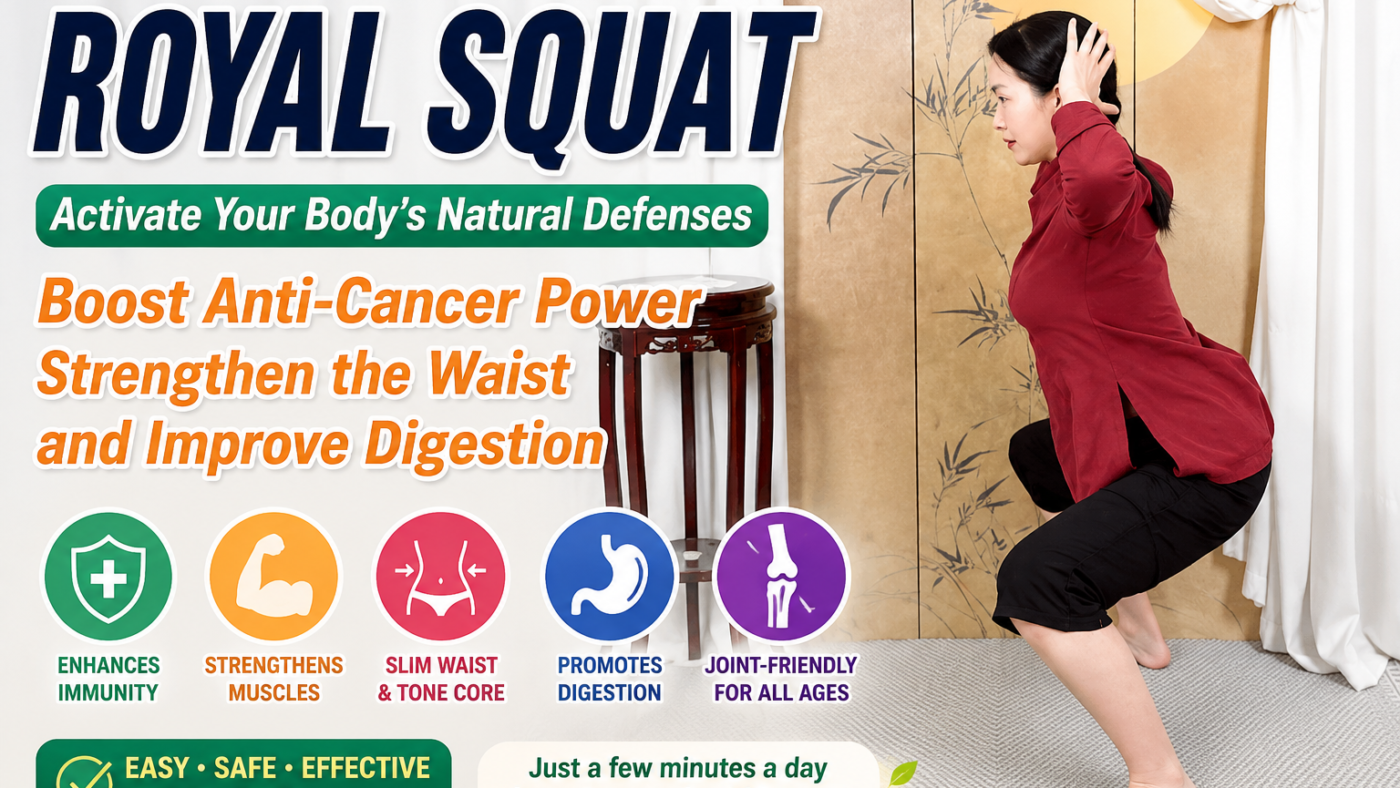
Could one exercise activate your body’s natural defenses against cancer?
That is an appealing idea.
Squats are among the most effective and practical strength exercises available. They train large muscles in the hips and legs, require core control and can be modified for almost every fitness level.
But claims that one special squat can immediately activate an anticancer system or directly suppress tumor growth go beyond what current evidence can support.
The relationship between exercise and cancer is much more interesting and much more complex.
Regular physical activity is associated with a lower risk of several cancers.
Exercise can also improve cardiovascular fitness, muscle strength, insulin sensitivity, body composition and physical function.
For people living with or recovering from cancer, appropriately prescribed exercise can also help reduce fatigue and preserve strength and quality of life.
That makes resistance training extremely valuable.
It just does not turn a squat into a cancer treatment.
Why Strength Training Matters More as We Age
Muscle is not only important for appearance.
It helps you stand up.
Walk.
Climb stairs.
Carry groceries.
Maintain balance.
Recover from illness.
Protect independence.
As people age, muscle mass and strength tend to decline, especially when physical activity becomes limited.
That process can eventually contribute to weakness, reduced mobility and a higher risk of falls.
Resistance exercise provides muscles with a reason to adapt.
Squats are useful because they train several large muscle groups at once, including the quadriceps, glutes and muscles around the hips and trunk.
Maintaining these muscles becomes increasingly important in middle age and later life.
What Exercise Really Has to Do With Cancer Prevention
Physical activity is associated with a reduced risk of several types of cancer.
The relationship probably involves multiple biological pathways rather than one special anticancer substance.
Regular exercise can influence:
Body weight
Insulin sensitivity
Blood glucose regulation
Inflammation
Sex hormone levels
Immune function
Muscle metabolism
Cardiovascular health
Body composition
These factors may contribute to long term differences in disease risk.
This is very different from saying that one squat sends immune cells directly into a tumor.
Exercise works through repeated biological adaptations over time.
Consistency matters far more than one dramatic workout.
What Are Myokines?
Skeletal muscle is metabolically active tissue.
When muscle contracts, it can release signaling molecules often referred to as myokines.
Researchers are studying how these molecules may influence inflammation, metabolism, immune function and communication between tissues.
Some laboratory studies have also explored relationships between exercise related signaling molecules and cancer cells.
This research is scientifically interesting.
But laboratory findings should not be turned into claims that contracting the glute muscles during squats directly kills cancer cells inside the human body.
The evidence is not strong enough for that conclusion.
The practical message is simpler.
Muscle is an important organ of movement and metabolism.
Regularly using it is good for health.
You do not need to describe it as a cancer killing factory.
The Squat: A Powerful Lower Body Exercise
A squat is a movement in which the hips and knees bend while the body lowers toward the floor before returning to standing.
It resembles movements we perform throughout everyday life.
Sitting down.
Standing from a chair.
Picking something up.
Getting out of a low seat.
Because the movement is so practical, learning an appropriate squat variation can be useful at almost any age.
How to Start
Stand with your feet approximately shoulder width apart.
A slightly wider or narrower position may feel better depending on your anatomy.
Allow your toes to turn outward slightly if that feels natural.
Brace your trunk gently.
Begin bending at both the hips and knees.
Allow your hips to move backward and downward.
Lower only as far as you can comfortably control.
Then press through your feet and return to standing.
Keep the movement smooth.
Do not rush.
Your Knees Do Not Have to Stay Behind Your Toes
One of the most common squat instructions is that the knees must never move beyond the toes.
That rule is too simplistic.
During many normal and safe squat variations, the knees move forward beyond the toes.
How far they travel depends on factors such as:
Ankle mobility
Limb proportions
Squat depth
Foot position
Torso angle
Individual technique
Instead of obsessing over an invisible vertical line above the toes, focus on comfort and control.
Your knees should generally track in a direction compatible with your feet rather than collapsing dramatically inward.
If allowing the knees to move forward feels comfortable and controlled, that movement is not automatically harmful.
Your Back Does Not Need to Be Perfectly Vertical
Another misconception is that the torso must stay completely upright.
It does not.
A forward torso lean is normal during many squat styles.
The important issue is controlling the trunk and avoiding a position that causes pain or loss of balance.
Think about maintaining a comfortable, stable spinal position rather than trying to keep your back perfectly vertical.
Your personal squat will depend on your body proportions and mobility.
Do You Need to Squat to 90 Degrees?
No.
There is no universal depth that everyone must reach.
Some people can comfortably squat with the thighs approximately parallel to the floor.
Others should begin much higher.
A partial squat is still exercise.
If you are older, deconditioned or dealing with joint discomfort, controlling a shallow squat may be far more useful than forcing yourself into a deep position.
Range can gradually increase as strength and confidence improve.
A Better Beginner Version: Chair Squats
For many older adults, a chair squat is an excellent starting point.
Place a sturdy chair behind you.
Stand in front of the chair.
Keep your feet in a comfortable position.
Slowly bend your hips and knees.
Lower yourself until you lightly touch or sit on the chair.
Then stand back up.
Use your hands for support if necessary.
As you become stronger, gradually rely less on your hands.
The chair provides both a target and additional confidence.
Start With Fewer Repetitions
There is nothing magical about performing 10 to 12 repetitions for four sets.
Beginners may start with:
5 to 8 controlled repetitions
Rest
Repeat for 1 to 3 sets
If that feels easy over time, gradually increase the challenge.
Progress may involve more repetitions.
A slightly deeper squat.
More sets.
Slower movement.
Or eventually some additional resistance.
Exercise works best when the challenge increases gradually.
What About the Arms Behind the Back?
The traditional exercise in the original routine adds an unusual upper body position.
The arms cross behind the body while the hands reach toward the shoulders.
Some people may find this position comfortable.
Others may find it difficult because it requires substantial shoulder mobility.
It is not necessary for gaining the major benefits of squatting.
If the position causes shoulder, neck or upper back discomfort, skip it.
You can perform a normal squat with your arms:
In front of your chest
Extended forward
Resting on your hips
Holding a chair
The lower body benefits remain.
A Safer Upper Body Variation
Stand tall.
Place your hands across your chest.
Keep your shoulders relaxed.
Perform the squat normally.
This is easier to control and does not require extreme shoulder positioning.
People who already have shoulder problems should be especially cautious with behind the back arm positions.
Can Slow Squats Be Useful?
Yes.
Slowing down an exercise increases the amount of time your muscles remain under tension.
For example, you could lower for approximately three to five seconds.
Pause briefly.
Then return to standing under control.
Slow repetitions can make body weight exercises significantly more challenging without using additional equipment.
This can be particularly useful when training at home.
However, a seven second squat is not automatically superior to every other squat.
Different training speeds can all be useful.
The best method depends on your ability and goals.
Can Squats Lower Blood Sugar?
Resistance exercise can improve glucose regulation and insulin sensitivity.
Large muscle groups consume energy during and after exercise.
Over time, regular strength training can be an important part of metabolic health.
That does not mean one squat session permanently lowers blood sugar.
People with diabetes should think in terms of a consistent exercise program rather than a single special movement.
Medication, diet, sleep and overall medical care remain important.
Can Squats Lower Blood Pressure?
Regular exercise can contribute to healthier blood pressure over time.
Both aerobic exercise and resistance training can be useful components of a cardiovascular health program.
But people with uncontrolled hypertension or significant cardiovascular disease should seek appropriate guidance before beginning strenuous resistance training.
Holding your breath during heavy exertion can cause substantial temporary increases in blood pressure.
That is another reason beginners should avoid breath holding.
How Should You Breathe?
Natural breathing is usually a good place to start.
Do not hold your breath unnecessarily.
You can exhale during the more difficult portion of the movement and inhale during the easier portion if that feels comfortable.
But you do not need to follow a rigid breathing sequence for a light body weight squat.
The priority is simply continuing to breathe comfortably.
Are Squats Good for Older Adults?
They can be excellent.
Squat type movements train abilities older adults need every day.
Standing from a chair.
Controlling descent into a seat.
Using the hips and thighs.
Maintaining balance.
However, the exercise must match the person.
Someone who is 70 and physically active may perform loaded squats confidently.
Someone else of the same age may need a high chair, hand support and a very shallow range.
Chronological age alone does not determine what exercise is appropriate.
What If Your Knees Hurt?
Do not assume that squats automatically damage knees.
But do not ignore pain either.
Try reducing the depth.
Use a chair.
Slow the movement.
Change your stance slightly.
Reduce the number of repetitions.
If pain remains significant or repeatedly worsens, stop and seek appropriate professional guidance.
Knee pain has many possible causes.
The solution is not always to push through it.
Can Squats Strengthen the Prostate?
There is no good evidence that squats directly strengthen the prostate.
Squats strengthen skeletal muscles.
They can improve general fitness and metabolic health.
Those are worthwhile benefits without adding unsupported prostate claims.
Do Squats Increase Testosterone?
Heavy resistance exercise can sometimes produce temporary hormonal changes after training.
That does not mean a set of squats permanently increases testosterone or treats low testosterone.
Long term hormonal health depends on many factors.
Exercise remains valuable even without dramatic hormone claims.
Can Exercise Prevent Cancer?
Regular physical activity can contribute to lower risk for several cancers.
But no exercise provides complete protection.
Cancer risk involves many factors, including:
Age
Genetics
Tobacco exposure
Alcohol
Body weight
Certain infections
Ultraviolet exposure
Environmental exposures
Hormonal factors
Random cellular changes
Physical activity
Exercise is one important part of prevention, not a guarantee.
The strongest recommendation is therefore not to search for one anticancer exercise.
Build a lifestyle in which movement happens consistently.
Resistance Training for People With Cancer
Exercise can also be valuable after a cancer diagnosis.
Many people undergoing treatment or living after treatment can safely participate in appropriately designed exercise programs.
Potential benefits may include better strength, physical function, mood and quality of life, along with reduced fatigue.
But cancer is not one disease.
Treatment may involve surgery, chemotherapy, radiation therapy, hormone therapy, immunotherapy or other approaches.
Side effects vary considerably.
Someone receiving cancer treatment should not simply copy a demanding squat routine from an online video.
Exercise may need to be modified according to:
Blood counts
Bone health
Neuropathy
Surgical recovery
Fatigue
Balance
Cardiovascular status
Treatment related side effects
An oncology team or appropriately trained exercise professional can help individualize the program.
A Practical Strength Routine for Healthy Aging
You do not need to rely on squats alone.
A balanced strength routine might include:
Chair squats
Calf raises
Step ups
Glute bridges
Wall push ups
Resistance band rows
Light carries
Hip strengthening exercises
These movements collectively train more of the body.
Strength training is usually most effective when major muscle groups are trained regularly rather than focusing exclusively on one exercise.
Why Walking Still Matters
Strength training should complement aerobic activity.
It should not replace it.
Walking, cycling, swimming and other aerobic activities support cardiovascular fitness and endurance.
Strength training supports muscle and physical function.
Balance training helps reduce fall risk.
Mobility work helps maintain comfortable movement.
Healthy aging benefits from combining these approaches.
Frequently Asked Questions
Do Squats Kill Cancer Cells?
There is no evidence that performing squats directly kills cancer cells inside the human body.
Exercise can influence many biological pathways associated with long term health, but it is not a cancer treatment.
Does Strength Training Help Prevent Cancer?
Regular physical activity, including muscle strengthening, can be part of a lifestyle associated with lower risk of several cancers.
Cancer prevention also depends on many other factors.
Are Squats Safe After 60?
Many people over 60 can safely perform appropriate squat variations.
Chair squats and shallow supported squats are useful starting options.
Should Your Knees Never Go Past Your Toes?
No.
Knee movement beyond the toes can occur naturally during safe squatting.
Comfort, control, joint tolerance and individual anatomy matter more than a rigid rule.
How Many Squats Should a Beginner Do?
Start conservatively.
Five to ten controlled repetitions may be enough initially.
Add repetitions or sets gradually when the exercise becomes easy.
Is a Seven Second Squat Better?
Slow squats can increase muscular effort because the muscles remain under tension longer.
But seven seconds is not a uniquely proven duration.
Can Squats Reduce Belly Fat?
Not specifically.
Squats burn energy and train large muscles, but they cannot selectively remove fat from one part of the body.
Do Squats Increase Longevity?
No single exercise guarantees a longer life.
Regular physical activity and maintaining physical fitness are associated with numerous health benefits that support healthier aging.
Bottom Line
Squats deserve a place in many healthy aging programs.
They train some of the largest muscles in the body.
They help preserve leg strength.
They support everyday movements such as sitting, standing and climbing stairs.
They can improve physical function and contribute to better metabolic health.
And resistance training is an important component of a physically active lifestyle associated with lower chronic disease risk.
But we do not need to turn squats into a miracle therapy.
One squat does not activate a hidden cancer killing switch.
Glute muscles do not directly send cancer destroying substances throughout the body.
Your immune cells do not suddenly race toward tumors because you completed a set of squats.
And exercise does not replace cancer screening, medical treatment or other proven preventive strategies.
Use squats for what they do exceptionally well.
Build muscle.
Maintain strength.
Improve function.
Challenge balance.
Support metabolic health.
Help you remain physically capable as you age.
Those benefits are powerful enough without exaggeration.
Start with a variation that fits your ability.
Use a chair if necessary.
Move through a comfortable range.
Breathe.
Progress gradually.
And combine resistance training with aerobic activity, balance work, appropriate nutrition, adequate sleep and recommended preventive healthcare.
That is a far more realistic path toward long term health.
Medical Disclaimer
This article is for educational and informational purposes only and is not medical advice. Exercise is not a substitute for cancer screening, diagnosis or treatment. People undergoing cancer treatment, recovering from surgery, or living with significant cardiovascular, neurological, bone or joint conditions should discuss appropriate exercise with a qualified healthcare professional before beginning a new program.
This article is for general education and does not replace individualized care from a qualified health professional. Seek appropriate advice for persistent, severe, or concerning symptoms.
Read the full medical disclaimer