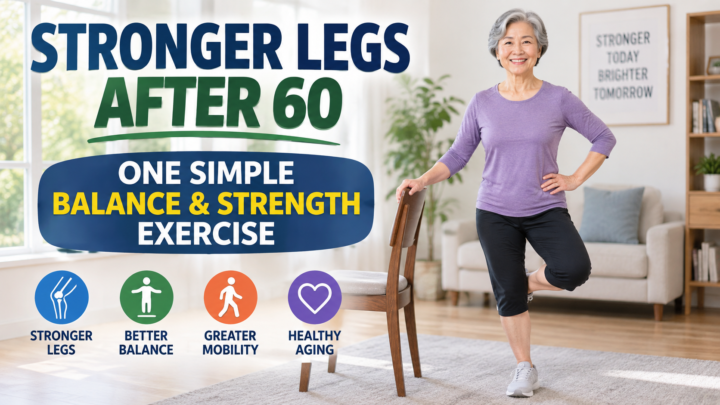
As we get older, staying active does not always require intense workouts, running or jumping.
Sometimes the most useful movements are simple enough to perform at home.
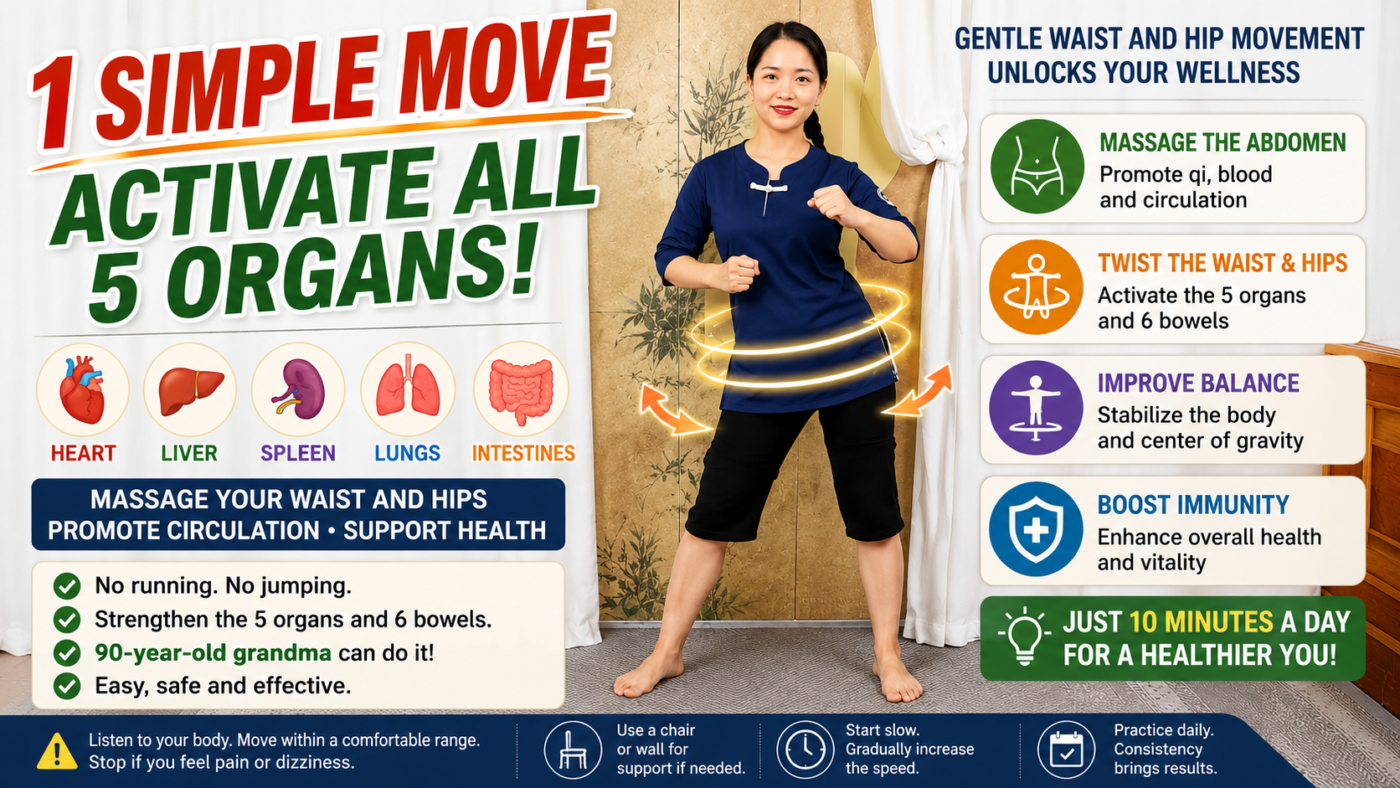
One example is a gentle standing hip and pelvic mobility exercise that combines controlled side to side and forward to backward movement with relaxed arm motion.
It may look easy.
But when performed carefully, the exercise challenges several important physical abilities at the same time.
Hip mobility
Pelvic control
Balance
Lower body coordination
Core stability
Weight shifting
Ankle control
For people who spend much of the day sitting, this type of gentle movement can also provide a simple way to break up sedentary time.
What it cannot do is diagnose blocked internal organs, remove toxins or prevent tumors.
Those claims go far beyond what exercise science supports.
The real benefits are less dramatic but much more useful.
Regular movement can help preserve physical function, mobility and independence as we age.
Why Mobility Matters With Age
Many adults notice that movement gradually becomes less comfortable over time.
Getting out of a chair may feel slower.
The hips may feel stiff after sitting.
Turning, bending and changing direction may require more effort.
Balance may not feel as automatic as it once did.
These changes do not mean that aging inevitably leads to severe disability.
Physical activity remains valuable throughout life.
Regular aerobic activity, muscle strengthening and balance training can help older adults maintain physical function and independence.
The hips deserve particular attention because they connect the trunk to the legs.
Every time you walk, climb stairs, sit down, stand up or change direction, muscles around the hips and pelvis help control the movement.
A Gentle Standing Hip and Pelvic Mobility Exercise
This exercise does not require gym equipment.
You only need enough space to stand comfortably.
If your balance is uncertain, place a sturdy chair, kitchen counter or wall beside you before beginning.
Stand with your feet slightly apart.
Allow your knees to remain comfortably relaxed.
Do not lock them straight.
Keep your chest upright and your shoulders relaxed.
Begin by gently shifting your pelvis toward the left.
Then move toward the right.
Once that feels comfortable, allow the pelvis to move slightly forward and backward.
Gradually combine these directions into a slow circular motion.
Imagine that your hips are tracing a small circle.
Keep the movement smooth.
You do not need a large range.
This is a mobility exercise, not a flexibility competition.
Keep the Knees Soft
A common mistake is standing with the knees completely locked while trying to move the pelvis.
That can make the motion feel stiff and uncomfortable.
Instead, keep a small amount of bend in both knees.
Think about remaining springy rather than rigid.
The knees can naturally adjust slightly as your body weight changes.
However, avoid forcing the knees into aggressive twisting.
Your feet and knees should move naturally enough to accommodate the motion.
There is no benefit in trying to keep the lower body perfectly frozen.
Comfortable joint movement is more important than rigid positioning.
Let the Hips Lead the Movement
Think of the movement as beginning around the hips and pelvis.
You should not simply shake your shoulders from side to side.
The upper body may move slightly because the body functions as a connected system.
That is normal.
But the goal is not to actively swing the head and shoulders.
Keep your head comfortable and your gaze forward.
Allow the pelvis and lower trunk to produce most of the motion.
Add Gentle Arm Movements
Once the hip movement feels natural, you can add your arms.
Bend your elbows slightly.
Keep your hands relaxed.
Allow your arms to move gently with the rhythm of your body.
You can imagine the relaxed arm movement used during easy walking.
Do not clench your fists tightly.
Do not force the shoulders backward.
The arms are simply adding coordination and rhythm.
Start Slowly
The original traditional exercise is sometimes demonstrated at a relatively fast pace.
There is no need to begin that way.
Start slowly enough that you always know where your center of gravity is.
If you become dizzy or unstable, stop.
Speed is not the goal.
Control is the goal.
As your coordination improves, you may naturally become slightly more fluid.
But faster movement is not necessarily better exercise.
A Beginner Routine
Try the following progression.
First minute
Practice gentle side to side weight shifting.
Second minute
Add a small forward and backward movement.
Third and fourth minutes
Combine the directions into small hip circles.
Fifth minute
Reverse the direction of the circles.
Then rest.
If you feel comfortable, repeat the sequence.
This gives you a routine of approximately 5 to 10 minutes.
You do not have to reach 10 minutes immediately.
Two or three comfortable minutes are more useful than forcing yourself through a longer session with poor control.
Why Weight Shifting Matters
Walking is essentially a continuous series of controlled weight transfers.
Your body moves from one leg to the other with every step.
The ankle, knee, hip and trunk must continuously adjust to keep you upright.
This exercise practices some of those same skills without requiring you to travel across the room.
As the pelvis moves, your body weight shifts slightly between your feet.
Your ankles make small corrections.
Your leg muscles respond.
Your trunk helps keep the body controlled.
That makes the movement more than a simple hip stretch.
It becomes a basic coordination and balance exercise.
The Role of the Core
The core includes muscles around the abdomen, pelvis and back.
These muscles help stabilize the trunk while the arms and legs move.
During the exercise, gently engage your midsection.
You should still be able to breathe normally.
Do not suck your stomach in as hard as possible.
Do not hold your breath.
Think about keeping the trunk controlled rather than rigid.
Traditional Chinese movement systems sometimes describe this central area using the concept of the Dantian.
Dantian is a traditional concept rather than an anatomical organ.
However, traditional movement practices often emphasize awareness of the body’s center, posture and coordinated weight shifting.
Those movement principles can be practiced without making unsupported claims about energy or internal organs.
Can This Exercise Massage the Internal Organs?
The abdominal contents naturally change position slightly as you breathe and move.
Your abdominal wall, diaphragm, pelvis and trunk all participate in normal movement.
However, there is no good evidence that rotating the hips physically cleans blocked organs or massages toxins out of the liver, heart, lungs or intestines.
Internal organs do not become unhealthy simply because they have not been shaken or rotated enough.
Different organs develop disease for very different reasons.
Chest tightness can have cardiovascular, respiratory, gastrointestinal, musculoskeletal and other causes.
Chronic cough can have many causes.
Constipation can result from diet, medications, physical inactivity, pelvic floor problems and medical conditions.
Poor appetite can also have many explanations.
These symptoms should not automatically be labeled as an organ blockage.
Can Gentle Movement Support Digestion?
Regular physical activity can be helpful for overall digestive health.
For example, physical activity is one of the lifestyle measures commonly recommended for constipation.
But the relationship is not because exercise physically pushes toxins out of the organs.
Movement can influence metabolism, nervous system activity, muscle function and gastrointestinal motility.
People who spend long periods sitting may therefore benefit from getting up and moving regularly.
That is a much more realistic reason to practice this exercise.
Does Belching Mean You Are Releasing Toxins?
No.
Belching is primarily the release of gas from the upper digestive tract.
People may swallow air while eating, drinking or talking.
Carbonated beverages also introduce gas.
Movement may sometimes make someone more aware of gas in the stomach and cause a belch.
That does not mean toxins are leaving the body.
Belching does not detoxify the blood, liver or kidneys.
Can Gas Enter the Blood and Create Tumors?
Ordinary intestinal gas does not become a toxin that circulates through the blood and produces tumors.
Cancer develops when abnormal cells grow uncontrollably.
Genetic changes play a central role in this process.
Cancer risk can be influenced by factors such as aging, tobacco exposure, alcohol, certain infections, radiation, obesity, environmental carcinogens and inherited genetic changes.
The idea that trapped gas or blocked Qi gradually turns into a tumor should not be presented as a medical explanation.
What About Nodules and Cysts?
A nodule simply means a small lump or area of abnormal tissue.
A cyst is typically a sac that contains fluid or other material.
Neither automatically means cancer.
They can occur for many different reasons depending on where they develop.
Some are harmless.
Some require monitoring.
Some require further testing.
Finding a nodule or cyst is not evidence that the body contains stagnant toxins.
If you discover a new lump or imaging reveals a nodule, the appropriate response is medical evaluation rather than trying to massage or exercise it away.
Pain Is Not Proof of a Blockage
This point is especially important.
Some traditional explanations use the phrase that where there is pain, there is blockage.
That idea should not be used to interpret exercise pain.
If you feel pulling, stabbing or significant abdominal pain while performing this movement, do not assume that you have discovered a blocked organ.
Pain can arise from muscles, joints, connective tissue, the spine or internal medical conditions.
Stop the exercise if you experience significant pain.
Seek medical advice if the pain is persistent, severe, new or unexplained.
You should never continue twisting aggressively because someone tells you that the pain means the exercise is working.
How Hard Should You Move?
Use a range that feels easy to moderate.
Your breathing should remain comfortable.
You should be able to speak normally.
A mild sense of muscles working is reasonable.
Sharp pain is not.
A gentle warming sensation can occur simply because muscles are becoming active and blood flow is increasing.
That is different from proving that Qi, blood stagnation or toxins have been cleared.
Modification for Older Adults
Older adults can make the movement much safer by using support.
Stand beside a kitchen counter or place a sturdy chair in front of you.
Hold it with one or both hands.
Make very small hip circles.
Keep both feet fully on the floor.
Do not increase the speed.
Once you feel stable, you may gradually reduce how much support you use.
There is no reason to remove the chair simply to make the exercise look more advanced.
A safe exercise that you can repeat consistently is more useful than a difficult exercise that increases your risk of falling.
What If You Have Knee Problems?
This exercise may be comfortable for some people with mild knee stiffness, but it is not suitable for everyone.
Keep the circles small.
Avoid twisting aggressively through the knee.
Use support.
Stop if the knee becomes painful.
Persistent swelling, locking, giving way or difficulty bearing weight deserves professional evaluation.
Do not accept the claim that a particular movement cannot possibly injure the knee, hip or spine.
Almost any exercise can become inappropriate when the movement, intensity or individual condition does not match.
What If You Have Back Problems?
Move particularly slowly if you have a history of back pain.
Use a smaller range.
Avoid exaggerated pelvic circles.
If the exercise reproduces pain traveling down the leg, numbness, tingling or weakness, stop and seek appropriate medical advice.
People recovering from spinal surgery should follow the exercise recommendations provided by their healthcare team.
Can This Exercise Reduce Belly Fat?
Not specifically.
Moving the waist and abdomen does not selectively burn abdominal fat.
Spot reduction is not a reliable strategy for fat loss.
Physical activity can contribute to overall energy expenditure and improve many aspects of health.
Strength training can also help preserve or increase muscle.
But changes in abdominal fat depend on overall energy balance, nutrition, activity, sleep, genetics and other factors.
This exercise can help you move more.
It should not be marketed as a method that melts belly fat from one particular area.
Can It Strengthen Your Internal Organs?
Exercise can absolutely benefit many organ systems.
Regular physical activity supports cardiovascular health.
It improves muscle function.
It can improve metabolic health.
It can contribute to better physical function and quality of life.
But those benefits are very different from saying that rotating the hips directly strengthens each internal organ.
The most accurate way to describe this movement is as a gentle mobility and coordination exercise.
One Exercise Is Not Enough
A short hip mobility routine can be useful, but it should be part of a broader activity program.
Healthy aging generally benefits from a combination of aerobic activity, muscle strengthening and balance training.
Aerobic activities might include walking, cycling or swimming.
Strength training can include chair squats, sit to stands, resistance bands, step ups and appropriate weight training.
Balance work can include supported single leg standing, heel to toe walking, tai chi and controlled weight shifting.
Mobility exercises such as this hip circle can complement those activities.
They should not replace them.
A Simple Weekly Approach
You might practice this hip mobility movement for 5 to 10 minutes on several days each week.
Combine it with regular walking.
Include strength exercises at least twice each week.
Add dedicated balance practice.
Break up long periods of sitting whenever possible.
The exact routine should match your health and current fitness level.
Consistency is more important than performing one special exercise every day.
When to Stop and Seek Medical Advice
Stop exercising and seek appropriate medical attention if you develop severe or unexplained symptoms.
These include chest pain.
Severe shortness of breath.
Fainting.
Sudden weakness.
Severe abdominal pain.
New neurological symptoms.
Persistent dizziness.
A new unexplained lump.
Unexplained weight loss.
Blood in the stool.
Persistent vomiting.
These symptoms should not be interpreted as detox reactions or evidence that a blockage is being cleared.
Frequently Asked Questions
Can Hip Circles Improve Mobility?
Gentle hip circles can move the hips and pelvis through several directions and may be useful as part of a mobility routine.
The range should remain comfortable and controlled.
Are Hip Circles Good for Older Adults?
They can be appropriate for many older adults when performed slowly and with support nearby.
People with significant balance problems, recent surgery or severe joint pain should seek individualized guidance.
Can This Exercise Improve Balance?
Controlled weight shifting can challenge balance.
Balance training is an important part of healthy aging, but a complete program should use several types of balance and strength exercises.
Does This Exercise Detox the Body?
No.
Your liver, kidneys, lungs, digestive system and other organs continuously process and eliminate metabolic waste.
Hip circles are an exercise, not a detoxification procedure.
Does Abdominal Pain During the Exercise Mean an Organ Is Blocked?
No.
Pain is not a reliable test for blocked organs or meridians.
Stop if the movement produces significant pain and seek medical evaluation if symptoms persist.
Can Belching During Exercise Be a Good Sign?
Belching may simply mean gas or swallowed air is leaving the stomach.
It is not evidence that toxins are being removed.
Can This Exercise Prevent Tumors?
There is no evidence that this particular exercise prevents tumors by clearing organ blockages.
Regular physical activity is associated with many health benefits and can help reduce the risk of some chronic diseases, but cancer prevention is much more complex.
How Long Should I Practice?
Beginners can start with 2 to 5 minutes.
If the exercise feels comfortable, you can gradually work toward approximately 5 to 10 minutes.
There is no medically necessary duration.
Bottom Line
A gentle standing hip and pelvic movement can be a useful way to add mobility, balance, weight shifting and core control to your day.
It is especially practical for people who want a low impact movement without running or jumping.
The exercise may help you feel less stiff and more comfortable moving after long periods of sitting.
But its benefits should not be exaggerated.
It does not diagnose blocked organs.
It does not remove tumors, nodules or toxins.
Pain does not prove that a meridian is blocked.
Belching does not detoxify the body.
Use this movement for what it can realistically provide.
Gentle activity.
Hip mobility.
Better body awareness.
Balance practice.
Coordination.
A simple way to move more.
For long term healthy aging, combine mobility work with walking or other aerobic exercise, progressive strength training and regular balance practice.
Move comfortably.
Use support when necessary.
Listen to pain rather than trying to push through it.
And seek professional care when symptoms cannot reasonably be explained by ordinary exercise.
Affiliate Disclosure
This article may contain affiliate links. If you purchase through one of these links, we may earn a commission at no additional cost to you. Affiliate relationships do not influence our editorial standards or health recommendations.
Medical Disclaimer
This article is for educational and informational purposes only and is not medical advice. Traditional wellness concepts discussed here should not be interpreted as modern medical diagnoses. Exercise should be adapted to individual health, fitness and mobility. Consult a qualified healthcare professional or physical therapist if you have persistent pain, significant balance problems, recent surgery or other medical concerns before beginning a new exercise routine.
This article is for general education and does not replace individualized care from a qualified health professional. Seek appropriate advice for persistent, severe, or concerning symptoms.
Read the full medical disclaimer