For many people, success is defined by achievements, income, career growth, and social recognition.
From a young age, we are often encouraged to compete, compare, and constantly improve. We measure ourselves against others and believe that reaching a certain level of success will finally bring happiness and freedom.
However, many people eventually discover a deeper truth:
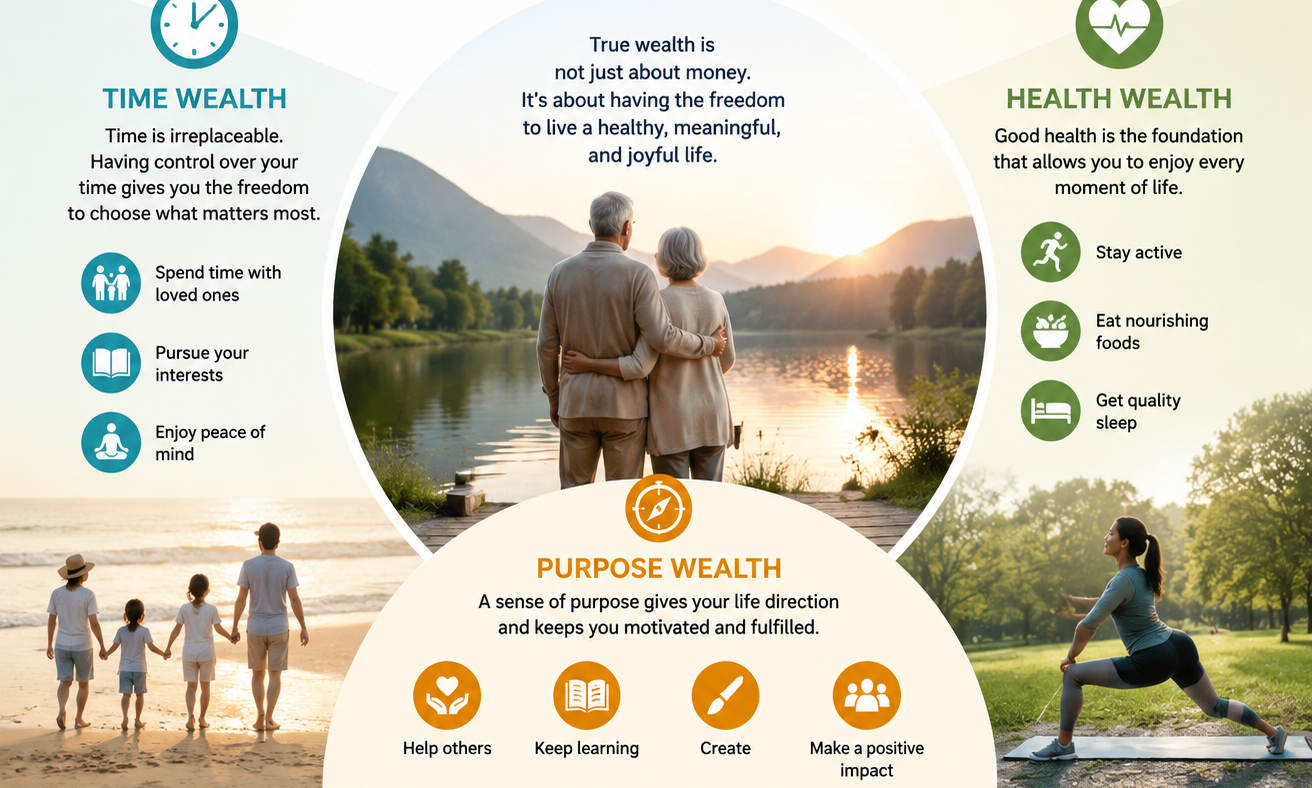
The greatest forms of wealth are not only financial. They are time, health, and the ability to live according to your own values.
A meaningful life is not simply about accumulating more. It is about having the energy, independence, and awareness to enjoy what you have created.
This perspective is at the heart of healthy aging.
The Hidden Cost of Living According to Other People’s Expectations
One of the most common mistakes people make is building a life based on external expectations.
Many individuals spend years chasing goals influenced by:
Family expectations
Social comparisons
Workplace competition
The desire for approval
This constant comparison can create a stressful cycle:
Work harder, achieve more, compare again, and feel that something is missing.
The problem is not ambition itself. Growth and achievement can be positive forces.
The problem occurs when people lose connection with their own strengths, interests, and personal definition of success.
A healthier approach is to ask:
What kind of life do I actually want to build?
Understanding yourself is an important part of long-term wellness.
The Three Levels of Wealth: Money, Time, and Health
Financial security is important. Money can provide comfort, education, healthcare access, and opportunities.
But true wealth has deeper layers.
Financial Wealth
Money provides resources and choices.
It allows people to solve problems and create stability.
However, money alone cannot guarantee happiness or fulfillment.
Time Wealth
Time is one of the most limited resources in human life.
Unlike money, time cannot be earned back.
A person may accumulate financial success but lose the freedom to enjoy it because of stress, poor health, or an overloaded schedule.
Having control over your time is a powerful form of freedom.
Health Wealth
Health determines how you experience your life.
Without physical and mental well-being, even financial success becomes difficult to enjoy.
Healthy aging is not only about adding more years to life.
It is about maintaining the ability to:
Move freely
Think clearly
Stay independent
Participate in meaningful activities
Why Health Becomes the Foundation of Success
Many ambitious people sacrifice their health while pursuing career goals.
They may ignore:
Sleep quality
Regular exercise
Balanced nutrition
Stress management
At first, the body may adapt.
But over time, chronic stress and unhealthy habits can affect energy levels, metabolism, cardiovascular health, and overall quality of life.
A healthier philosophy is simple:
Your body is your lifelong foundation.
Taking care of your health is not a distraction from success.
It is what allows success to continue.
Small Habits Create Long-Term Transformation
Major life changes often begin with small actions.
The idea behind sustainable habit building is that consistent improvement creates powerful results over time.
Instead of trying to completely change your lifestyle overnight, focus on manageable steps.
Improve One Meal at a Time
Choose more whole foods, adequate protein, vegetables, and balanced portions.
Move Every Day
Exercise does not always need to be intense.
Walking, strength training, mobility exercises, and active hobbies all support healthy aging.
Protect Your Sleep
Quality sleep supports:
Brain health
Hormonal balance
Emotional regulation
Physical recovery
Create Space for Reflection
A busy life can leave little room for creativity, curiosity, and self-awareness.
Quiet time is not wasted time.
It allows people to reconnect with what matters.
The Importance of Purpose in Healthy Aging
Research on longevity increasingly highlights the importance of purpose and meaningful engagement.
People who maintain a sense of purpose often remain more active, socially connected, and mentally engaged.
Purpose does not have to mean a major career achievement.
It can come from:
Helping others
Learning new skills
Creating something meaningful
Supporting family and community
Sharing knowledge and experience
A fulfilling life continues to evolve throughout every stage of aging.
Retirement Should Be About Freedom, Not Waiting
Many people think of retirement as the moment when work stops.
But a healthier definition is different:
Retirement is the freedom to choose how you spend your time.
A meaningful later life may include:
Learning new subjects
Traveling
Volunteering
Creating content
Exercising
Building relationships
The goal is not simply to stop working.
The goal is to create a life where your time belongs to you.
Finding Passion Through Curiosity
Many people believe passion is something you suddenly discover.
In reality, passion is often developed through exploration.
Curiosity comes first.
You try something new.
You learn.
You improve.
Over time, interest becomes skill, and skill can become purpose.
Leaving small amounts of free time in your schedule can create opportunities to discover new directions.
Even a few minutes each day can start a meaningful change.
Health Is a Lifelong Practice, Not a Temporary Project
Many people approach health as a short-term challenge:
A quick diet
A temporary exercise plan
A short wellness program
But lasting health requires a different mindset.
Health is a lifelong practice.
Just like maintaining a home, your body requires regular care.
Daily choices accumulate:
What you eat
How you move
How you sleep
How you manage stress
How you spend your time
These choices shape your future quality of life.
The Connection Between Wealth, Wellness, and Longevity
Modern life often encourages people to chase more:
More money.
More achievements.
More recognition.
But longevity teaches us another lesson:
Sometimes the most valuable things are simple:
A healthy body
A clear mind
Meaningful relationships
Control over your time
The ability to enjoy ordinary moments
True success is not only about reaching a destination.
It is about creating a life you enjoy living every day.
FAQ
What is the true meaning of healthy aging?
Healthy aging means maintaining physical function, mental well-being, independence, and quality of life as you grow older.
Why is time considered a form of wealth?
Because time cannot be replaced. Having control over your time allows you to focus on meaningful activities and relationships.
Can small habits really improve long-term health?
Yes. Consistent small improvements in nutrition, movement, sleep, and stress management can create significant benefits over time.
How can people find more purpose in life?
Purpose often develops through exploration, learning, helping others, and engaging in activities that feel meaningful.
Is retirement only about stopping work?
No. A healthy retirement is about gaining freedom and choosing how to spend your time in meaningful ways.
Bottom Line
The greatest wealth in life is not measured only by money.
It is measured by:
The health you protect.
The time you control.
The purpose you discover.
Healthy aging is not about simply living longer.
It is about creating more meaningful, energetic, and fulfilling years.
Affiliate Disclosure
This article may contain affiliate links. If you purchase through these links, we may earn a commission at no additional cost to you.
Medical Disclaimer
This content is for educational purposes only and is not medical advice. Always consult a qualified healthcare professional before making decisions related to your health.
This article is for general education and does not replace individualized care from a qualified health professional. Seek appropriate advice for persistent, severe, or concerning symptoms.
Read the full medical disclaimer