Alcohol is often associated with social gatherings, business dinners, celebrations, and other situations in which people may feel pressure to drink.
But from a health perspective, there is no acupressure point, massage technique, supplement, or “detox” routine that can cancel out the biological effects of alcohol.
The liver plays a major role in metabolizing alcohol, and repeated or excessive drinking can contribute to alcohol-associated liver disease. Alcohol can also irritate the lining of the gastrointestinal tract and contribute to nausea, vomiting, inflammation, and digestive discomfort.
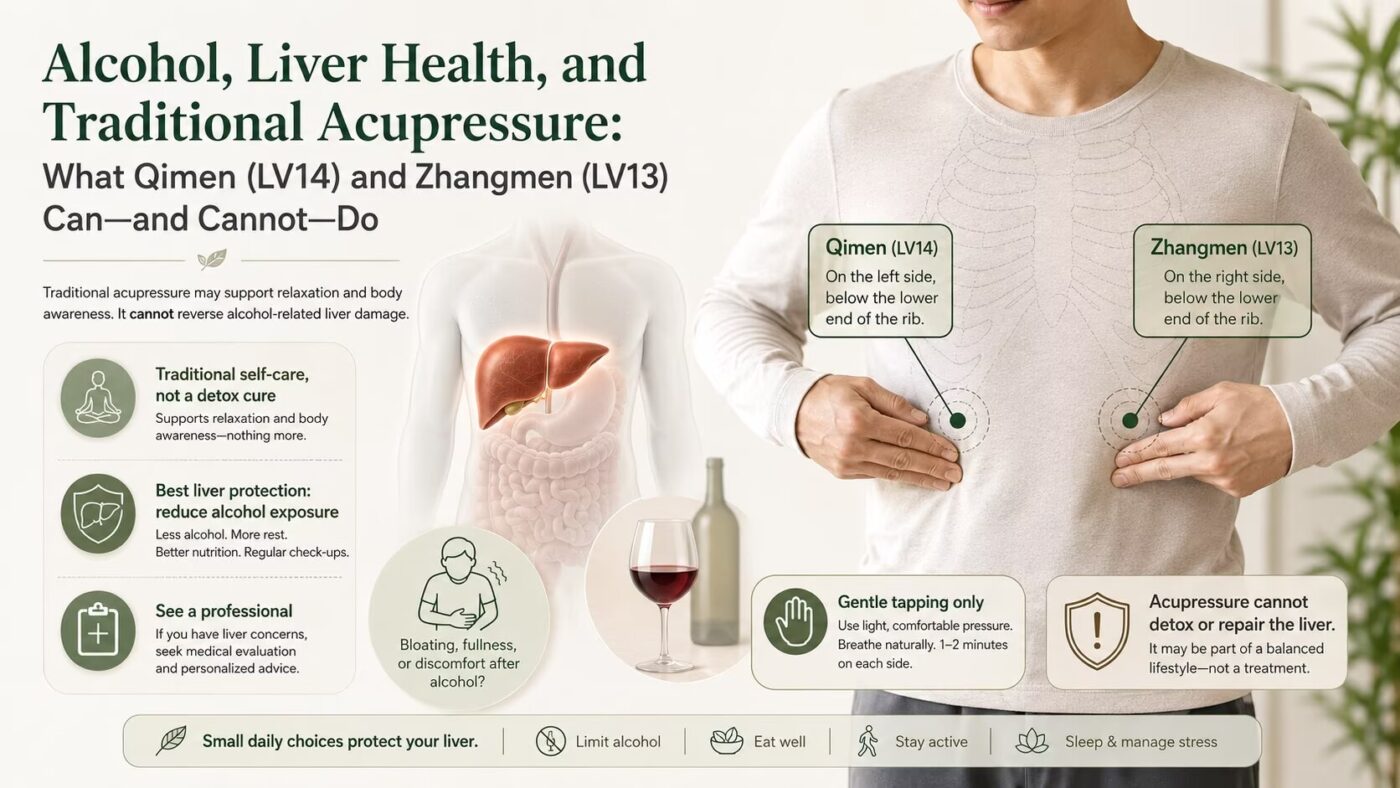
Traditional Chinese wellness practices sometimes recommend stimulating two points known as Qimen and Zhangmen as part of a broader self-care routine.
These practices can be discussed as traditional wellness techniques.
They should not, however, be promoted as a way to “protect the liver from alcohol” or reverse alcohol-related injury.
What Actually Happens When You Drink Alcohol?
After alcohol is absorbed from the digestive tract, much of it is metabolized by the liver.
The liver converts ethanol into other compounds, including acetaldehyde, which is toxic and contributes to alcohol-related cellular injury. Chronic heavy alcohol exposure can disrupt normal liver function and damage liver tissue over time.
Alcohol can also directly irritate the gastrointestinal tract.
NIAAA notes that alcohol can damage the mucous membranes lining the esophagus, stomach, and intestines and contribute to gastrointestinal inflammation.
So if someone feels nauseated, develops stomach burning, or experiences digestive discomfort after drinking, the explanation is not that a specific acupuncture point has “affected the stomach.”
The alcohol itself may be contributing to the symptoms.
Alcohol Is Different From Stress and Staying Up Late
Traditional wellness videos often group together alcohol, staying up late, and emotional stress as three equal ways of “damaging the liver.”
That is too simplistic.
Alcohol has a well-established direct toxic effect on the liver and can contribute to alcohol-associated liver disease.
Poor sleep, chronic stress, physical inactivity, and unhealthy eating habits can certainly affect overall health and may influence metabolic and cardiovascular risk.
But it is not scientifically accurate to say that being angry or going to bed late “damages the liver” in the same direct way that excessive alcohol exposure can.
Healthy liver care is better understood as part of whole-body health rather than through a single traditional concept.
What Are Qimen and Zhangmen?
Qimen is traditionally identified as LV14, and Zhangmen as LV13, within the acupuncture nomenclature used in traditional Chinese medicine. The WHO has standardized the international naming and location system used for classical acupuncture points.
Qimen is traditionally located in the lower chest region, while Zhangmen is located farther to the side near the lower rib area.
These points belong to traditional acupuncture theory.
The traditional explanation may describe them as influencing the Liver meridian, qi movement, or digestive function.
Modern anatomy does not recognize a measurable “Liver meridian” that can be physically unblocked by tapping.
For this reason, acupressure in this area should be viewed as a complementary relaxation or body-awareness practice rather than a method of cleansing or repairing the liver.
A Gentle Traditional Tapping Practice
If you enjoy traditional self-massage, you may use gentle tapping over the soft tissues around the side of the lower ribs and upper abdomen.
Form a loose, hollow fist rather than a tight fist.
Keep your shoulders relaxed.
Tap lightly and rhythmically.
The pressure should feel comfortable.
There is no need to hit the area hard.
There is also no medical reason that you must perform exactly 49 repetitions.
A short, comfortable period is enough for a general wellness practice.
Do not repeatedly strike directly over painful ribs, bruised tissue, recent injuries, surgical sites, or areas of unexplained tenderness.
The goal is relaxation and body awareness—not force.
Can Tapping Qimen and Zhangmen Protect the Liver?
There is no reliable evidence that tapping LV13 or LV14 prevents alcohol-related liver injury.
It also does not speed up the body’s elimination of alcohol in a clinically meaningful way.
The most effective way to reduce alcohol-related harm is to reduce alcohol exposure itself.
For people with alcohol-associated liver disease, abstinence is especially important. NIAAA notes that stopping alcohol can allow improvement in earlier stages of alcohol-related injury and can reduce further liver damage in people with more advanced disease.
In other words:
You cannot “earn back” liver protection by tapping an acupuncture point after drinking.
Can Acupressure Help With Stomach Discomfort After Drinking?
Gentle touch may feel soothing to some people, but it should not be advertised as a treatment for alcohol-induced gastritis, nausea, or abdominal pain.
If stomach discomfort is mild, the safest approach is usually to stop drinking, allow time for recovery, avoid additional stomach irritants, and seek medical advice if symptoms are significant or persistent.
If symptoms are severe, acupressure is not an appropriate substitute for medical assessment.
What About Moxibustion?
The original routine recommends applying moxibustion around Qimen and Zhangmen after drinking.
That recommendation deserves caution.
Moxibustion involves burning dried mugwort near the skin to produce heat. NCCIH notes that reported complications include burns, allergic reactions, and infections.
There is not good evidence that self-administered moxibustion after drinking reverses alcohol-related stomach irritation or protects the liver.
For that reason, someone who has been drinking should not rely on moxibustion as an “antidote” to alcohol.
If you use moxibustion as part of a traditional practice, it should be performed carefully and preferably under the guidance of a qualified practitioner.
The Better Way to Protect Your Liver
The liver does not need a special acupoint routine to “flush out toxins.”
The most meaningful liver-health strategies are much more practical.
They include limiting or avoiding alcohol, maintaining a healthy body weight, staying physically active, managing diabetes and metabolic risk factors when present, avoiding unnecessary exposure to liver-toxic substances, using medications appropriately, and obtaining medical care when liver disease is suspected.
NIDDK notes that excessive alcohol use can cause liver disease and that long-term liver injury can lead to cirrhosis.
If someone already has fatty liver disease or another liver condition, alcohol may further increase liver injury risk.
If You Find It Hard to Cut Down on Alcohol
Some people do not drink simply because they “lack willpower.”
Alcohol use disorder is a recognized medical condition characterized by difficulty controlling alcohol use despite negative consequences.
If work, social pressure, or habit makes it difficult to reduce drinking, talking with a healthcare professional can be more useful than searching for ways to neutralize alcohol afterward.
Seeking help early can reduce the risk of long-term health consequences.
Warning Signs After Drinking
Seek urgent medical attention if someone who has been drinking develops:
- difficulty staying awake or cannot be awakened
- confusion or loss of consciousness
- repeated vomiting
- seizures
- very slow or irregular breathing
- bluish or unusually pale skin
- severe abdominal pain
- vomiting blood or passing black stools
- severe weakness, collapse, or other rapidly worsening symptoms
Alcohol overdose can suppress breathing, heart rate, temperature regulation, and protective reflexes and can be fatal.
Do not assume someone can simply “sleep it off.”
When Liver Symptoms Need Medical Evaluation
Liver disease can remain silent for a long time.
When symptoms do appear, they may include fatigue, nausea, reduced appetite, discomfort in the upper-right abdomen, itching, weight loss, or jaundice. More advanced disease can cause significant complications.
If you regularly drink heavily, have abnormal liver tests, notice yellowing of the skin or eyes, develop persistent abdominal swelling, or have unexplained symptoms, seek medical evaluation.
Doctors may use medical history, blood tests, imaging, and sometimes additional testing to assess liver disease.
The Traditional Chinese Medicine Perspective
Traditional Chinese medicine describes Qimen and Zhangmen through concepts involving the Liver meridian, qi flow, and the relationship between emotional state, digestion, and internal balance.
These concepts are part of a traditional medical framework and can be valuable for understanding the historical background of acupressure.
But they should not be translated into claims such as:
“tapping opens the liver meridian,”
“49 taps detoxifies alcohol,”
or
“moxibustion repairs the liver after drinking.”
Those claims are not supported by modern evidence.
A safer interpretation is that gentle acupressure can be used as a personal relaxation ritual while evidence-based liver protection focuses on reducing alcohol exposure and managing broader health risks.
The Bottom Line
Qimen (LV14) and Zhangmen (LV13) are traditional acupuncture points that can be included in a gentle self-massage or acupressure practice.
But they should not be treated as a biological shield against alcohol.
Tapping these areas does not neutralize ethanol.
It does not repair alcohol-related liver damage.
It does not eliminate inflammation from the stomach.
And it should not be used to justify continued heavy drinking.
The most effective principle is much simpler:
If you want to reduce alcohol-related liver damage, reduce the amount of alcohol reaching the liver in the first place.
Traditional wellness techniques can complement relaxation and self-care.
They cannot replace that.
This article is intended for general educational and wellness purposes only. It is not intended to diagnose, treat, cure, or prevent liver disease, alcohol use disorder, gastrointestinal disease, or any other medical condition.
Acupressure and traditional self-massage should not be used to counteract excessive alcohol consumption or delay medical care. Seek urgent medical assistance for difficulty waking, confusion, seizures, slow or irregular breathing, severe vomiting, vomiting blood, severe abdominal pain, or other signs of alcohol overdose or serious illness.
This article is for general education and does not replace individualized care from a qualified health professional. Seek appropriate advice for persistent, severe, or concerning symptoms.
Read the full medical disclaimer