Neiguan PC6 for menopause is sometimes used as a gentle complementary practice to support relaxation and emotional well-being during the menopausal transition.Stress, irritability, emotional ups and downs, and feeling overwhelmed are common experiences—and for many women, these feelings can become more noticeable during demanding periods of life.
Work pressure, family responsibilities, poor sleep, relationship changes, and hormonal transitions can all influence emotional well-being. During perimenopause and menopause, some women may experience increased irritability, anxiety, crying spells, sleep problems, or changes in mood. These experiences are real, but they should not simply be described as signs of “premature aging.”
Emotions are only one part of healthy aging. Genetics, sleep, physical activity, cardiovascular and metabolic health, sun exposure, smoking, nutrition, and many other factors also influence how we feel and age.
For people interested in traditional East Asian wellness practices, one simple technique sometimes used for relaxation is gentle stimulation of Neiguan, also known as PC6 or P6.
The important question is not whether pressing one point can “stop aging” or “protect the heart,” but whether it can be used safely as a small part of a broader stress-management routine.
What Is Neiguan, or PC6?
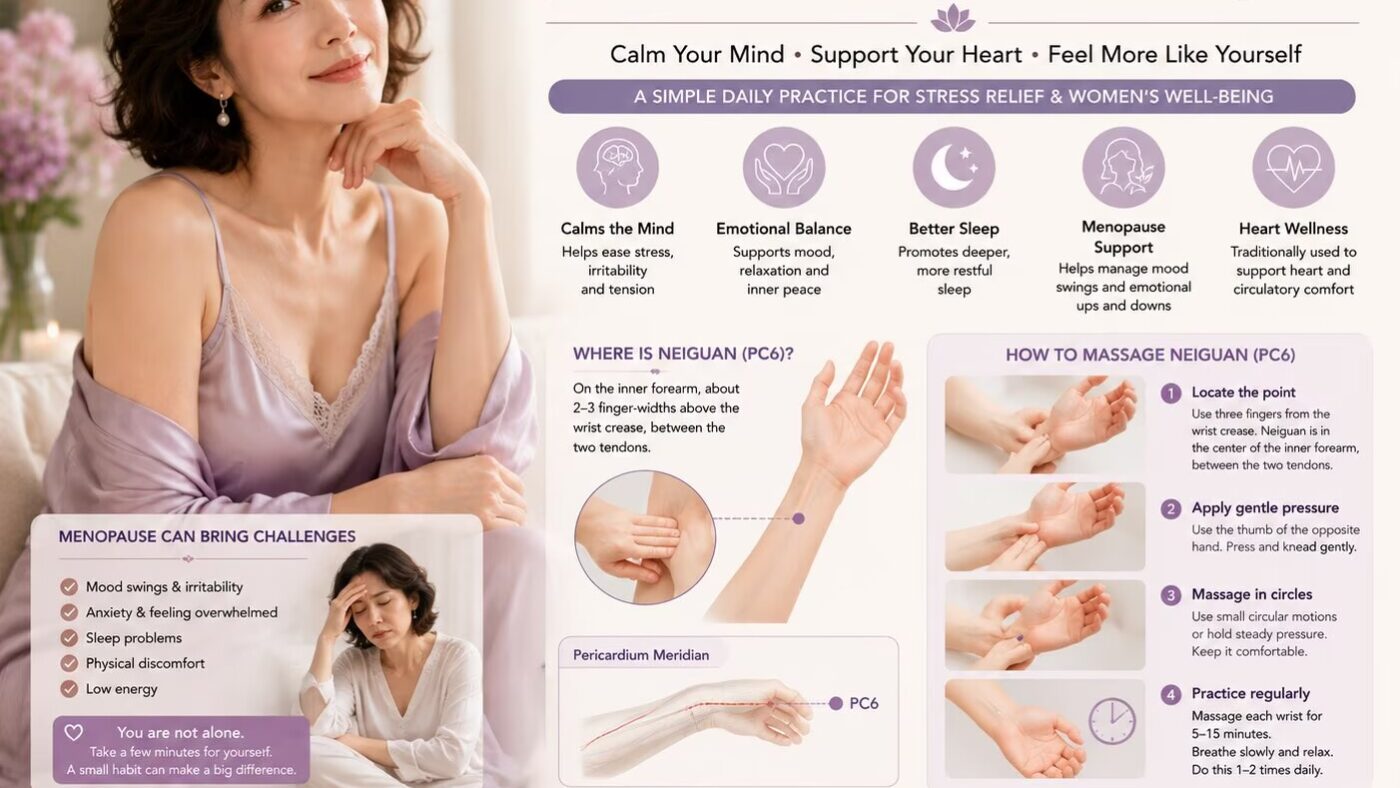
Neiguan is a traditional acupuncture and acupressure point located on the inner forearm, a short distance above the wrist crease.
In traditional Chinese medicine, Neiguan belongs to the Pericardium meridian and has historically been associated with symptoms involving the chest, stomach, and emotional discomfort.
These descriptions come from a traditional medical framework. They should not be interpreted as proof that pressing PC6 directly changes the heart, “opens blocked qi,” or prevents emotional stress from damaging internal organs.
Modern research evaluates acupressure through measurable outcomes rather than traditional meridian theory.
Studies of acupressure have reported possible reductions in anxiety in some populations and clinical settings, but the evidence varies considerably in quality, study design, treatment points, and patient groups. A systematic review of randomized trials found potentially favorable effects on anxiety while also emphasizing limitations in the available evidence.
For that reason, PC6 is better presented as a complementary relaxation technique, not as a treatment for anxiety disorders, heart disease, or other medical conditions.
How to Locate Neiguan
When used safely, Neiguan PC6 for menopause may serve as a calming self-care ritual rather than a treatment for hormonal or medical conditions.Turn one hand so the palm faces upward.
Find the main crease where your palm meets your wrist.
Move approximately two to three finger-widths up the inner forearm.
Neiguan is traditionally located near the center of the inner forearm, between two prominent tendons.
You do not need to identify the location with millimeter-level precision for gentle self-acupressure intended simply for relaxation.
Use the pad of the opposite thumb to apply comfortable pressure to the area.
How to Try Gentle PC6 Acupressure
Place your thumb over the Neiguan area.
Apply gentle to moderate pressure.
Massage slowly using small circular movements, or simply maintain comfortable steady pressure.
Keep your hand, shoulder, jaw, and breathing relaxed.
The pressure may produce a mild sensation of fullness or tenderness, but it should not be sharply painful.
After a short period, release the pressure and relax the arm.
You can repeat the same technique on the opposite wrist.
There is no established medical requirement to massage each wrist continuously for exactly 15 minutes. Longer and harder pressure is not automatically more effective.
For everyday wellness, a short period of comfortable self-massage combined with slow breathing may be more practical than aggressively pressing the point for a fixed amount of time.
Pair Acupressure With Slow Breathing
The acupressure itself does not have to be the entire relaxation practice.
While gently pressing PC6, try allowing your breathing to become slower and more comfortable.
Avoid forcing unusually deep breaths.
Instead, inhale naturally, allow a relaxed exhalation, and notice whether your shoulders and jaw begin to release tension.
This turns the practice into a brief pause from stressful thoughts rather than a search for a “magic point.”
Mindfulness and meditation-based approaches have substantially more research supporting their potential role in reducing some symptoms of anxiety and stress than claims that a single acupressure point can control emotions.
Can Neiguan Help When You Feel Irritable or Stressed?
Possibly—as a relaxation ritual.
Some studies of acupressure suggest that it may help reduce subjective anxiety in certain circumstances. For example, randomized clinical research has reported reductions in anxiety among people undergoing specific medical procedures, although these findings cannot automatically be generalized to every person experiencing everyday stress.
This distinction is important.
Feeling calmer while receiving or performing acupressure does not prove that PC6 treats depression, anxiety disorders, hormonal changes, or cardiovascular disease.
A reasonable interpretation is:
Gentle PC6 acupressure may provide some people with a calming sensory focus and can be incorporated into a broader relaxation routine.
If you enjoy it and find it comfortable, there is no need to turn the practice into something more dramatic than that.
What About Women Going Through Menopause?
Menopause deserves special attention because emotional changes during this stage are often oversimplified.
Some women experience irritability, anxiety, sadness, sleep disturbance, difficulty concentrating, or changes in emotional well-being during the menopausal transition. These symptoms may relate to hormonal changes, sleep disruption, life stress, previous mental-health history, or a combination of factors.
Acupressure can be used as a personal relaxation practice if it feels helpful, but it should not be promoted as a treatment for menopause itself.
Women with persistent anxiety, depression, severe sleep disturbance, disruptive hot flashes, or symptoms significantly affecting everyday life have evidence-based treatment options and should discuss them with a qualified healthcare professional. The U.S. Office on Women’s Health notes that medical treatments, including menopausal hormone therapy for appropriate patients, may help certain troublesome menopausal symptoms.
Does Being Angry or Stressed “Damage the Heart”?
The original claim needs considerable qualification.
Emotional stress can influence heart rate, blood pressure, sleep, behavior, and overall well-being, and long-term cardiovascular health is affected by many interacting lifestyle and medical factors.
But it is misleading to suggest that pressing Neiguan immediately prevents anger from “damaging the heart.”
More importantly, acupressure should never be used to manage suspected angina or other potentially serious cardiac symptoms.
Angina is chest pain or discomfort associated with inadequate blood flow to the heart muscle. Symptoms may include pressure, squeezing, tightness, or burning in the chest, sometimes spreading to the arms, shoulders, neck, jaw, or back.
Unstable angina can be a medical emergency requiring immediate hospital treatment.
If someone develops new or severe chest discomfort, shortness of breath, unusual sweating, faintness, or other symptoms suggestive of a heart attack, they should seek emergency medical care rather than attempting to relieve the problem by pressing an acupuncture point.
Neiguan Should Not Be Used to Treat an Irregular Heartbeat
The same caution applies to palpitations or suspected abnormal heart rhythms.
Feeling an occasional awareness of the heartbeat can have many causes, including stress, caffeine, sleep deprivation, medications, or benign rhythm changes.
But recurrent racing, fluttering, skipped beats, fainting, chest discomfort, or unexplained shortness of breath deserves appropriate evaluation.
Acupressure may feel calming, but a calming sensation is not evidence that an abnormal heart rhythm has been corrected.
This distinction is especially important for health education websites because readers should never be encouraged to substitute self-massage for cardiovascular assessment.
Avoid Pressing Too Hard
Acupressure should be comfortable.
Do not dig the fingernail into the wrist or apply enough force to create bruising, numbness, sharp pain, or skin damage.
Avoid pressing directly over broken, inflamed, infected, or recently injured skin.
If the area becomes painful, stop.
A common misconception in traditional self-massage videos is that a stronger “sore and swollen” sensation means a stronger therapeutic effect.
That is unnecessary.
For a relaxation-oriented practice, comfortable pressure is enough.
A Better Everyday Stress Routine
Instead of expecting one acupuncture point to solve emotional distress, use PC6 as one small part of a more comprehensive routine.
A useful approach might combine gentle PC6 pressure with several minutes of relaxed breathing, regular walking or other physical activity, adequate sleep, time away from screens, supportive relationships, and strategies for managing ongoing sources of stress.
For women approaching or experiencing menopause, addressing sleep, physical activity, mental health, and troublesome menopausal symptoms together is generally more useful than attributing every emotional change to “blocked energy.” Mood changes during menopause can arise from multiple interacting factors.
When Emotional Changes Deserve More Than Self-Care
Everyone experiences difficult emotions occasionally.
But persistent sadness, anxiety, irritability, loss of interest in previously enjoyable activities, major sleep disturbance, panic symptoms, or emotional changes that interfere with work and relationships deserve professional attention.
Complementary practices can coexist with appropriate healthcare.
They should not delay it.
The National Center for Complementary and Integrative Health notes that evidence for acupuncture in anxiety remains limited overall, with important concerns about study quality. That is another reason to avoid presenting acupoint stimulation as a replacement for established mental-health care.
The Bottom Line
Neiguan, or PC6, is one of the best-known points used in traditional East Asian acupressure.
Gently pressing the point may provide a calming ritual for some people and can be combined with relaxed breathing as part of an everyday wellness routine.
What it should not be presented as is equally important.
PC6 does not have proven ability to prevent aging, protect the heart from anger, treat angina, correct an abnormal heart rhythm, or eliminate the effects of menopause.
The more useful goal is simple:
Use traditional wellness practices for comfort and self-awareness while keeping medical claims grounded in evidence.
For women dealing with everyday stress, emotional changes, or the menopausal transition, long-term well-being is better supported by good sleep, regular movement, healthy relationships, stress management, appropriate medical care, and realistic expectations than by relying on any single pressure point.
Medical Disclaimer
This article is intended for general educational and wellness purposes only and is not a substitute for professional medical diagnosis or treatment.
Acupressure may be used as a complementary relaxation practice, but it should not be used to treat chest pain, suspected angina, abnormal heart rhythms, severe anxiety, depression, or other medical conditions.
Seek prompt medical care for new or severe chest pain, shortness of breath, fainting, significant palpitations, or other concerning cardiovascular symptoms. If emotional symptoms are persistent, severe, or significantly affecting daily life, consult a qualified healthcare or mental-health professional.
This article is for general education and does not replace individualized care from a qualified health professional. Seek appropriate advice for persistent, severe, or concerning symptoms.
Read the full medical disclaimer