Many people experience the frustration of waking up during the night and finding it difficult to fall asleep again. Repeated early morning awakening can affect energy levels, mood, concentration, and overall quality of life.
Sleep interruptions can happen for many reasons, including stress, emotional changes, irregular sleep schedules, caffeine intake, lifestyle habits, and various health conditions.
In traditional Chinese wellness practices, nighttime waking is sometimes explained through concepts such as internal imbalance or excess heat affecting the body’s systems. These traditional perspectives provide a cultural approach to understanding health, but they should not be considered a medical diagnosis.
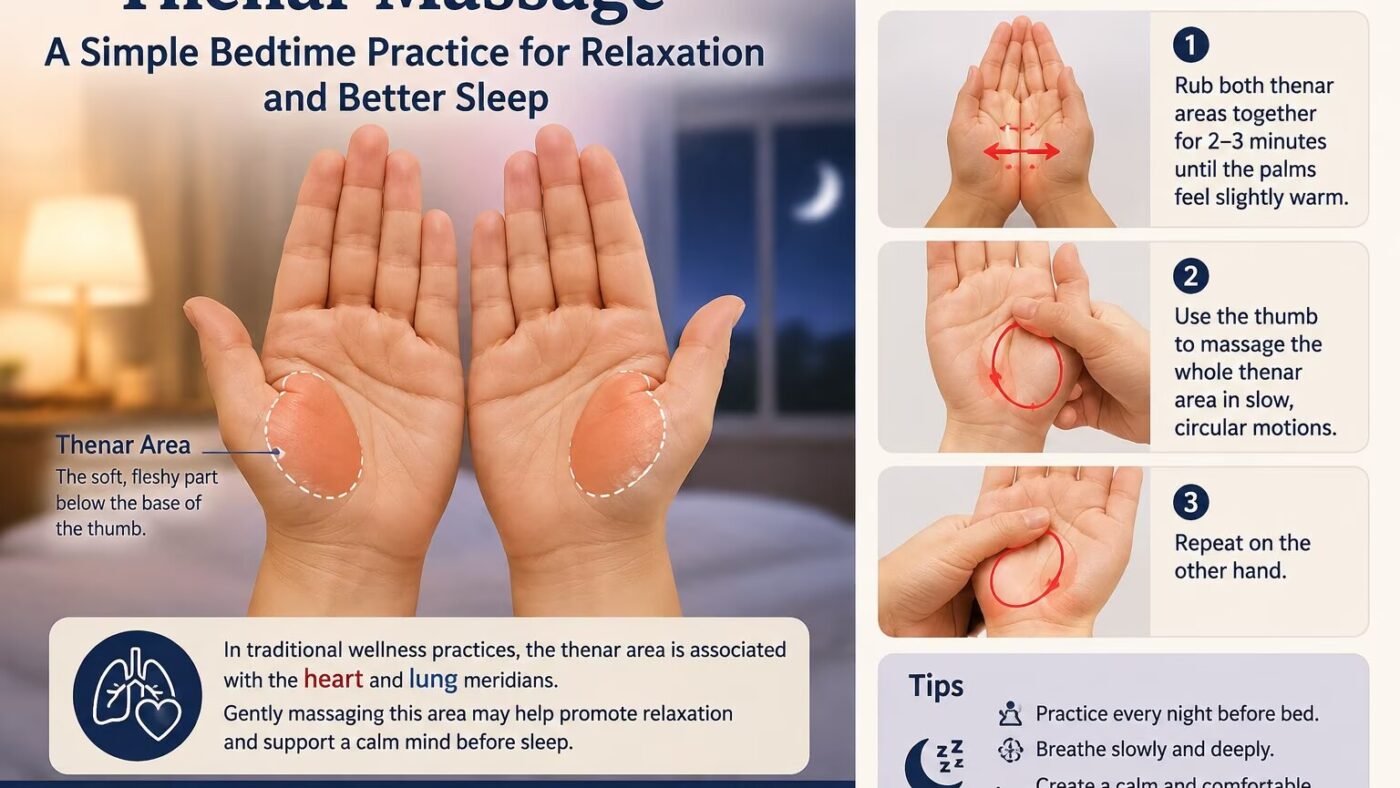
One simple self-care practice often used in traditional wellness routines is gentle massage of the thenar area of the hand.
What Is the Thenar Area?
The thenar area is the soft, fleshy part of the palm located directly below the base of the thumb.
This area contains muscles that support thumb movement. In traditional Chinese medicine, the thenar region is associated with pathways connected to the heart and lung meridians.
From a modern wellness perspective, gentle hand massage may help promote relaxation, increase warmth in the hands, and create a calming bedtime routine.
How to Practice Thenar Massage
Place your hands together so that the fleshy areas below both thumbs touch.
Rub the two thenar areas against each other slowly for about two to three minutes until your palms feel slightly warm.
After warming the hands, use the thumb of one hand to gently massage the thenar area of the opposite hand.
Use slow circular movements across the entire soft area below the thumb. Then repeat the same process on the other hand.
At first, some people may notice mild tenderness in this area. Use comfortable pressure and avoid pressing too strongly.
The goal is relaxation, not creating pain.
When Is the Best Time to Practice?
Many people prefer to practice thenar massage before bedtime as part of a relaxing evening routine.
Combining gentle hand massage with slow breathing, reduced screen exposure, and a peaceful sleep environment may help prepare the body and mind for rest.
Consistency is more important than performing the practice at a specific time.
How This Practice May Support Relaxation
Gentle massage can stimulate touch receptors in the skin and muscles, helping create a sense of calm and body awareness.
The warmth generated through rubbing the hands, combined with slow breathing and quiet attention, may help reduce tension after a busy day.
However, thenar massage should be viewed as a relaxation technique rather than a proven treatment for insomnia or sleep disorders.
Healthy Sleep Habits Matter
Better sleep usually depends on multiple daily habits.
Maintaining a regular sleep schedule, getting natural daylight exposure during the day, staying physically active, reducing caffeine late in the day, and creating a comfortable bedroom environment can all support healthier sleep.
If you frequently wake up during the night and cannot return to sleep, it is worth considering possible underlying causes and discussing them with a healthcare professional.
When to Seek Professional Help
Occasional nighttime waking is common. However, medical advice may be helpful if sleep problems continue for several weeks or affect your daily life.
Seek professional guidance if sleep difficulties are accompanied by loud snoring, breathing interruptions, severe anxiety, persistent low mood, chest discomfort, unexplained pain, or significant daytime exhaustion.
Final Thoughts
Thenar massage is a simple traditional wellness practice that can be incorporated into a calming bedtime routine.
By gently rubbing and massaging the area below the thumb, people may experience warmth, relaxation, and a moment of mindfulness before sleep.
While it should not replace professional medical care for sleep disorders, it can be a supportive self-care habit alongside healthy lifestyle choices.
This article is intended for general education and wellness information only. It does not provide medical advice, diagnosis, or treatment. Thenar massage is not a substitute for professional healthcare. Anyone experiencing persistent sleep problems or other health concerns should consult a qualified healthcare professional.
This article is for general education and does not replace individualized care from a qualified health professional. Seek appropriate advice for persistent, severe, or concerning symptoms.
Read the full medical disclaimer