Emotional stress, anxiety, anger, and sudden mood changes can temporarily affect the body. Some people may experience a faster heartbeat, shallow breathing, muscle tension, or temporary changes in blood pressure during stressful situations.
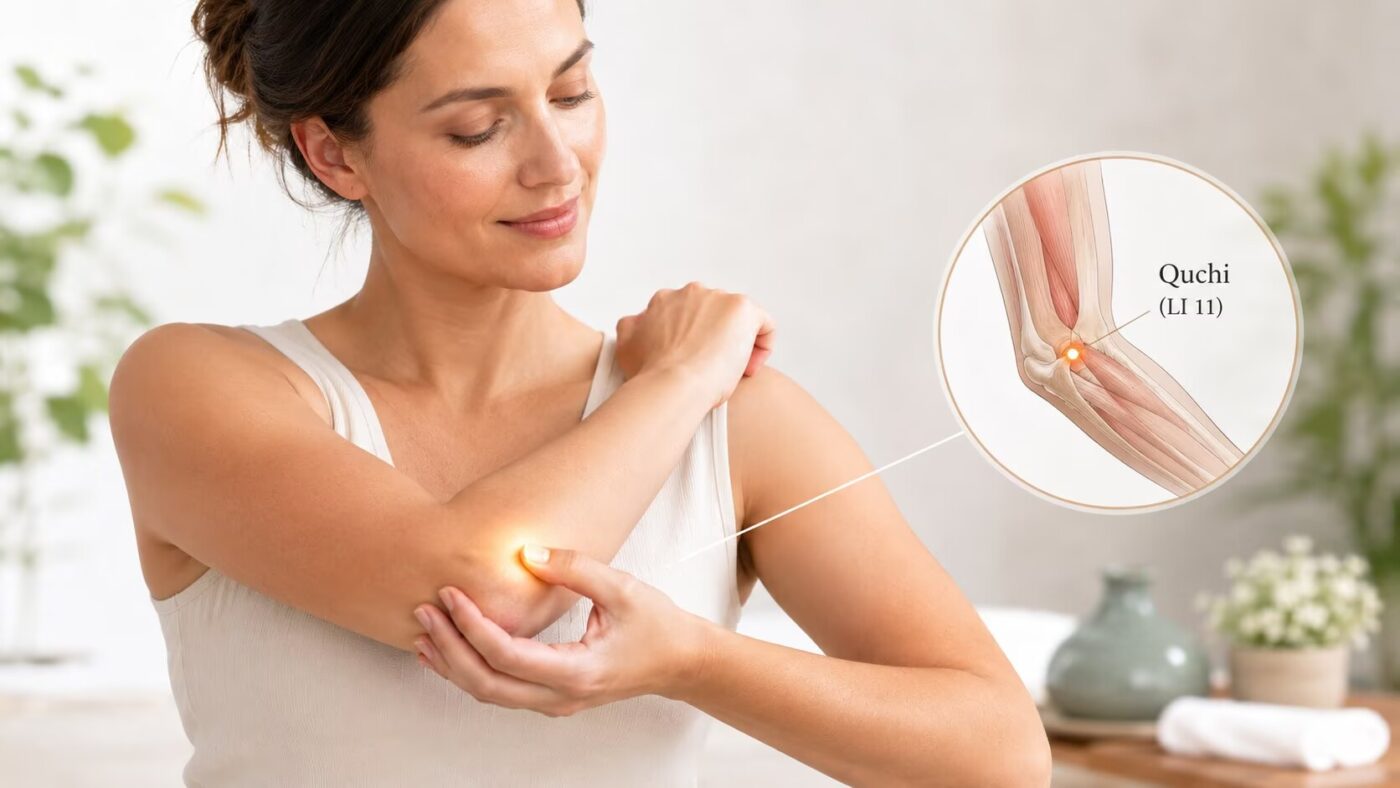
In traditional Chinese wellness practices, certain acupressure points are used to support relaxation and promote physical balance. One of these points is Quchi, also known as LI11, which is located near the outer side of the elbow.
Quchi massage can be used as a simple self-care practice to help the body relax. However, it should not replace medical evaluation, prescribed medication, or emergency treatment for high blood pressure.
What Is the Quchi Point
Quchi is an important point on the Large Intestine Meridian in traditional Chinese medicine. Its name is often translated as Pool at the Bend because it is located near the bend of the elbow.
How to Locate the Quchi Point
Bend your elbow and look for the crease that forms across the joint. The Quchi point is located near the outer end of this crease, in a small depression beside the elbow joint.
The exact position may feel slightly different from person to person because body structure varies.
How to Massage the Quchi Point
Use the thumb of your opposite hand to press the Quchi point. Wrap the other four fingers gently around the elbow to keep your hand stable.
Apply slow and comfortable pressure with the pad of your thumb. You may use small circular movements or maintain steady pressure on the area.
A mild feeling of tenderness, warmth, or soreness may occur, but the massage should never cause sharp or severe pain.
Massage each side for several minutes while breathing slowly and evenly. Avoid pressing too hard if the area is bruised, swollen, injured, or unusually sensitive.
When to Practice Quchi Massage
Quchi massage can be practiced whenever you have a few quiet minutes. You may use it during a work break, after a stressful situation, before breathing exercises, or as part of a daily relaxation routine.
Traditional wellness teachings sometimes recommend practicing acupressure at certain times of day. However, there is not enough reliable medical evidence to confirm that pressing Quchi at a particular hour has a stronger effect on blood pressure.
Comfort, consistency, and safe technique are more important than following a strict schedule.
Potential Wellness Benefits
Quchi massage is traditionally used to support relaxation during emotional stress, ease physical tension, encourage calm breathing, improve body awareness, and promote a general sense of well-being.
Combining gentle acupressure with slow breathing may help the body enter a more relaxed state. This practice can be included as part of a broader stress-management routine.
However, Quchi should not be described as a rapid blood pressure switch. It should not be relied upon to treat, control, or prevent hypertension.
A Simple Relaxation Practice
Sit in a comfortable position and bend one elbow. Locate the Quchi point and press it gently with the thumb of your opposite hand.
Breathe in slowly through your nose and exhale gradually. Relax your shoulders and continue the massage for several minutes.
Repeat the same method on the other arm.
Stop immediately if you experience increasing pain, numbness, dizziness, weakness, chest discomfort, or any other concerning symptoms.
Blood Pressure Monitoring and Medical Care
High blood pressure often causes no obvious symptoms. The only reliable way to know whether your blood pressure is elevated is to measure it with a properly fitted and validated blood pressure monitor.
People who have been diagnosed with hypertension should continue taking prescribed medication and follow the advice of their healthcare professional.
Medication should never be stopped, reduced, or changed because of temporary improvement after massage or relaxation.
Long-term blood pressure management includes regular monitoring, taking medication as prescribed, limiting excessive sodium intake, staying physically active, maintaining a healthy body weight, avoiding smoking, managing stress, getting adequate sleep, and attending routine medical appointments.
When to Seek Emergency Care
Acupressure should never delay urgent medical attention.
Seek emergency medical care if a severely elevated blood pressure reading is accompanied by chest pain, severe headache, shortness of breath, sudden weakness, numbness, confusion, vision changes, difficulty speaking, fainting, or loss of consciousness.
These symptoms may indicate a serious cardiovascular or neurological emergency.
Final Thoughts
Quchi massage can be a calming traditional self-care practice when performed gently and safely. It may help reduce tension, encourage slower breathing, and create a brief period of relaxation during a stressful day.
It should be viewed as a complementary wellness practice rather than a medical treatment for hypertension.
Regular monitoring, healthy daily habits, and professional medical care remain the foundation of safe blood pressure management.
This article is intended for general education and wellness information only. It does not provide medical advice, diagnosis, or treatment.
Acupressure is not a substitute for prescribed medication, professional medical care, or emergency services.
Anyone with high blood pressure, cardiovascular disease, pregnancy, an elbow injury, or another medical condition should consult a qualified healthcare professional before beginning a new self-care practice.
This article is for general education and does not replace individualized care from a qualified health professional. Seek appropriate advice for persistent, severe, or concerning symptoms.
Read the full medical disclaimer