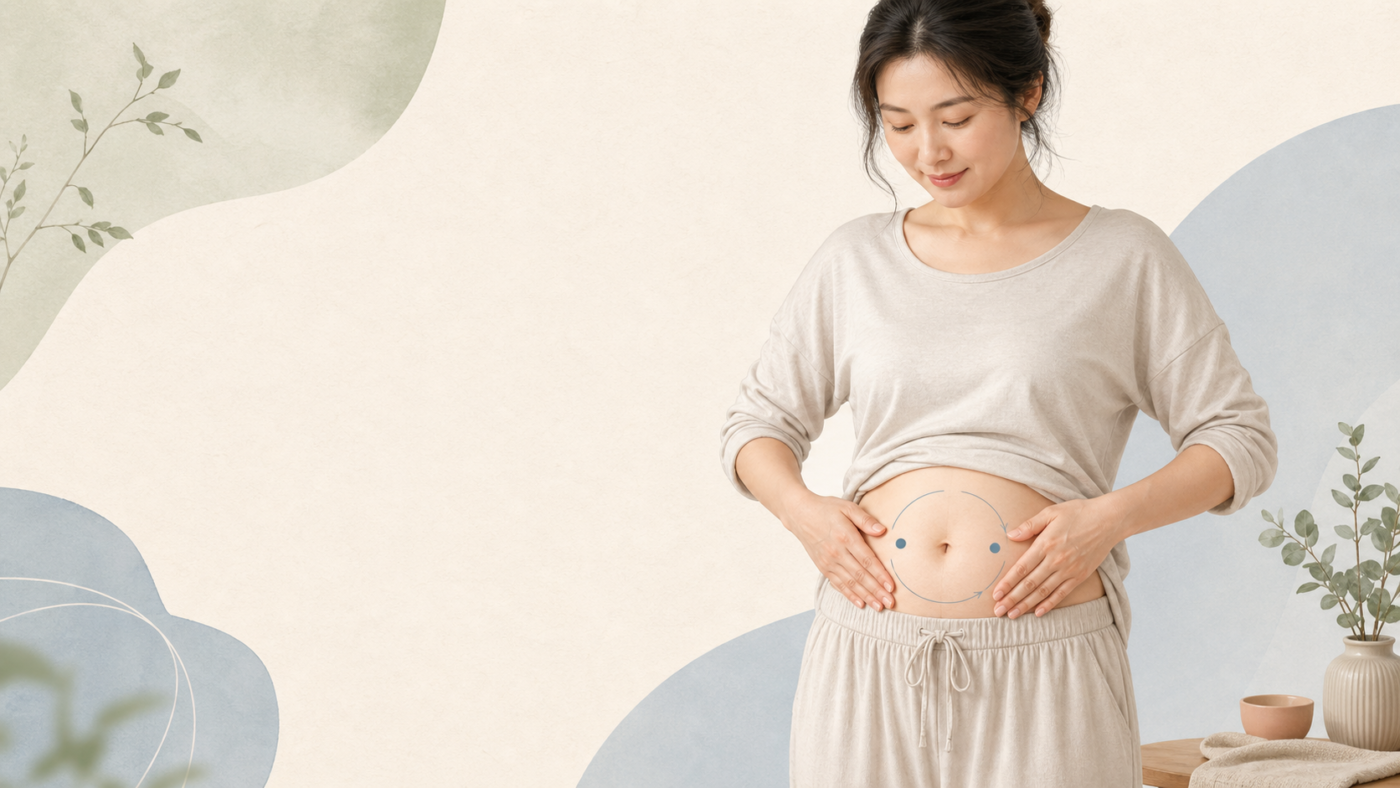
As the weather gets hotter, many people feel less motivated to exercise. This makes claims such as “lose belly fat with just a few minutes of massage a day” especially appealing. One popular version suggests that the Tianshu acupoints on either side of the navel act as “natural weight-loss switches.” According to the claim, massaging or tapping these points can unblock energy pathways, remove toxins, and reduce abdominal fat.
But does it actually work? In simple terms, gentle abdominal massage may be a relaxing self-care practice, but it cannot replace evidence-based weight-loss methods. If your abdomen feels softer, less bloated, or more comfortable after a massage, the change is more likely related to muscle relaxation, bowel movement, or reduced bloating. It does not mean that abdominal fat has been massaged away.
The Tianshu acupoint is internationally identified as ST25. It is located on both sides of the navel and is traditionally described as being two cun away from its center. A cun is a body-proportional unit used in traditional Chinese medicine, not a fixed measurement in centimeters or inches.
For a rough at-home reference, place two or three fingers beside the navel and look for an area that feels mildly tender when pressed. Because finger width and body shape vary from person to person, this method provides only an approximate location. The World Health Organization has standardized acupuncture-point names and locations, but having a standardized location does not prove that an acupoint has weight-loss effects. WHO standard acupuncture nomenclature
At present, there is no strong evidence that massaging the Tianshu acupoints for a few minutes each day directly burns abdominal fat. Some studies have examined massage or acupuncture as complementary approaches to weight management, but the treatment methods, study durations, and participant groups vary considerably. A systematic review of massage therapy for obesity rated the available evidence as low certainty and concluded that better-quality randomized controlled trials are still needed. Systematic review of massage therapy and obesity
Some electroacupuncture studies have included the Tianshu acupoint. However, electroacupuncture is a professional treatment that often involves several acupoints and may be combined with dietary changes, exercise, or standard medical care. It is not equivalent to pressing the abdomen with your fingers for a few minutes at home. These studies also have limitations, including small sample sizes and short follow-up periods, so their findings should be interpreted cautiously. Research on acupuncture and weight management
Changes in abdominal fat are mainly influenced by long-term energy balance, diet, physical activity, sleep, genetics, and hormonal factors. Warmth, redness, or soreness after a massage simply indicates that the skin and soft tissues have been stimulated. It does not show that fat is being burned. If your waist measurement becomes slightly smaller immediately after a massage, the difference may be caused by passing gas, having a bowel movement, temporary fluid changes, or measurement error rather than fat loss.
Claims that abdominal massage “removes toxins and waste” are also not supported by established medical evidence. The liver, kidneys, lungs, and digestive system already process and eliminate metabolic waste. It does not need to be shaken or pressed out of the abdomen. Hitting or pressing the area hard enough to cause pain, redness, or bruising will not improve fat loss and may damage the skin or underlying tissue.
Although abdominal massage should not be treated as a weight-loss technique, gentle massage may still have practical benefits. It can help relax the abdominal muscles, reduce feelings of tightness after prolonged sitting, and make some people with bloating or constipation feel more comfortable.
To try it safely, sit or lie in a comfortable position. If lying down, bend your knees slightly to relax the abdominal muscles. Warm your hands by rubbing them together, then place them gently around the navel. Use your fingertips or palms to make slow circular movements, or gently press the approximate Tianshu areas on either side of the navel. Three to five minutes is enough. The pressure should feel comfortable—pain or intense soreness is neither necessary nor more effective.
Abdominal massage is not suitable for everyone. Avoid forceful abdominal massage if you are pregnant or may be pregnant, have recently had abdominal surgery, have an umbilical or inguinal hernia, take anticoagulant medication, or bruise or bleed easily. Stop massaging and seek medical advice if you experience persistent unexplained abdominal pain, fever, repeated vomiting, blood in the stool, black stools, severe swelling, abdominal rigidity, or intense tenderness. Healthcare guidance also recommends extra caution or avoiding massage in people with recent abdominal surgery, scars, or hernias. Cambridge University Hospitals abdominal massage guidance
If your goal is to reduce your waist circumference, the most effective approach is to build habits that can be maintained over time. Exercise does not have to begin with an intense workout. Brisk walking, cycling, swimming, dancing, and low-impact home exercise can all increase daily activity. The World Health Organization recommends that adults complete at least 150 minutes of moderate-intensity physical activity each week while reducing the amount of time spent sitting. If that feels unrealistic at first, begin with 10 to 15 minutes a day and gradually increase the duration. WHO guidelines on physical activity and sedentary behavior
There is also no need to rely on extreme dieting for rapid, short-term weight loss. A more sustainable approach is to eat more vegetables, whole grains, and high-quality protein while cutting back on sugary drinks, alcohol, desserts, and high-fat snacks. The U.S. National Institute of Diabetes and Digestive and Kidney Diseases identifies a sustainable healthy eating pattern and regular physical activity as the foundation of weight loss and long-term weight maintenance. Healthy eating and physical activity for weight management
Strength training can also be included alongside aerobic activity. Squats, wall push-ups, resistance-band exercises, and core exercises suited to your fitness level can help maintain muscle and improve posture. Abdominal exercises strengthen the core, but they cannot guarantee that fat will disappear specifically from the stomach. Adequate sleep and stress management are equally important because chronic sleep deprivation and stress can affect appetite, food choices, and motivation to exercise.
To monitor changes in waist circumference, take measurements at approximately the same time and under similar conditions each week. Measure at the same position every time and focus on trends over several weeks or months rather than comparing measurements immediately before and after a massage.
In conclusion, Tianshu is a commonly used acupoint in traditional Chinese medicine. Gentle massage may serve as a relaxing daily practice and could help some people feel more comfortable when experiencing bloating or constipation. However, describing it as a “natural weight-loss switch” or claiming that a few minutes of massage can remove toxins and burn belly fat is not supported by reliable evidence.
The most effective way to reduce waist circumference remains a combination of balanced nutrition, regular physical activity, appropriate strength training, adequate sleep, and long-term consistency. Abdominal massage may be included as a complementary relaxation practice, but it should not be the main part of a weight-loss plan or replace necessary medical evaluation and treatment.
This article provides general health information and is not a substitute for personalized medical diagnosis or treatment.
This article is for general education and does not replace individualized care from a qualified health professional. Seek appropriate advice for persistent, severe, or concerning symptoms.
Read the full medical disclaimer