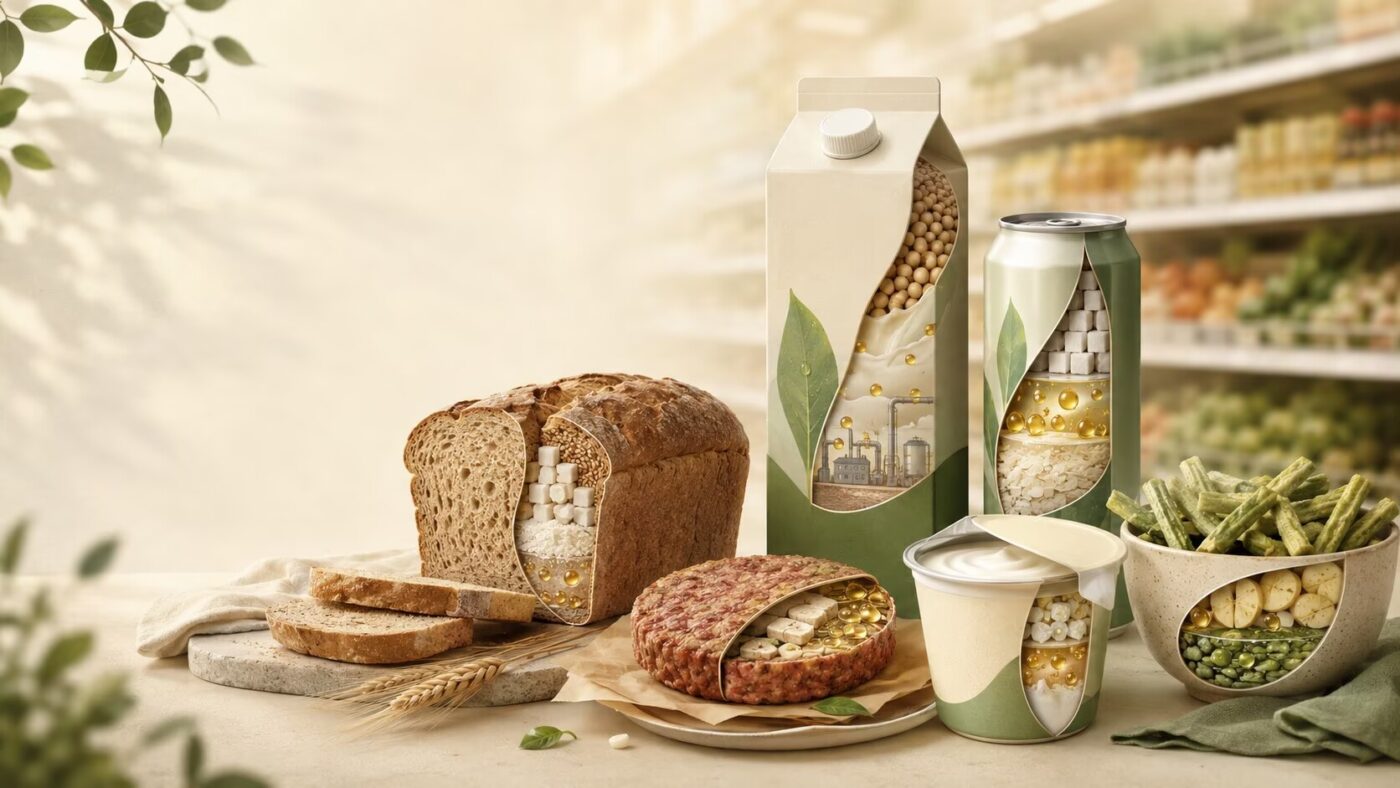
The package may look healthy. The food may tell a different story.
You replace white bread with a brown loaf. You trade regular soda for a zero-sugar version. You choose oat milk instead of dairy and put a plant-based burger in your cart.
Each decision feels like an upgrade.
Sometimes it is. Sometimes it is only a change in packaging, marketing or ingredients. Words such as “natural,” “multigrain,” “plant-based,” “low-fat” and “sugar-free” can create a powerful health halo—the impression that a product is healthier than it actually is.
The solution is not to fear packaged food or eliminate everything processed. It is to look beyond the front of the package and ask a better question:
What does this food actually provide, and how does it fit into my overall diet?
Processing is not automatically a problem
Almost everything we eat has been processed in some way. Washing vegetables, freezing berries, fermenting yogurt, cooking tofu and canning beans are all forms of processing.
Many processed foods are nutritious, affordable and convenient. Frozen vegetables, canned beans, plain yogurt, tofu, canned fish and whole-grain bread can all be valuable parts of a healthy diet.
The greater concern is often ultra-processed food: industrial formulations made primarily from refined ingredients, isolated proteins, added sugars, oils, flavorings, colorings or texture-modifying additives.
Even this classification should not be treated as a perfect moral dividing line. Foods within the same category can have very different nutritional profiles. The purpose of checking processing is to understand a product—not to label every packaged food as “bad.”
- Brown bread is not necessarily whole-grain bread
Bread is one of the easiest places for a health halo to appear.
A loaf may be brown because it contains whole grains, but color alone proves very little. Molasses, malt, caramel or other ingredients can also darken bread. Terms such as “wheat,” “multigrain” and “made with whole grains” do not necessarily mean that whole grain is the main ingredient.
According to the FDA’s whole-grain labeling guidance, a useful first step is to check whether a named whole grain—such as whole-wheat flour, whole oats or whole rye—appears as the first or predominant grain ingredient.
What to check
- Is a whole grain the first ingredient?
- How much fiber does one serving provide?
- How much added sugar and sodium does it contain?
- Is the serving size one slice or two?
- Is the ingredient list dominated by refined flour, sweeteners and oils?
A longer ingredient list does not automatically make bread unhealthy, and an unfamiliar ingredient is not automatically dangerous. Compare similar breads and choose the one that delivers more whole grain and fiber with less added sugar and sodium.
Sourdough can be a satisfying choice, but the word “sourdough” is not a guarantee of superior nutrition. Recipes, fermentation times and flour types vary widely.
- Plant-based milk should be chosen for its nutrients—not its image
There are legitimate reasons to choose a dairy alternative. Some people have allergies, follow a vegan diet or experience digestive symptoms after consuming lactose.
About 68% of the global population has some degree of lactose malabsorption, although many people do not develop noticeable symptoms, according to the National Institute of Diabetes and Digestive and Kidney Diseases.
But almond, oat, coconut and soy beverages are not nutritionally interchangeable.
The FDA advises consumers to compare plant-based beverages for:
- Protein
- Calcium
- Vitamin D
- Potassium
- Added sugar
- Saturated fat
- Total carbohydrate
Fortified soy beverages generally come closest to dairy milk in protein and overall nutrient profile. Oat and almond beverages may contain considerably less protein, although brands vary.
“Unsweetened” and “no added sugar” are also not the same as “low carbohydrate.” Anyone monitoring blood glucose should examine total carbohydrate and serving size rather than relying on the front label alone.
Choose the beverage that fits your nutritional needs. If it regularly replaces dairy, make sure the missing protein, calcium, vitamin D and other nutrients are supplied elsewhere in your diet.
- Zero-sugar drinks can be useful—but they are not a health tonic
A zero-sugar soda is not poison. When it directly replaces a sugar-sweetened drink, it can reduce added sugar, calories and exposure of the teeth to sugar.
That can be a practical short-term step.
However, “zero sugar” does not make a beverage nutritious. It provides little of what the body needs, and maintaining a strong preference for intensely sweet flavors may make less-sweet foods and drinks less appealing.
The World Health Organization advises against relying on non-sugar sweeteners for long-term weight control. Importantly, this is a conditional nutrition recommendation—not a declaration that approved sweeteners are poisonous.
A sensible hierarchy is:
- Water as the everyday default
- Unsweetened tea, coffee or sparkling water for variety
- Zero-sugar drinks as an occasional substitute
- Sugar-sweetened drinks as an occasional treat
The goal is not perfection. It is to prevent sweetness—whether from sugar or sweeteners—from dominating daily hydration.
- Why ultra-processed foods can make overeating easier
Ultra-processed foods are often soft, rapidly eaten, highly flavored and convenient. These qualities can make it easier to consume a large amount before fullness signals have time to catch up.
In a small but carefully controlled National Institutes of Health randomized trial, 20 adults alternated between ultra-processed and minimally processed diets. During the ultra-processed phase, participants ate approximately 500 more calories per day and gained an average of about 0.9 kilograms over two weeks. They lost a similar amount during the minimally processed phase.
This trial was short and involved a small number of participants, so it does not prove that every ultra-processed product has the same effect. It does, however, show that food structure and processing can influence how much people eat—even when the diets are designed to be broadly comparable in key nutrients.
Large observational studies have also linked higher ultra-processed-food intake with greater rates of cardiovascular disease and other chronic conditions. These associations do not prove that processing alone causes every outcome, but they reinforce the value of making minimally processed foods the foundation of the diet.
- Plant-based meat is not automatically healthier than meat
“Plant-based” describes where a product’s ingredients came from. It does not automatically describe its nutritional quality.
Some meat alternatives offer useful protein and fiber. Others contain substantial sodium, saturated fat and a long list of refined ingredients used to reproduce the taste and texture of meat.
Before buying, compare:
- Protein per serving
- Fiber
- Sodium
- Saturated fat
- Added sugars
- Portion size
- The first several ingredients
For regular meals, beans, lentils, tofu, tempeh, nuts and seeds are often simpler plant-protein choices. A plant-based burger can still be enjoyed, but it is better viewed as a convenient packaged food than as a replacement for vegetables or legumes.
- Processed meat deserves special attention
Bacon, sausages, hot dogs, ham and many deli meats are preserved through smoking, curing, salting or related processes.
The International Agency for Research on Cancer classifies processed meat as carcinogenic to humans because the evidence linking it to colorectal cancer is strong.
This classification describes the strength of the scientific evidence, not the size of the risk. It does not mean that eating a slice of ham carries the same risk as smoking.
The evidence reviewed by IARC estimated that eating 50 grams of processed meat every day was associated with an approximately 18% relative increase in colorectal cancer risk. Risk generally rises with the amount and frequency consumed.
The practical response is moderation: make processed meat an occasional food rather than a daily protein source.
- Other foods that often wear a health halo
Product What can be misleading What to examine
Flavored yogurt “Probiotic” or “low-fat” may distract from added sugar Added sugar, protein, serving size and live cultures
Instant cereal drinks Grain imagery can make a sweetened drink look like breakfast Added sugar, fiber, protein and creamer ingredients
Vegetable chips Vegetable powder or coloring does not make chips equal to vegetables First ingredient, sodium, fiber and portion size
Dried fruit Small portions contain concentrated calories and natural sugar Whether sugar is added and how large the serving is
Candied fruit Fruit may be coated with additional sugar or syrup Added sugar and portion size
Meat floss and sweet-savory meat toppings Small serving sizes can hide meaningful sodium and sugar Sodium, added sugar and frequency of use
Probiotic drinks A health claim may overshadow high sugar content Added sugar, serving size and the specific probiotic strain
Unsweetened dried fruit, plain yogurt and some fortified foods can be nutritious. The point is not to reject the category; it is to judge the individual product.
A practical 30-second label check
You do not need a chemistry degree to shop well. Use this sequence:
- Identify what the product is supposed to replace
Is it replacing whole fruit, beans, water or a home-cooked meal—or is it replacing another highly processed product?
A zero-sugar soda may be an improvement over regular soda, but water remains the better everyday drink.
- Check the serving size
A product may appear low in sugar, sodium or calories because the stated serving is much smaller than the amount people normally consume.
- Read the first few ingredients
Ingredients are generally listed in descending order by weight. The first few ingredients therefore tell you much more than the pictures on the front.
Look for recognizable foundational ingredients such as whole grains, beans, nuts, seeds, vegetables, milk or soy.
- Compare products within the same category
Do not compare oat milk with canned beans or bread with yogurt. Compare two similar products and look for meaningful differences in:
- Fiber
- Protein
- Added sugar
- Sodium
- Saturated fat
- Important vitamins and minerals
- Do not judge a product by one number
Low sugar does not automatically mean low sodium. Low fat does not automatically mean high fiber. High protein does not automatically mean minimally processed.
Look at the complete nutritional role of the food.
- Consider how often you eat it
An occasional dessert is not the same as a supposedly healthy product eaten every morning.
The most important foods to evaluate are often the ordinary ones consumed repeatedly.
- Choose patterns, not perfection
A healthy diet can include packaged food and occasional treats. What matters is that most meals are built around foods such as:
- Vegetables and fruit
- Beans and lentils
- Whole grains
- Nuts and seeds
- Eggs, fish or other minimally processed proteins
- Plain dairy or nutritionally comparable alternatives
- Water and unsweetened beverages
The bottom line
Good health is not determined by the color of a package, a single nutrient claim or the word “plant-based.”
Brown does not always mean whole grain. Sugar-free does not mean nourishing. Plant-based does not automatically mean minimally processed. At the same time, processing is not automatically harmful, and no single ingredient list can tell the whole story.
The best supermarket question is not simply, “Does this look healthy?”
Ask instead:What nutrients does it provide, what is it replacing, and how often will I eat it?
Use the front of the package to identify the product. Use the nutrition facts and ingredient list to decide whether it belongs in your cart.
Educational information only. This article does not provide medical diagnosis or individualized dietary treatment. People managing diabetes, food allergies, kidney disease or other medical conditions should seek guidance from a qualified healthcare professional.
This article is for general education and does not replace individualized care from a qualified health professional. Seek appropriate advice for persistent, severe, or concerning symptoms.
Read the full medical disclaimer